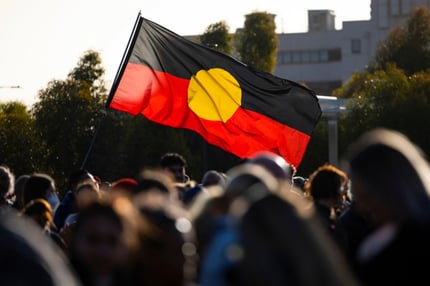
Voting for the Indigenous Voice to Parliament referendum is officially underway.
Australians now have the once-in-a-generation opportunity to "bring our country together", says Prime Minister Anthony Albanese.
"The idea for a Voice came from the people and it will be decided by the people. On October 14, you are not being asked to vote for a political party, or for a person. You're being asked to vote for an idea. To say yes to an idea whose time has come," he explained.
Australians are being asked to vote on the question of whether the nation should recognise First Nations people through an Indigenous Voice to Parliament in the Australian Constitution.
"It's a form of recognition that will importantly make a positive difference to their lives and their futures," Albanese said. "The Voice is a way for all of us to recognise Indigenous Australians and their history in our constitution."
Whether you've been following the Voice debate online, struggling to understand the issue, or Googling 'What is a referendum?', you're definitely not alone. Many people have never voted in a referendum before, and it can be hard to make sense of the conversation if you haven't been following along.
As a proud Wiradjuri lawyer and Uluru Youth Dialogue Ambassador, I've been working on community education to help people understand the Uluru Statement from the Heart and First Nations Voice since 2019. To help you get up to date, this Voice 101 explainer will answer all of your questions.
Let's start at the beginning.
The Voice to Parliament: What does 'constitutional recognition' even mean?
When people talk about 'constitutional recognition,' they're talking about making changes to the 'Australian Constitution' to properly recognise the unique status of First Nations people in Australia’s history.
So what actually is the Australian Constitution? It's technically Australia's founding legal document and it was written back in the 1890s. The Constitution sets out the broad powers of Australia's legal and political system. It outlines the roles of the courts, the Parliament, and the Executive Government, and explains what their powers are and how they work together.
When the Constitution was first written, there weren't any First Nations people in the room (there weren't even any women). First Nations people were explicitly written out of the Australian Constitution. This stopped them from being counted in the census or as members of the Australian population (this is what changed in the 1967 referendum).
The Voice to Parliament: What is required to change the Constitution?
While we're hearing a lot from the government at the moment about the Constitution, only the Australian public can change it through a special vote called a referendum.
To pass a successful referendum, you need what's called a 'double majority.' This means:
If a referendum gets a double majority, the result is binding on the Government, meaning they have to follow the result. This is different from the same-sex marriage plebiscite, which was more of an opinion poll that the government was not required to follow.
While a double majority is a high bar to reach, the Constitution is supposed to be able to change over time as society changes too.
The Voice to Parliament: What is the Uluru Statement from the Heart, and where did it come from?
To really understand what the Uluru Statement from the Heart is and why it's important, you have to also understand the broader history. For many decades, Aboriginal and Torres Strait Islander advocates have been calling for different forms of constitutional recognition, agreement-making and parliamentary representation to help improve the lives of their communities.
In response to these calls, the national government has been working towards recognising First Nations people in the Constitution for over two decades. Over the last twenty years, there have been more than six parliamentary processes and nine government reports on this issue, each one trying to answer the question of what constitutional recognition of First Nations people looks like.
To help answer this question, and in response to calls from First Nations leaders, the government set up the Referendum Council. The role of the Referendum Council was to go out in community and run a dialogue process answer the question of what form of recognition First Nations people want.
The Uluru Statement from the Heart came out of this process, which was the most comprehensive consultation of First Nations people that Australia has ever seen. Twelve Regional Dialogues were held across Australia throughout 2016-2017, where more than 1200 Aboriginal and Torres Strait Islander people came together to deliberate and think about which reforms would have the most impact in their communities.
At the end of this process, over 250 representatives of the Dialogues attended the First Nations National Constitutional Convention at Uluru. the purpose of the Convention was to try and bring together the views of the different dialogues and reach a consensus position. They weren't sure if they were going to be able to reach a position where everyone agreed, but on the Saturday of the Convention, a consensus was reached. There were seven attendees, including Senator Lidia Thorpe, who walked out due to concerns over sovereignty and did not form part of the final consensus position.
On the Sunday of the Convention, on 27 May 2017, the Uluru Statement from the Heart was gifted to the Australian people, outlining calls for two sequenced reforms – a constitutionally enshrined Voice to Parliament and a Makarrata Commission to oversee processes of agreement-making and truth-telling (or Voice, Treaty, Truth).
The Uluru Statement is a written statement surrounded by the signatures of the over 250 signatories who attended the Convention. It is bordered by an artwork painted by Mutitjulu artists, led by Maruku artist and Uluru traditional owner Rene Kulitja.
Why did First Nations people ask for a Voice to Parliament?
In the Uluru Statement, First Nations people called for a Voice to Parliament, which is a representative body that can give Aboriginal and Torres Strait Islanders a say in the law and policy that affects them. The Dialogue attendees spoke of the history of Aboriginal and Torres Strait Islander communities not being properly consulted on laws that impact their lives, the impact that this has on the community.
While the purpose of the Regional Dialogues was not to decide on the form or the model of the Voice, many delegates believed that the Voice could allow for elected representatives from remote, rural, and regional communities to be heard at the national level. They spoke of the need for the Voice to be representative rather than hand-picked by government, and to be structured in a way that respects culture. Delegates also said that the Voice could support treaty-making processes by providing a structural body that could represent First Nations people during any agreement negotiations (see more below).
The Voice to Parliament: Why does this need to go to a referendum? Can't we just set up the Voice in normal laws?
The Uluru Statement specifically asks for a constitutionally enshrined Voice to Parliament. This is because many of the delegates were aware of the limits of creating the Voice in normal legislation/laws. The way that our system works is that the Parliament can create laws, change laws, and repeal (or remove) laws. This means that when a body is created in normal laws, it can be removed easily by normal laws. Other First Nations representative bodies in the past have been removed overnight because they were either part of the government, or made in normal laws, like the Aboriginal and Torres Strait Islander Commission (or ATSIC). When this happens, First Nations communities need to start over, working to set up new representative bodies to allow them to speak to the government.
When a body is created through the Constitution, the existence of the body is guaranteed. This means that the only way that it can be removed completely is by holding another referendum. While the form of the body can change over time (as the details of how it works are set up in normal laws), the existence of the body is protected.
Watch: Prime Minister Anthony Albanese explains the Indigenous Voice to Parliament. Post continues below.
The Voice to Parliament: What will we be asked at the referendum?
A referendum runs just like a normal election, where every Australian voter casts a single vote (which means yes - there will likely be democracy sausages).
On referendum day, the ballot contains the following question:
A Proposed Law: to alter the Constitution to recognise the First People of Australia by establishing an Aboriginal and Torres Strait Islander Voice.
Do you approve this proposed alteration?
For your vote to count, you have to write 'YES' or 'NO' clearly in the box provided.
If successful, the referendum would insert the following actual words into the Constitution:
"Chapter IX Recognition of Aboriginal and Torres Strait Islander Peoples
129 Aboriginal and Torres Strait Islander Voice
In recognition of Aboriginal and Torres Strait Islander peoples as the First Peoples of Australia:
1.There shall be a body, to be called the Aboriginal and Torres Strait Islander Voice;
2.The Aboriginal and Torres Strait Islander Voice may make representations to the Parliament and the Executive Government of the Commonwealth on matters relating to Aboriginal and Torres Strait Islander peoples;
3.The Parliament shall, subject to this Constitution, have power to make laws with respect to matters relating to the Aboriginal and Torres Strait Islander Voice, including its composition, functions, powers and procedures.”
It might be surprising how short the section is that actually goes into the Constitution, but this is just the way out system works. The purpose is to set out the broad power of the body, with the detail to be explained in normal legislation/laws. We wouldn't want all of the details written into the Constitution because it is so hard to change with a referendum.
What could a Voice to Parliament look like?
The final form of the Voice will be worked out through consultation with First Nations communities following a successful referendum. This is important, as Aboriginal and Torres Strait Islander communities need to be able to design the Voice in a way that is culturally appropriate for communities across the country.
It's important to remember that the referendum is about voting on the existence of the Voice in the Constitution. What the Voice looks like and how it works will change and evolve over time depending on what works and what doesn't. By protecting the Voice in the Constitution, the Voice has the flexibility to change and improve within risk of being completed removed. That's why the third paragraph of the Constitutional Amendment above gives the Parliament a broad power to set up the Voice following this design process.
Together with First Nations leaders, the Government have developed and released a number of Voice design principles which set out the key features of the Voice. To summarise:
Further details expanding on each of the Voice principles can be found on the voice.gov.au website.
The Voice to Parliament: Do First Nations people support the Voice?
Polling over the last year has shown that most First Nations people support the Voice, with polls showing between 80-83 per cent support. However, there are of course Aboriginal and Torres Strait Islander people who disagree. It's important to remember that we don't expect 100% of any other social group to agree before implementing changes, so why would we expect that of First Nations people?
There are different reasons why First Nations people disagree with the Voice, such as Senator Lidia Thorpe's view that a Voice does not go far enough and that a treaty should be pursued instead of a Voice, or Senat

Sign up to Mamamia Daily
Sent daily
Kishaya Delaney
Author
No Comments
Be the first to leave a comment