A question for you:When was the last time you updated your makeup look? You know, switched up your usual routine?
We're nosy, we know. But hear us out. Because the thing is - your skin changesa lotas you shimmy on into your 40s and 50s. And once you hit perimenopause, you'll start to notice even more changes.
Things like lines and wrinkles around your mouth, forehead and eyes, maybe some pigmentation, dryness and all that other fun stuff. This means that makeup starts to sit differently on our faces.
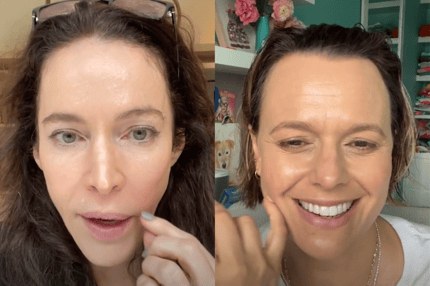
That's why Mia Freedman sat down with celebrity makeup artist Rae Morris in a three-part series, to nut out exactly what tweaks we can make to our makeup routines as we age - starting with, quite literally, the foundation.
Here's exactly what Rae Morris told Mia Freedman to do when it comes to nailing her makeup base.
Ready? Grab your brush and let's go.
1. When it comes to foundation, less is more.
While there are some very good formulas out there for mature skin, more often than not, you'll probably find that they all just end up hanging out in your fine lines. Right?
Well, as Rae tells Mia, a lot of it comes down tohow muchfoundation you're putting on your face. Because when it comes to foundation and mature skin, apparently more... does not equal more.
"When we get older, our skin has more movement, so you have to put less on the skin," she said.
"The more foundation you put on it, the more it's going to crease. It's all about using products with the pigment that you want, but using less amount because our faces are more flexible."
The amount you apply can mean the difference between lovely, even and healthy looking skin, and heavy, crepey skin.
For Mia, she tells Rae she's more partial to a tinted moisturiser as opposed to something heavier.
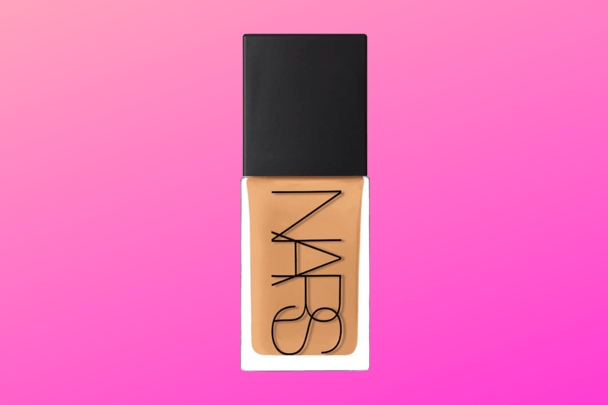
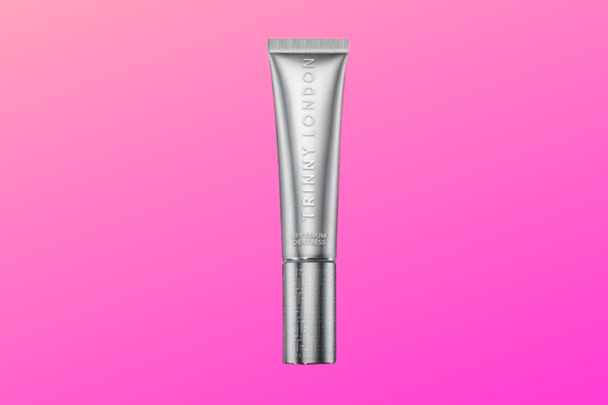
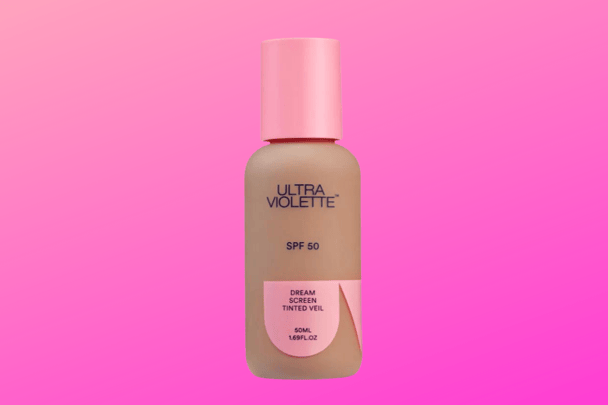
Some of Mia's faves include NARS Light Reflecting Foundation ($73), Trinny London BFF Rebalance Serum Foundation ($75) and Ultraviolette Dream Screen SPF50 Tinted Veil, $55.
All good choices!
Rae also recommends IT Cosmetics Your Skin But Better CC+ Cream SPF 50, $65.
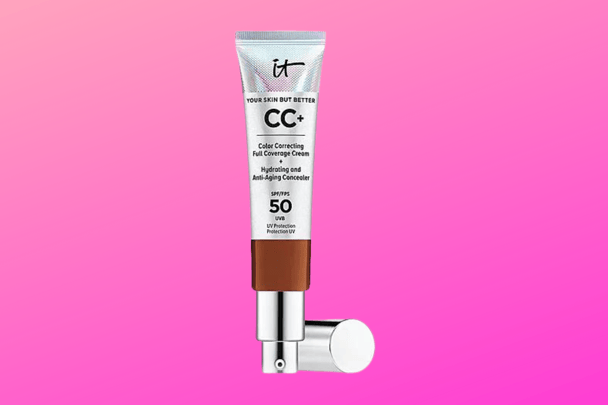
"Find the coverage that you want - the best option for you (you're always better to get something with a bit more coverage) - but use less of it. You don't want to be in that world of piling on this layer, then that layer, and then a sheer one."
And forget that word 'buildable' when it comes to foundation - because, as Rae said, for mature skin, it can just be too much.
"Less is best!"
2. Focus on an even skin tone above everything else.
According to Rae, there's one goal we all need to focus on when it comes to makeup for mature skin. And no - it's not smoothing out fine lines or wrinkles.
As Rae tells Mia, "I get to speak on a panel with plastic surgeons. Basically, my role is to help them make women and men more age appropriate. Because a lot of surgeries are not making women look younger - it's making them look weirder."
"But they're also finding that makeup can make you look ten, 20 years younger. So, it's about teaching the subtleties."
What are the subtleties? TELL US ABOUT THE SUBTLETIES, RAE.
"In a conference, one of the world's best plastic surgeons got up in a room full of only other plastic surgeons and the question was asked, 'If you had to do one thing to a woman to make her look younger, you can use any tool that you want, what would be the one thing that you would do?'
"And what he said floored me. He said, 'I wouldn't chase the wrinkles. I would even out the skin tone'."
Boom.
"When he said that, he put a picture up of a woman in her seventies from Queensland. She smoked, drank, baked in the sun. She had - what we would call in the makeup world - salami skin."
Salami skin.
As Mia goes on to say, pigmentation and 'salami skin' is one of her chief skin concerns, and something that lingered around after pregnancy in her thirties.
According to Rae, this is a key factor of ageing.
"In one photo, he [the plastic surgeon] retouched all the wrinkles out of this woman's face - she didn't look younger; she looked odd. But in the second photo, he evened out her skin tone, and she looked 20 years younger. And I thought wow - as a makeup artist, even out your skin tone. That's just by using foundation."
"The most anti-ageing thing you can do is even out your skin tone," Rae tells Mia.
Interesting.
"When women get older, the biggest thing I would hear my mum say was, 'I want more colour on my skin. I feel dead. I've got no colour'. But when you addjustcolour - like on your lips or cheeks - if you don't even out the skin tone, you'll enhance all that pigmentation."
Meaning? If you want to add colour like a lip or cheek, you need to work on addressing any redness or pigmentation first.
3. A brush will give you the best foundation application.
So, you've been nailing number one and two, but your base still looks...meh.
It might not come down to your actual foundation, but the way you've been applying it.
When Mia asks Rae for her weapon of choice, she said, "I like a brush, because you can polish it out."
"Fingers are great to get it on there, but the problem with fingers is - one, foundation gets everywhere, because it's greasy. And also you get fingerprint marks."
No good.
"What I like about a brush too is that it's a great way to take a thicker foundation and thin it down - it will make the foundation look flawless and it cuts the foundation time in half."
Rae recommends buffing it out down the neck to get the most seamless application, adding that when you're using your fingers to apply foundation, you never really know what the right amount is. "Whereas with a brush, it evens everything out."
"A brush is also really good for pockmarks and things like that because it just sort of goes over the top."
4. For concealer, never go over two shades away from your skin tone.
Hands up who thought you had to go super light when it comes concealers? Otherwise it won't brighten your under eyes, right?
Wrong.
Mia tells Rae one of the main things she's learnt from her is to match y
Erin Docherty
Beauty & Lifestyle Editor
No Comments
Be the first to leave a comment