
It’s been two months since my mother passed away after a 23-year-long battle with dementia and a question that keeps popping up is: “How do you think your mother’s illness has affected you?”
My answer? “How long is a piece of string?”
As teenagers and even young adults, we’re reluctant to look inwards. We don’t care about being self-aware, we don’t notice our behavioural patterns and how they may be affecting the relationships in our lives and we generally won’t seek the help or guidance of say, a professional, unless we find ourselves at rock bottom.
How to Talk To People With Anxiety. Post continues after video.
Since turning 30 in 2017 however, I’ve done the complete opposite.
I’ve sought out all the help I could get, both in the traditional western medicine world and alternative therapies. I’ve spoken with psychologists and psychics. Kinesiologists, meditation teachers, acupuncturists, reiki healers, GPs, life coaches and even a clinical neuropsychologist.
Why? Because I am intelligent enough and self-aware enough to recognise the fact that my childhood, amongst other factors, has impacted me in a negative way and I wanted to get to the bottom of it. I wanted to work on myself, to better myself.
I wanted to understand who I was and where I’d been and why I am the person I am today.
I wanted to be the best version of myself. And I wasn’t too proud to ask for help in getting there.
Yes, it was scary. Terrifying in fact. And emotionally draining. I have lost count at the number of appointments I have left, soggy tissues in hand. Appointments where I drag my heavy boots back to my car and just rest my forehead on my steering wheel for a while, collecting myself so that I’m able to drive home.
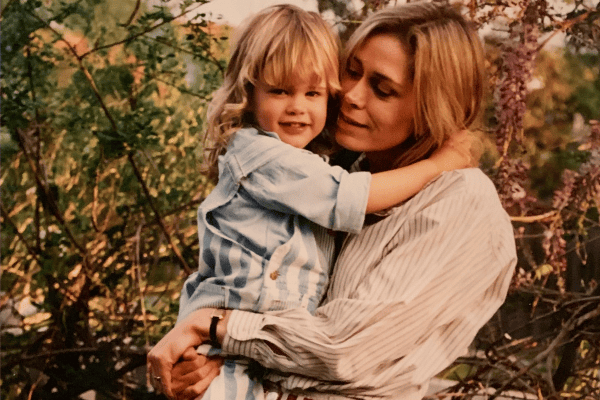
Tully with her mum, Kay. Image: Supplied.
It’s also not cheap. These appointments… these specialists, especially the good ones, cost an arm and a goddamn leg. Sure, some of it is covered by private health insurance and some of it can be claimed back on Medicare but a lot of it can’t.
I’ve often had to pick and choose which health care professional I could see that week. Who was the priority? My mental state or my physical health?
But has it all been worth it? Absof*ckinglutely.
In our lifetime, we’re assigned roles and we claim roles, not always consciously.
With any role comes a set of expectations, behaviours and limitations. Something I’ve learnt from years of working on myself is that losing my mum to early-onset dementia at 14-years-old has made me a “rescuer”.
I want to save everyone.
Tully Smyth spoke to Mia Freedman about her mother's battle with dementia on No Filter. Post continues after podcast.
So, you think you might be a “Rescuer”? Here are some of the signs and reasons why explained by psychotherapist Sarah Jane Crosby ( @themindgeek).
Signs of a 'Rescuer':
Sound familiar? Because I nodded so vigorously to each and every single one of those, my head almost fell off.
I have felt like I’m single-handedly keeping my family together and “happy” since mum started losing her mind and I am EXHAUSTED.
I say “I’m fine” because I wouldn’t even know where to begin with what’s wrong and feel like the other person has much more important stuff to be worried about than my silly little issues.
Finally, I’m constantly wanting to wave a magic wand and fix all of my friend’s issues or problems and feel extremely guilty when I can’t.
But how does the role of “Rescuer” come about? And how are we cast in a role we didn’t consciously audition for?
Reasons we become Rescuers:
Raise your hand if you feel “seen”.... I. F*cking. Feel. You.
So, what now? How do we learn to pack away our Superhero capes and chill the eff out?
Focus on ourselves and our own happiness rather than trying to be the knight in shining armour for everyone else?
How can we be there for others, truly supporting them, without defaulting to “rescuing” and sacrificing ourselves?
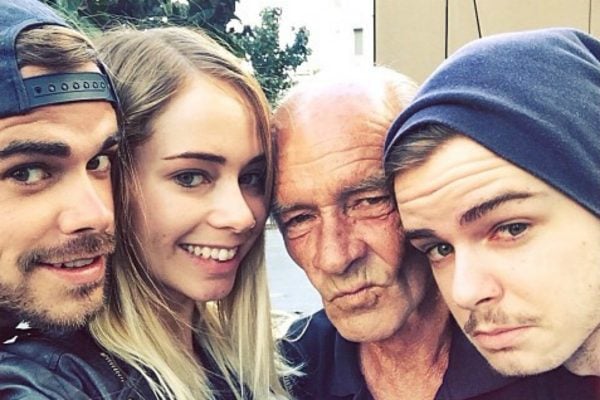
Tully and her family. Image Supplied.
Rescuing vs. support:
End of the day, putting down the role of the “Rescuer” can feel pretty uncomfortable, particularly if family or friends are accustomed to us saving them… or you’re the one used to swooping in and feeling helpful, needed. It’s something I’ve been struggling with particularly since losing mum.
Working on the transition from “Rescuer” to “Supporter” involves creating boundaries and identifying our reasons for wanting to rescue. Don’t stress, these things take time and this is where the additional support of say, a psychologist can really help.
Always try to remember: true support shouldn’t involve self-sacrifice.
Allowing ourselves space to notice our patterns and reflecting on what their cause may be is integral for change to occur. And don’t they say a change is as good as a holiday?
Tully Smyth
Author
No Comments
Be the first to leave a comment