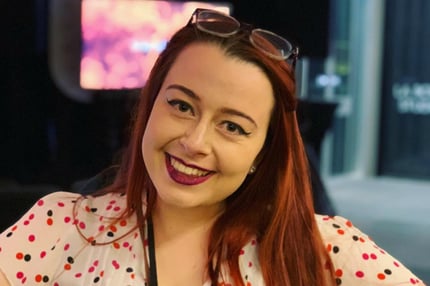
It wasn’t until I met proud disabled people that I discovered I could be proud of myself, too.
For most of my life, I had only known disability and disability identity through the media, or the lens of those teaching me.
These people were able-bodied, neurotypical teachers, teacher aides and physiotherapists who mostly knew disability from working with children with disability, not from experiencing it themselves. Their messaging echoed that of mainstream media; disability is a bad thing, something to be pitied and ashamed of. Everything must be done to ‘overcome’ it.
Mamamia sits down with for a cup of tea with Stella Young. Despite her death in 2014, her legacy lives on. Post continues after video.
To this day, the stories that circulate far and wide are largely built on devastation or grief. “I had to grieve the child I lost when he was diagnosed with autism” or “everyday I live with the shame of being different”. These stories are popular because they elicit sympathy.
The problem is that these messages don’t actually reflect the vast majority of disabled people. These messages are built on internalised ableism, and are devastatingly harmful.
Internalised ableism is in the little things, like being ashamed to be seen with a cane because it’s ‘embarrassing’, or telling your wheelchair-using son that he’s ‘okay because at least there’s nothing wrong with your brain!’. It’s when you doubt your disabled employee can complete a task so you delegate to someone else before they even get a chance to try. It’s when disabled actors aren’t cast in disabled roles because ‘it’ll cost too much’. It’s when ableism pokes through your words and your actions without even realising it, reinforcing your core belief that disability is bad and something to be mourned – even if you’re adamant that you don’t feel that way.
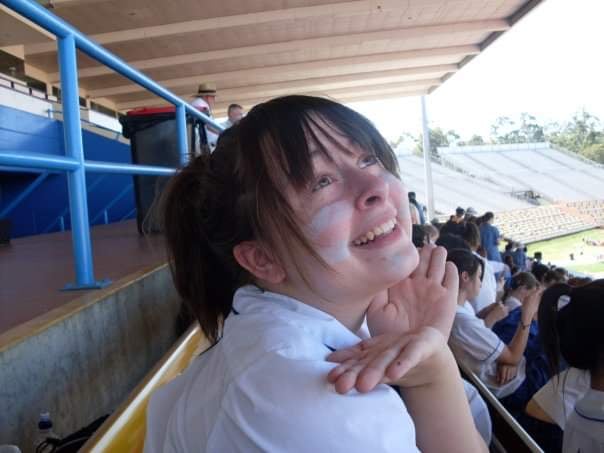
Madeleine Little, at 13 or 14, once shuddered at the word ‘disabled’ because it made me feel ‘less than’ those who don’t live with disability. Image: Supplied.
Last week, as I was scrolling through Twitter, I saw a tweet fromMamamialinking an article they had shared, an excerpt of Lee Kofman’s book, Imperfect: How our bodies shape the people we become.As soon as I started reading the excerpt, I felt a deep sense of sadness and hurt. The language used didn’t sit well with me and felt deeply offensive not just to me, but to so many disabled people I know who embody pride, strength, and respect. I felt that the excerpt was leaning into pity and resentment, fostering the negative perception of disability that I had to fight to unlearn.
These are the stories we hear most. These are the stories that get the most attention online and in print. I expressed my concern about these tropes on Twitter, and I’m grateful toMamamiafor asking me to write this piece as a result.
Though I don’t live with visible scars like Kofman, I am still visibly disabled. I walk with an uneven gait that draws attention. Living with a rare muscle disease has been challenging, but as I came to terms with my body and how it functions, I found myself struggling more with the constant need for advocacy and reinforcing my right to take up space and be heard.
I once shuddered at the word ‘disabled’ because it made me feel ‘less than’ those who don’t live with disability. I now know that the feeling of shame came directly from the internalised ableism I lived with. I couldn’t shake that feeling until I met proud disabled people who took me in and taught me about the social model of disability, and ‘inspiration porn’.
Reading up on Stella Young’s work and legacy was life-changing and helped me come to be comfortable in the body I inhabit. The honour of receiving the inaugural Stella Young Award from Arts Access Victoria in 2018 is still mind-blowing, but I know there’s no way it would have happened if I hadn’t come to challenge this ‘disability as tragedy’ trope that was thrust upon me from an early age.
I’m not going to argue that life is blissfully easy, but I’m not going to argue that I deserve a round of applause just for existing. Thanks to the social model of disability, I now know with certainty that I am not disabled because my body is. I am disabled because of the barriers society has created, both physical and attitudinal. Those attitudinal barriers exist because of the stereotypes and tropes we have continued to uphold, all thanks to internalised ableism.
Little is a performer, theatremaker, researcher and advocate based in Brisbane. You can find her on TwitterInstagram @madeleinelittle.Read more about Madeleine at madeleinelittle.com
Madeleine Little
Author
No Comments
Be the first to leave a comment