Sarah says she had always wanted to be a mum – in fact, she’d always planned on having a large family, with around four children. But life didn’t exactly work out as she’d planned. She’d turned 30 and then years passed without finding the long-term partner she’d always banked on to start a family with.
And so, four years ago, at 36-years-old, she decided to have her eggs frozen. She didn’t really believe at the time that she’d ever use them, she just saw it as a safety net to ensure that she could become a mother in the future.
It was an expensive process to go through with. But to her mind, the $10,000 was worth it, because she saw it as a guarantee for her future, regardless of whatever happened in her love life.
Watch: One woman decided to travel 9000 kms to freeze her eggs. Post continues after video.
Then, finding herself single again after the breakdown of a short-term relationship, Sarah had a clarifying moment when she realised that becoming a parent was the priority for her, whether she had a partner by her side or not.
"I think it was probably a long thought process internally of deciding what to do and then literally one day, it all landed in my brain," she tellsMamamia.
"I was like 'I’m about to turn 40, it’s time to have a baby'. And the minute I made the decision it’s like this weight came off my shoulder that I had been carrying around for years. I couldn’t care less about men, I just completely changed my focus to 'I’m going to have a baby'."
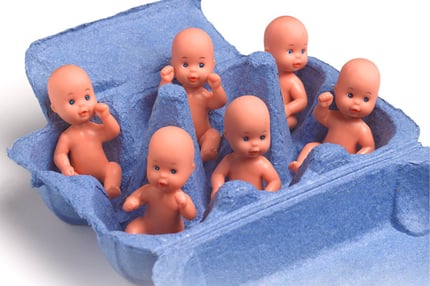
Once she had resolved to become a parent on her own, Sarah entered the process of choosing a sperm donor and undergoing another round of egg freezing to add to the seven that she had already stored. Ultimately, it was one of the eggs from four years prior that ended up being successfully implanted.
Sarah’s baby is due in a couple of months and she reflects that she’s feeling incredibly grateful for going through with freezing her eggs when she did. She’s also reflecting now on her decision-making around parenthood and seeing how many of the couples that she’d looked to as traditional models of parenting are now splitting up.
Sarah says that if she’d known that those relationships would end and that picture-perfect families aren’t for everyone, she would have gone through with the pregnancy five years ago.
"Everyone is so excited for me and I think probably I feel really proud now – I quite like being a bit different to everyone else,"” she says.
In many ways, Sarah’s story captures the triumph and promise of oocyte cryopreservation (egg freezing) in Australia, as an option that opens up possibilities and helps to ensure that, regardless of the circumstances, many people’s dreams to become a parent can be realised.
However, those promises are far from assured and the dream that’s being sold may be more complicated than women are being led to believe.
Egg freezing is a method of preserving a woman’s eggs for future use and falls under the banner of assisted reproductive technology (ART) alongside in vitro fertilisation (IVF), which is the process of fertilising eggs with sperm in a laboratory.
Since its inception, IVF has hugely benefited people who face medical challenges conceiving naturally. The overall success rate of IVF has also increased over the years, from 19.5 per cent in 2013 to around 23 per cent in 2020 in women aged between 35 and 39 years old. IVF has proved to be an extremely effective solution for people who struggle to naturally conceive or who are experiencing medical threats to their fertility, such as undergoing cancer treatment.
Egg freezing is now also being increasingly sold as an option to women, like Sarah, who have delayed becoming pregnant for any number of reasons that are not directly related to medical issues. Women are adopting egg freezing to overcome issues of age-related declines in infertility as they delay pregnancy for social and economic reasons.
Failure to find the right partner, concerns about career progression, indecision, or lack of economic stability are driving more and more women to consider egg freezing as an 'insurance policy' that they can opt into.
The popularity of egg freezing is reflective of broader fertility trends that Australia has witnessed over the past few decades. In 1991, 23 per cent of Australian women were having their first child over the age of 30 – by 2016, that number had more than doubled to 48 per cent.
Fertility in women begins to decline slowly after the age of 30 and the decline is known to accelerate after the age of 35. By around 40 years old, most women have around a 5 per cent chance of conceiving naturally in any monthly cycle and by 45, fertility has declined to the point that becoming pregnant naturally is unlikely.
In the face of these odds and mounting complexities around making parenting decisions, egg freezing has been heralded as a game changer.
From 2010 to 2019, the number of egg freezing cycles performed in Australia each year increased by more than 1000 per cent.
Dr Molly Johnston is an IVF researcher from Monash University and tellsMamamiathat even five years ago, people weren’t commonly speaking about egg freezing. Now, it’s entered the mainstream.
Celebrities, including Chrissie Teigen, Emma Roberts, Amy Schumer, and Kourtney Kardashian have spoken publicly about their own egg freezing. And the mainstream interest has been compounded by mainstream advertising. Here in Australia, IVF clinics run a huge amount of advertising on traditional media platforms, such as radio, as well as partnering with social media influencers and sending women targeted ads on social media. Many companies advertise egg freezing as “self-care”, acts of self-empowerment, or ways to secure the dream of ‘having it all’ for young, career-focused women.
Johnston says that there is nothing inherently wrong with this kind of marketing; it may even be somewhat beneficial because it increases women’s awareness about the impacts of age on fertility and allows them to make more informed decisions. But she does have concerns about the accuracy of what women are consuming.
"I don’t think marketing and publicising egg freezing is necessarily bad but we do need to be very careful about the content of the information that’s been provided," she says.
There are caveats to egg freezing that young women in particular may not be given immediate access to when they are digesting this information from social media, including the fact that egg freezing can not in itself provide an absolute guarantee of leading to pregnancy.
In fact, new research published this year shows that the overall chance of a live birth from frozen eggs is 39 per cent, however, this number is heavily dependent on a woman’s age when they try to conceive and the age at which they first froze their eggs.
Lucy Lines is an embryologist and fertility educator at Two Lines Fertility. Lines worked in the IVF industry for 17 years before leaving to pursue a career educating and consulting women through their ART journeys. Lines says that when she first started working in ART, it was a not-for-profit industry and by the time she left, this had changed dramatically. She is concerned that profit is being prioritised and women are not being given the full picture of success rates when it comes to egg freezing.
"[Women] are being romanced into this concept of putting their future fertility on ice and then everything’s fine. They’ve got an insurance policy for the future – but it isn’t an insurance policy, it’s a lottery ticket. You can’t win the lottery without a ticket and absolutely, buy the ticket, but it’s not an insurance policy."
IVF clinics have also been criticised in the past for their lack of transparency – or the publication of outright misinformation. Back in 2016, the consumer watchdog the Australian Competition and Consumer Commission (ACCC) investigated several leading IVF clinics for advertising false or misleading information about their success rates. The clinics were not publicly named but it was reported that some had been advertising success rates of up to 90 per cent – statistics that excluded clients who had unsuccessful cycles or who had moved clinics after failed attempts.
ACCC Commissioner Sarah Court said at the time that IVF clinics were competing against one another in a "race to the bottom" and taking advantage of vulnerable people.
Then in 2020, Monash University researchers led a study looking at the 21 main fertility clinic companies operating in Australia and assessed them for the information they were providing on their websites about health risks, success rates, and costs of egg freezing. The researchers found that across all clinics, key information for consumers was lacking and none of the clinics had provided sufficient information on their website for women to make informed choices.
The study also observed that egg freezing "may not be as simple as portrayed by Australian fertility clinics". Dr Kiri Beilby, the lead researcher of the study, said at the time that women were extremely reliant on online information before they pursue fertility services and it was crucial that "information provided online by fertility clinics regarding egg freezing is accurate".
While there hasn’t been another systematic review of the information provided by IVF clinics since this study, Johnston says that anecdotally, she hears there hasn’t been a huge improvement in the information that’s published online and made available to people who might be interested in egg freezing.
Experts are also concerned about the relative lack of information provided to women about how to naturally increase fertility before undergoing egg freezing.
Embryologist Lucy Lines says that she became disillusioned after years of working in the fertility industry due to the lack of information being provided to women.
"I felt like there were a lot of gaps. There were gaps in the information that people had in reproductive health information and there were a lot of big leaps people were expected to make, which often resulted in people having IVF treatment when maybe they didn’t really need it. Or maybe if they had more education, it could have been better," she tellsMamamia.
Like Johnston, Lines says that egg freezing can be life-changing for some people but she is frustrated that women aren’t being educated adequately about fertility before undergoing the procedure. Lines advocates in particular for women to undertake preconception health courses before going through with egg freezing.
Lines says that there are a lot of courses online that teach women how to "reduce their exposure to endocrine disrupting chemicals, increase their good foods, give up smoking and not vape for a while and really look after their preconception health but women who visit fertility clinics are necessarily being directed to take these steps.
"In an ideal world, I would love to see you walk up to your fertility specialist and for them to say ‘Yes, it looks like you’re going to need IVF. Go away and do this program for three months and we’ll start your IVF or egg freezing process then… But clinics aren’t going to do it because that’s three months where they’re not doing cycles. That’s me being very cynical but I just think that there’s no money in it for them."
Despite decreasing in cost in recent years, egg freezing is still a significant expense at approximately $7000 per cycle, in addition to costs for medication and hospital fees. ART was born out of private health care and there are only a handful of public health options for egg freezing in Australia. The process also locks women into paying for IVF further down the road if they use their frozen eggs, which can cost approximately $10,000. While there are Medicare rebates available for women who are undergoing egg freezing due to medical reasons, the costs are still prohibitive for many.
"We know from looking at the data of who is undergoing these procedures, predominantly, it is women who are high income earners and who essentially have the means to be able to afford this. Because even if you get a subsidy from the public health system, you’re still looking at an out-of-pocket cost of at least $5,000," Johnston explains.
Then, there is the looming issue of what to do with all the eggs that ultimately go unused.
Elfy Scott
Author
No Comments
Be the first to leave a comment