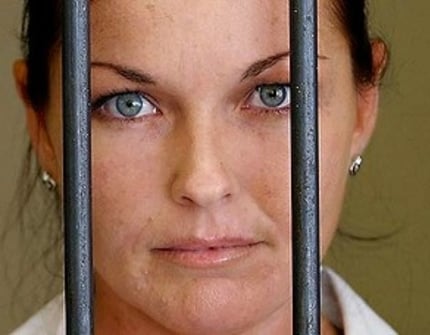
Without doubt, 2008 was the worst year Schapelle had endured so far in prison. Her mental health became a serious concern to herself, her family and her friends, and the media zeroed in on it as well, as they had with every minuscule thing about her life in a foreign jail. Sadly, the next handful of years were no better.
Mercedes blamed her sister’s deteriorating mental condition largely on the unrelenting media attention – which continued to be truly constant, significant coverage – and how the reports were peppered with glaring inaccuracies about Schapelle and her family.
But it was also the year that her father Michael passed away from cancer in January and then, a few months later, her final appeal failed. I have no doubt those two events crushed Schapelle as she began contemplating many more years in prison, which would have been devastating.
This prospect added to her fragility over the next few years. The Kerobokan governor in 2008, Ilham Djaya, had come up with a plan for Schapelle to gain a ‘higher rank’ of Pemuka in the prison structure, which could have meant an earlier release within five or six years. I featured this in the final chapter of the first edition of this book, as I had nothing else positive to add at that time. But that hope was dashed on the rocks when he was transferred.
So with all that happening in one tumultuous period, Schapelle’s condition continued to deteriorate and she was placed on strong medication, including anti-depressants and anti-psychotic drugs for her mental state and these began to affect her physically as well. The whole situation was to consume her and her family over the next few years, Ros told me on a number of occasions.
Schapelle had times where she was like a zombie, sitting staring into space without saying a word. In other periods she would be child-like, clutching toys while still staring into space, and then again at times she would be her normal self. Fortunately, a great deal of this behaviour was kept out of the media at the time, but it shook the rock solid duo of Ros and Merc to their very core.
While media did cover some of these times and issues, there were some outlets claiming she was faking her mental health problems, but a professional smashed those allegations as pure beat-up rubbish. Glimpses of that disturbing time have since emerged and they picture a very troubled Schapelle talking grimly and frequently about her father’s death and about contemplating suicide.
She would sit in the visitors’ area, rocking from side to side, telling her now less frequent visitors about how ugly she had become – a reaction I believe came largely from the constant media attention. One visitor said Schapelle had described herself as stupid and that she was being subjected to bullying from other prisoners and guards, together with taunts such as ‘white monkey’.
From her early days in Kerobokan, Schapelle’s eyes would constantly dart everywhere around the prison, searching for cameras being trained on her for the media. On many occasions, the cameras were real and were trained on her – often being operated by prison guards paid to do so by numerous media outlets. There was even one instance where a TV network crew burst into her cell and she had to flee to the toilets to escape their intrusive attention. The only way they could have been able to get that far into the prison, which is a sprawling affair, and find the right cell was to have paid off a guard or guards.
Things had reached such a parlous state for Schapelle that in mid-2009, the Corbys paid for a top Australian psychiatrist to go to Kerobokan and assess Schapelle’s mental state. On August 24, 2009 theSydney Morning Heraldpublished an alarming but largely accurate story under the terrifying headline ‘Schapelle Corby insane’. The story as follows was equally alarming:
Schapelle Corby has gone insane and will not survive her 20-year sentence unless she is moved out of Bali’s Kerobokan jail, a top Australian psychiatrist has warned. Associate Professor Jonathan Phillips, who visited Corby in prison earlier this month and says the former beauty student is ‘hanging on by a thread’.
She is lost in her own bewildering world where fantasy, hallucinations and bizarre ideas dominate her mind,’ Dr Phillips told New Idea magazine. Dr Phillips, former president of the Royal Australian and New Zealand College of Psychiatrists, says the 32-year-old will continue to deteriorate unless she is moved.
‘Even if Schapelle got really good medical treatment in jail the place itself would destroy her, given her now precarious condition,’ he said. ‘I really fear for her.
‘I know from experience that her illness will not get any better in the current situation, and will probably worsen with the risk of calamity.
‘Whether she’s innocent or guilty, her needs are medical.”
Dr Phillips says the best option would be to have Corby transferred as a prisoner to Australia and treated in a secure hospital setting. Failing that, she should go to a psychiatric facility in Bali, he said. Dr Phillips says he is certain Corby’s condition is genuine.
‘Let me make it clear, I have been a psychiatrist for many years and I approach my work with proper clinical scepticism.
‘She is not putting this on.
‘She is in the deepest of pain and her personal world is coming apart.
‘Her mind is now playing dreadful tricks on her.
‘She can get no peace because she is sure she is being filmed at all times for bizarre purposes.
‘She sees highly personalised and critical messages in books, on television and in videos, and she is sure that others are conspiring to end her life.
‘She is in huge trouble.’
Dr Phillips said he was appalled that other prisoners took responsibility for giving Corby her medication.
‘I’ve never known a similar situation before and the things that might go wrong are beyond reckoning.’
The Corby family sent Dr Phillips’ 20-page report to the then Australian Prime Minister, Kevin Rudd, and other political leaders in the hope it might pressure them to press for Corby’s transfer.
The Queensland Premier of the day, Anna Bligh, weighed into the discussion and told the BrisbaneCourier Mailnewspaper that she believed Schapelle should be transferred to an Australian prison. She said there was nothing she could do to ensure Corby was returned to Australia but she was sympathetic.
‘These matters are quite appropriately dealt with on a federal level but I have to say I have always thought it would be better if Schapelle Corby served her time in Australia,’ Ms Bligh said. ‘These latest incidents may be an opportunity for that to be reconsidered.’
But it was all to no avail and the family did not receive a response from the Australian Federal authorities, continuing a pattern of silence that had existed for some time. At the time Mercedes told me she was not surprised by these reports. ‘It’s really, really sad to see it all written down in black and white,’ she said. ‘It makes me feel helpless. We have to get her out of that prison to a place where she can be properly looked after. I’m just worried of where this might end up.’
Merc told a news outlet in Bali that a local psychiatrist had been treating her sister since she tried to scale a water tower inside Kerokoban jail earlier in August 2009 and had to be coaxed down to safety. In May 2009, Schapelle had spent several days in an Indonesian hospital for treatment for depression after she reportedly claimed people were trying to spy on her through holes in the ceiling of her prison cell.
She had previously spent time in hospital in June 2008 also for depression. Even in that hospital, she was hounded by the media literally coming through the door in crazy scenes that were played out on primetime Australian TV. ‘We are trying to get her better. Every day is difficult and she is not good,’ said Mercedes.
Even though Schapelle had four months shaved off her jail term as part of Indonesia’s Independence Day celebrations in July 2009, it did not help her frame of mind. Mental health issues continued to dominate the Corby story and in March 2010, the family applied to the Indonesian Government for clemency on the grounds of her mental illness. Around April, the Indonesian Supreme Court confirmed that it had submitted its report to the then Indonesian President Susilo Bambang Yudhoyono, recommending Corby for an early release.
Further details of the court’s opinion then emerged, including that Indonesia’s Justice and Human Rights Ministry had also recommended she be granted clemency on humanitarian grounds. However, the court suggested that her sentence only be reduced by five years, despite some reports that raised the possibility she could have her 20-year term cut by as much as half. The Supreme Court judge in question also referred to Corby’s refusal to admit guilt, pointing out that ‘the convict kept denying the evidence was hers’.
Author
No Comments
Be the first to leave a comment