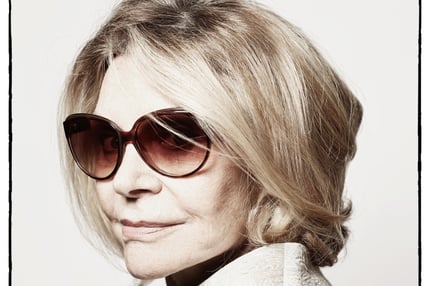
By her early 20s, Carla Zampatti had a dream.
It was the 1960s, she had just over $1000 to her name, and more women were entering the workforce in a post-war Australia. They needed smart, wearable fashion, and she was determined to fill that gap in the market.
Zampatti went on to become an Australian fashion legend, with her designs worn by some of Australia's most influential women, including Princess Mary of Denmark, Australia's first female prime minister Julia Gillard, Oscar-winning actress Nicole Kidman and NSW Premier Gladys Berejiklian.
She died earlier this month aged 78, after she fell down a set of stairs at Mrs Macquarie’s Point.
On Thursday, Zampatti will be farewelled in a state funeral at Sydney’s St Mary’s Cathedral. Those in attendance include three former prime ministers - Tony Abbott, John Howard and Malcolm Turnbull - journalists Melissa Doyle and Natalie Barr, and Zampatti's three children, Alex Schuman, Bianca Spender and Allegra Spender.
This is Carla Zampatti's story.
Watch: Zampatti on the biggest challenge for women in business. Post continues after video.
A toddler, a new business and an unhappy marriage.
When Zampatti arrived in Western Australia as a migrant from northern Italy in 1950 at the age of nine, she already had ambitions to become a fashion designer.
She made the big move to Sydney when she was 19 with her sewing machine in tow, taking a job as a cashier at a big retailer before landing a job designing blouses.
By the age of 24, Zampatti had started laying the foundations for her fashion label. She'd married accountant Leo Schuman two years prior who had encouraged her and invested financially in her plans. They had a son, Alexander, in 1969.
"When I started out, I had all the insecurities and frailties that women did in the ’60s because we weren’t told then how good we were at everything," she told The Australian in 2015.
Her early work was bold, graphic and had a nod to bohemianism. But Zampatti was shy, and while she found the process "exciting," it was also "daunting, terrifying and exhausting."
"Picking up the cheques from the people who bought my clothes and retailers was the most difficult aspect," she told Kochie'sBusinessBuilders.
When her son was just nine-months-old, Zampatti summoned the strength to leave her first husband who was aggressive and left her fearing for her safety.
In her memoir,My Life, My Look,she also details a relationship peppered with infidelities as her husband "made little attempt to hide his roving eye."
"The most difficult part is that he was in my business so we had to overcome that," she toldStudio 10.
In her divorce in 1970, Zampatti was forced to hand over her fashion factory and all remaining stock to her ex-husband. She was left with two apartments, two huge mortgages, her son, and a society that wasn't yet accepting of a single working mother.
In an interview with Nine in May 2021, Zampatti spoke about her struggle to start a business as a single mother in the 60s and 70s, when women were "in a different place".
"They were not working, certainly not leading mining or banking or building companies," she said.
"They were all hoping to get a job but were being discouraged by society or their families and pressured to stay home.
"I felt a bit of an outsider, which I have always felt in my life, which is not such a bad thing. Being an outsider makes you try harder."
Her divorce and the financial entanglement that followed lit a fire under Zampatti and gave her the determination to become financially independent.
As she told the Sydney Morning Herald, it was possibly the most "rewarding thing I did. I was at the right age and I found an inner strength I didn't realise I had."
Breaking rules, and rising fast.
After her divorce Zampatti relaunched her brand in 1970. The bank wouldn't lend her money, so she took a $5000 loan from her cousin Mick Caratti and opened her first boutique in 1972 in Surry Hills, Sydney.
Zampatti knew what women of the time needed: clothes that looked expensive, but were affordable. By the late 60s, early 70s, household spending on clothing had climbed dramatically. As more women entered the workforce and stopped making their own clothes, the need for 'ready to wear' clothing lines became paramount.
She began displaying her clothes in the windows of her workshop which was an unusual move at the time, as manufacturers were unlikely to also be retailers. But Zampatti wasn't afraid to do it differently, choosing to blur the lines between wholesale and retail.
Zampatti thought she would be happy to settle for making a small group of women happy. But over the next three years, she opened boutiques in Mosman, Double Bay and Elizabeth Street, as her popularity grew. She quickly attracted clients like Anna Murdoch, wife to the media mogul Rupert Murdoch, and Susan Peacock, a Sydney socialite.
Over the next decade Carla Zampatti Pty Ltd grew a chain of 30 Carla Zampatti boutiques and concept stores across Australia.
In 1973, Zampatti became one of the first Australian designers to introduce swimwear into her collection, and a line of sunglasses for Polaroid soon followed. She also redesigned a car especially for the women's market in a partnership with Ford Australia.

Sign up to Mamamia Daily
Sent daily
Gemma Bath
True Crime Conversations host
No Comments
Be the first to leave a comment