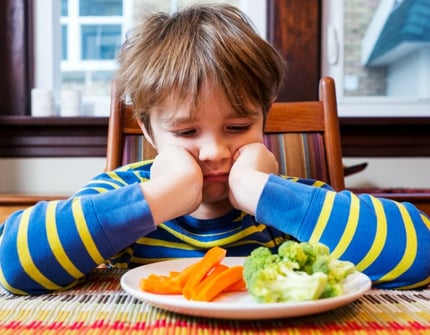
Getting children to eat their greens (and reds, oranges, blues, purples and browns) on a daily basis is a constant battle for the majority of parents I see in my practice and at workshops.
1. Create a rainbow plate.
Most little ones I see in my practice eat the same veggies each day. Whilst all vegetables are beneficial, the ultimate goal is to eat veggies from all the different colour groups to get the maximum benefit. We eat with our eyes first, so it makes sense to engage your child visually when encouraging them to eat more variety. Keep fresh and frozen produce on hand and get your child to create their own rainbow plate, filled with veggies from all the colour groups.
LISTEN: Holly’s son is eating vegetables thanks to a magical spinach pie. Post continues after audio.
2. Try one new veggie a week.
I usually find a strong connection between children who eat the same vegetables over and over and their parents who do the same. By expanding your own repertoire of vegetables you give your child an opportunity to see and taste a variety. You can also expand their range by including different vegetable groups. Try salad veggies, cruciferous vegetables like
3. Include beans and legumes.

A wholesome lentil soup is an excellent source of nutrients. Image supplied.
These are our most nutritious plant foods, high in proteins, B-vitamins, iron, potassium, fibre, minerals and phytochemicals. Beans are an excellent way to ensure optimum protein intake in vegetarians, prevent constipation and keep away diseases such as colon cancer, heart disease and high cholesterol.
4. Add sea vegetables.
Seaweed, thanks to its high calcium content, strengthens bones and teeth. It’s also high in iron, has antimicrobial properties and is a good source of essential vitamins, minerals and dietary fibre which helps prevent constipation.
Moderation is key, so don’t offer your child seaweed on a daily basis, either.
When it comes to vegetables Mandy Sacher says it's all about patience and making the process fun. Image via Instagram.
5. Don’t forget herbs and spices.
Basil
Mint
Oregano
Parsley
Spices
Spices are an easy way to turn cauliflower bites into flavour bombs. Image supplied.
6. Shop for vegetables together.
Encourage your children to touch, smell and engage with their food. Let them help with grocery shopping and encourage them to pick up new vegetables from the shelves and place them in the trolley themselves - this begins the engagement with the new food.
7. Cook vegetables together.
Get little ones involved in the kitchen. Children love to eat what they have helped to prepare and it’s important for them to be exposed to vegetables in their raw state and understand how the texture and look of a vegetable changes when it’s cooked. Let them help by peeling carrots and potatoes (using kid-friendly graters), cutting lettuce with a plastic knife or adding grated zucchini into the muffin batter.
8. Create a veggie patch.
Children love planting seeds, watching them grow, and eventually harvesting what they have planted. It’s the best way to help them make the association between earth to plate, and to engage their curiosity about different varieties of vegetables. If outdoor space is limited, start off with herbs such as basil or oregano, or better yet get involved with a community garden.
Author
No Comments
Be the first to leave a comment