Image: iStock.
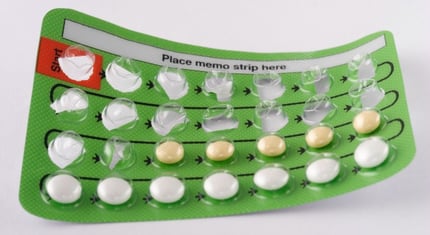
Anyone who’s taken the oral contraceptive pill, and read the paper insert inside the box, knows it’s associated with potential side effects. Some women experience psychological effects like mood changes, while others might encounter physical ones like nausea and breast tenderness.
Now, new research suggests there may be another side-effect to add to the list; this time, it’s related to the structure and function of the brain.
RELATED: Is there any truth to these contraception myths?
In a study published in Human Brain Mapping, a team of neuroscientists examined the brains of 90 women, 44 of whom were using oral contraceptives. Among those women in the latter group, two regions of the brain – the lateral orbitofrontal cortex and the posterior cigulate cortex – were thinner, although it wasn’t clear if this was a long-term effect or only lasted while the pill was being used.
As the lateral orbitofrontal cortex plays a role in the brain’s regulation of emotions, the study authors speculate their findings could explain why some users of the Pill experience side-effects tied to emotion and mood. (Post continues after gallery.)
Popular forms of birth control
Vaginal ring
Vaginal rings are soft plastic rings that contain the same two hormones as the combined pill - oestrogen and progestogen. The ring is inserted into the vagina, where the hormones are absorbed into the body and then prevent the ovaries from releasing eggs. Once inside the ring can't be felt, and it needs replacing every three weeks (with one week's break in between). When used correctly, this method is more than 99% effective.
Diaphragm
Like the male condom, the diaphragm is a barrier method of contraception. It's a shallow silicone dome that's inserted into the vagina andcovers the cervix, which is the entrance to the uterus. It's held in place by the pelvic muscles, and works by preventing sperm from entering the uterus. After sex, diaphragms need to remain in placefor another six hours, in which time the sperm inside the vagina die. This method is 88 to 94% effective at preventing pregnancy, although this rate increases with experience.
Contraceptive pill
The Pillis the most popular form of birth control. There are two types: the combined pill, containing two hormones, and theprogestogen-only, or mini, pill, which only contains one female hormone. The combined pill works by preventing the ovary from releasing an egg each month. The mini pill changes the mucus at the entrance of the uterus, which stops sperm from entering. Both are 99.7% effective; however, they don't offer protection from STDs.
Intrauterine device
IUDs are small, T-shaped devices that are inserted into the uterus by a doctor in order to prevent pregnancy. There are two types of IUD: copper, which affects the movement and survival of sperm in the womb while changing the lining of the womb;and hormonal, which releases progestogen (a synthetic version of the naturally-occurring hormone progesterone) into the uterus. Although IUDs have a success rate of more than 99%, only around 2% of Australian women currently use one.
Condoms
The male condom is a barrier contraception that prevents both pregnancy and the transmission of STDs. They work by collecting semen so it doesn't enter theman's partner's body. Condoms are 95 to 99% effective at preventing pregnancy.
The female condom
The female condom is a pre-lubricated sheath, which loosely fits inside of the vagina. The condom has a removable ring, which helps to insert the sheath and keep the condom in place. A larger ring remains on the outside to cover the opening of the vagina. They are designed to fit all women and can only to be used once. Due to misuse of the product it is only 79 per cent effective.
Birth control implant
This is a 4cm-longimplant that is inserted into a woman's upper arm, just under the skin, by a doctor. It releases a hormone called etonogestrel, which prevents ovulation and thickens the mucus in the cervix, which can stop sperm from entering. Contraceptive implants - usually sold as Implanon - are removed under anaesthetic every three years, and are close to 100% effective.
Depo Provera
Depo is a long lasting hormonal injection. The synthetic form of progesterone is administered every 12 to 14 weeks to woman, preventing pregnancy within this ongoing time period. The injection, which is given in the buttock or muscle of the upper arm, prevents ovulation and thickens the mucus in the cervix, helping to block sperm. The injections are 99 per cent effective but do not protect against STDs. Male contraceptive injections are currently being trialled
The morning after pill
Emergency contraception (popularly referred to as the morning after pill) is used to prevent a pregnancy following unprotected sex. Other reasons include missing a contraceptive pill or a condom breaking. It is common in Australia to use the progestogen-only method. This entails a dosage of EC pills containing progestogen or the synthetic version. A doctor can prescribe the pill or they can be bought over the counter at a pharmacy without a prescription. Emergency contraceptionis 85 per cent effective in reducing the risk of pregnancy.
Sterilisation
Sterilisation is a permanent form of contraception. For women there are two types of sterilisation: tubal ligation, in which clips are placed on the fallopian tubes, or tubal occlusion in which a device is inserted into the tubes. These methods work by preventing the sperm from reaching the egg. Tubal litigation is 99.5 per cent effective. The Vasectomy (for men) works by cutting and blocking the tubes called the vas deferens, preventing sperm from leaving the testicles. The chances of impregnation with a vasectomy are 1 in 1000.
“Some women experience negative emotional side effects from taking oral contraceptive pills, although the scientific findings investigating that have been mixed,” lead author Nicole Petersen explains to The Huffington Post.
“So it’s possible that this change in the lateral orbitofrontal cortex may be related to the emotional changes that some women experience when using birth control pills.”
The authors intend to continue their research so they can better understand the neurological effects of the synthetic hormones used in the contraceptive Pill; specifically, they hope to focus on emotional regulation and other behaviours that might be influenced.
RELATED: This is the second most popular contraceptive. And it’s very surprising.
Until then, don’t let this information turn you off the Pill. There’s a good reason it’s the most popular form of birth control in Australia and around the world – it’s both safe and highly effective, and in most cases, any side-effects experienced tend to be transient or short-lived.
Serious side-effects linked to the Pill, such as blood clots, are considered rare by health experts.
However, if you are experiencing ongoing or uncomfortable side effects from hormonal contraception, you don’t have to grit your teeth and stick it out. When it comes to choosing birth control, there’s no such thing as ‘one size fits all’ – a different brand of Pill, or another contraceptive altogether, might work better for you.
RELATED: These contraceptives might be more effective than you think.
“It’s worth talking to a doctor and maybe changing the formulation [of the hormones in your Pill], or choosing something different altogether,” Dr Deborah Bateson, Medical Director of Family Planning NSW, told The Glow.
“There are also contraceptives without hormones, of course, like the copper IUD. It’s important to know there are ways of tackling these side effects.”
History's worst contraceptives
Blacksmith water
Crocodile dung with honey
Fizzy Cola
Ground beaver testicles with moonshine.
Metal Thimbles
Onion Juice
Pig Intestines
Weasel testicles
Author
No Comments
Be the first to leave a comment