I had my first miscarriage in 1999, before the Internet. It was brutal in every way. Physically, I felt destroyed. At 19 weeks my body was preparing to welcome a baby. After she died inside me, after she was removed while I was under anaesthetic – I wince even now all these years later when I type the word ‘remove’ because it’s so brutally different from the way I’d wanted her to come into the world… to give birth to her… to hold her in my arms.
My empty arms.
The first thing I do when someone I know loses a baby is to tell them to go and buy a beautiful stuffed toy, something soft, and hold it, hug it. The maternal need to hold something after giving birth is primal. And so it can be after having that possibility snatched away from you. I was bleeding, just like after giving birth to a live baby. My stomach was swollen. I was hormonal.
And the milk. Nobody told me about the milk. As I stood in the shower, sobbing, the day after I’d had day surgery and said a tearful goodbye to my daughter while holding my stomach on the way into the operating theatre I was shocked to see milk mixing with the water and my tears on the floor. What the actual…
My body was confused. It wanted to hold a baby. It wanted to feed a baby. And I had… nothing. A cavernous empty hole in my heart where all my hopes and dreams for this baby had lived just a few days earlier.
There was nobody who understood. Oh they tried. They tried so hard. My husband. My mother and father. My best friend. They all tried to talk to me, to hug me, to console me. But I was unreachable. My grief was part bubble, part prison. I couldn’t escape from it and neither did I want to, frankly. All I wanted was to talk with and listen to other women who had experienced what I was going through. It was 1999 though, and I had no way to find them.
LISTEN: Monique Bowley opens up about her miscarriage on Mamamia Out Loud. Post continues below.
I went to bookshops, self-consciously standing in the health and self-help aisles, looking desperately for books about miscarriage. There were none. I had no friends who had experienced pregnancy loss. They were still in the trying-not-to-make-a-baby phase of their lives as was my sister in law. My other sister in law was pregnant. I couldn’t talk to her. My mum hadn’t been through it. I was alone and isolated by my tragedy and these feelings amplified the crushing sense of failure that so often accompanies pregnancy loss.
I’ve never forgotten how I felt in the aftermath of my miscarriage and it was fundamental in why I went on to createMamamiaeight years later… so that no matter what a woman was going through, she could find information and first-person stories from women who had been through it too. So she felt seen, understood, included, normal, reassured, safe.
Mamamialaunched our first annual Pregnancy Loss Awareness Week in 2016 (you can find all the content for that here) and we will be doing it again this year.
We have a closed Facebook group for women who have experience pregnancy loss ( you can find it here) and we have created a free e-book that anyone can download or send the link to a friend ( you can find that here).
Social media can feel so overwhelmingly full of perfect lives and impossible bodies that it’s so important to highlight people and places who are doing good things for women. When women share our stories and our experiences, we provide other women with a gift of spirit and generosity.
The Instagram account “ I Had A Miscarriage ” was created by Jessica Zucker, a Los Angeles-based psychologist specialising in women’s reproductive and maternal mental health. In her work, she’d spent a decade counselling women after pregnancy loss but until she lost her unborn daughter at 16 weeks back in 2012, she didn’t really understand the depth and magnitude of how it felt to lose a baby. She created the Instagram account “@Ihadamiscarriage ” and the hashtag #ihadamiscarriage.
Zucker’s miscarriage was during the second trimester of her second pregnancy and she delivered her baby at home alone. She had to cut the cord before she began haemorraging and was rushed to hospital by her husband where she had to have a dilation and curretage to remove the placenta and remnants of the pregnancy. Within a few hours she was back home. Not pregnant.
By telling her story and starting the Instagram account, Zucker told self.com that she wants to reach out to other women and help ease their feelings of guilt and shame – emotions that are so common and so isolating among women who have experienced pregnancy loss.
“By putting it out there in the world and sharing it with women globally, people then feel this sense of recognition and a robust community,” she says. “I don’t have to know you, because it’s social media, but I know those feelings so well. In so many of comments or messages people say, ‘I could have written this myself.’ Part of the point is to really show that we’re more similar than we think.”
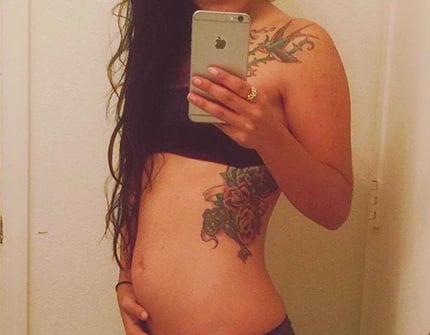
Anyone can contribute to the hashtag or the page. Here are some of the incredible photos and stories…
Mia Freedman
Co-Founder, Mamamia
No Comments
Be the first to leave a comment