If you want to support independent women's media, become a Mamamia subscriber . Get an all-access pass to everything we make, including exclusive podcasts, articles, videos and our exercise app, MOVE.
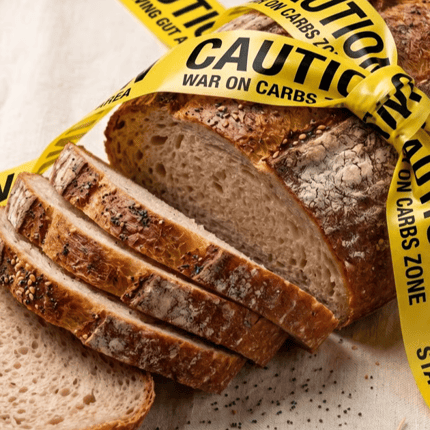
For the better part of a decade, the 'war on carbs' has had us convinced that grains are the enemy and protein is the only god worth worshipping.
But while we've been busy counting macros and dodging the bread basket, we've accidentally starved the very thing that keeps us running: our gut microbiome.
Cutting out grains and dodging the fructose in fruit makes you low- fibre. The 'carb phobia hangover' is real, and it's manifesting as sluggish digestion, erratic energy and gut flora diversity that looks more like a desert than a rainforest.
Few people understand the nuance of carbs better than Dr Alan Barclay. As a dietitian, nutritionist, and chef, he bridges the gap between complex nutritional science and what actually ends up on our forks.
And after chatting to him, it dawned on me that the number one source of fibre we aren't getting enough of isn't even related to wheat, not even a little bit, not even at all.
Watch: How to talk to your GP about clitoral health. Post continues below.

The 50-year "Carb Phobia" hangover.
"Robert Atkins thought that all carbohydrates were 'fattening'," Dr Barclay told Mamamia, recalling how his own mother refused to eat potatoes in the 70s because of the prevailing 'low-carb' Atkins Diet rage.
Then we swung into a 20-year obsession with low-fat diets in the 80s, which failed to make us healthier because we swapped fats for refined sugars and starches.
Fast-forward to the early 2010s, and we circled right back into a 'grain-free' obsession. Trends like Paleo and later Keto took that old-school Atkins fear and gave it a shiny "wellness" facelift.
"We've been in a dietary demonisation period of carbohydrates for a while now," Dr Barclay explained. The result? Our consumption has plummeted.
Currently, the average Australian eats 1.5 "serves" less than the daily minimum. In real-world terms, that's approximately a slice and a half of bread, three-quarters of a cup of cooked rice, or one and a half medium potatoes.
And according to the latest data, we are currently missing 2.8 serves a day of one of the most magical sources of fibre: the humble veggie.
To put that in perspective, that's like skipping a cup of salad, a half-cup of cooked broccoli and half a sweet potato every time the sun goes down.
Why your gut is actually "starving".
Your microbiome, that massive collection of bacteria, fungi and viruses living mostly in your large intestine, depends on fibre to survive.
Dr Barclay explained that fibre is the "preferred fuel" for these gut bugs. When they eat it, they convert it into short-chain fatty acids (SCFAs).
These aren't just byproducts; they are essential for keeping the lining of your bowel healthy and even for protecting your liver.
The consequences of a "starved" gut are becoming increasingly grim. Dr Barclay pointed to the rising rates of colorectal cancer in younger Australians as a major red flag.
"If you don't have enough fibre, you become constipated. Long term, that leads to diverticulosis, little pockets in the large bowel, which can then become inflamed (diverticulitis)," he warned.
He suggested that a high-protein, low-fibre diet is a dangerous combination, as undigested protein can sit in the bowel and ferment into byproducts that are far less friendly to our cells.
It's not just about the bread.
Dr Barclay gave some practical daily ways you can hit your fibre targets (25g a day for women and 30g for men) by focusing on these staples:
Fruit and vegetables: This is the non-negotiable number one. Aim for a minimum of two serves of fruit and five of veg. Yes, five serves of veg, not three!
One serving is half a cup of cooked green or orange veggies (like broccoli, spinach, or carrots), or one cup of raw leafy salad (like baby spinach or rocket).
Legumes: Three-quarters of a cup of cooked beans, lentils, chickpeas, or split peas. Dr Barclay noted that while some cultures eat these daily, Australians generally ignore them.
Nuts and seeds: A simple handful a day is a massive boost.
Whole grains: While the official guidelines suggest up to 6 serves for active adults a day, Dr Barclay suggests 4 serves is a great starting point to fix the "fibre gap" without feeling overwhelmed.
A single 'serve' of whole grains could be 1 slice of whole-grain bread, half a cup of cooked brown rice, whole-meal pasta, or quinoa, or half a cup of cooked oats. Aiming for four of these across your day is the magic number.
The "variety" factor: Aiming for 30 different foods a day (stay with me).
"The more varied your diet, the more varied your microbiome," he said. He suggested a Japanese-inspired guideline of 30 different foods a day.
While that sounded exhausting at first, he pointed out that a muesli with oats, fruit, nuts, and seeds could easily tick off ten items before you've even finished your morning coffee.
5 ways to fix your fibre gap (reclaiming your joy).
1. Stop steaming your life away. In the low-fat era, we were told to steam every vegetable until it was a sad, grey shadow of itself.
Dr Barclay urged us to bring back the flavour. "A vinaigrette-based dressing with olive oil is ideal," he said. The fats in the dressing actually help your body absorb the nutrients in the vegetables, making them more than just "roughage."
2. Embrace the "handful" rule. You don't need to weigh your food to get it right. Dr Barclay noted that a handful of grapes, a lady finger banana, or a handful of nuts are all easy ways to inch closer to that 25–30 g goal without needing a spreadsheet.
3. The 75% Rule. Dr Barclay pointed to the Mediterranean diet as the gold standard; it's not extreme. It's lower in carbs than the standard Western diet but high in healthy monounsaturated fats and seafood. It's about balance, not elimination.
4. Check the "Health Star" rating: While fibre isn't always listed on the back of the packet, it is a key factor used to calculate the Health Star Rating.
Dr Barclay explained that a higher rating is usually a reliable shorthand for better fibre content.
5. Legumes are the "secret" weapon. Three-quarters of a cup of legumes is a powerhouse serve of fibre. Toss some chickpeas or four bean mix in your salad or add lentils to your spaghetti bolognese, your gut bugs will throw a party.
Ultimately, Dr Barclay's message is that we need to stop treating food like the enemy.
"We've gone from one extreme to the other, thinking it will solve society's ills. It hasn't," he said.
"Enjoying your food is the best thing. It's not the enemy; it's an important part of our lives."
Life is far too short to live on chicken breast alone, and frankly, your gut bugs deserve a better menu.
Feature Image: Generated by Gemini AI.
Dr Alan Barclay is a practising dietitian, nutritionist and chef, with over 30 years' experience. You can connect with him on LinkedIn here .
Win a $1000 voucher!
We want to hear all your shopping secrets! Complete our 5 minute survey for a chance to win a gift voucher in our quarterly draw!
Take survey →Annaliese Todd
Lifestyle Producer
No Comments
Be the first to leave a comment