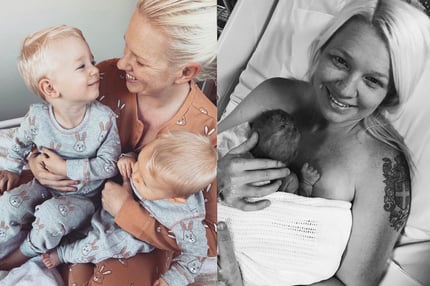
Children and germs. They go hand in hand. I learned that pretty quickly when I entered parenthood with my two boys.
Becoming a parent is many things. But being a full-time protector, regulator, manager, minimiser and security guard between your child and bacteria or viruses is just not realistic (no matter how hard I try with Archie and Arlo).
No one could have ever predicted the pandemic, and since it’s become part of our daily lives, we’ve all been busily sanitising hands and surfaces to repel harmful viruses and bacteria.
But not all bacteria are the bad guys. Many are actually on our side, working to support a healthy immune system. I wish I hadn’t spent so much time trying to avoid all bacteria and spent more time understanding them, really.
My youngest son Archie just this month contracted salmonella poisoning (parents: if you know, you know... it’s the worst). It’s only from this that I’ve come to learn through lots of late night research about the wondrous microbiome, an ecosystem of microbes that live on and in our bodies, that has a lifelong influence on your baby’s general health.
With two young kids under 2 years, it’s very easy to get into that autopilot mode where everything is just ticking along OK, then all of a sudden something happens to disrupt the natural order of routine. It’ll be kids getting sick (just when you had plans ha!) or falling out of tree (hello broken arm).
It’s only then that I stop and take the time to really consider, what else haven’t I been thinking about with the boys to keep on top of their health, or help them be as well as they can be as they keep growing?
It’s crazy to think I am here with my second child and I am only just learning about the microbiome, but I suspect I’m not at all alone. So here’s what you need to know to support your baby’s microbiome in their important first 1000 days earthside; from when your little one is first born until around age 2 or 3.
What is the microbiome?
The microbiome is a whole ecosystem of beneficial bacteria, viruses and fungi living on and in the human body.
The microbiome is as unique as a fingerprint, can weigh as much as the brain and influences many aspects of health including maintaining and supporting healthy digestive system function, immune system health and the digestion and assimilation of nutrients.
A healthy microbiome has large numbers (we’re talking trillions!) of many different strains of bacteria such asLactobacillusandBifidobacterium. While some aspects of the gut microbiome are inherited, its healthy development is mostly due to diet and lifestyle factors.
The best part is that as a parent, it gives us the opportunity to influence our child’s developing microbiome.
Why do the first 1000 days matter so much?
A growing body of evidence showed me the significance of establishing a healthy microbiome in the first 1000 days of their life.
Let’s face it, the first 1000 days of our kids’ lives are immense.
Our little miracles have grown from a tiny clump of cells to a performer of in utero gymnastics. They’ve taken their first breath, their first steps, and said their first word. They’ve learned how to hold a spoon, how to drag dirt from the front to the back of the house (such fun) and assert themselves by saying ‘No!’
Our beautiful and fascinating little ones will be a work in progress for a good while yet but one part of them is almost fully developed.
The microbiome reaches maturity in the toddler years, while your little one is still learning how to dress themselves and throwing tantrums because you cut their toast into squares not triangles.
Whilst those newborn days can be long, overwhelming and bit of a blur, we can definitely take comfort in knowing that those first 1000 days of them with us are a window of opportunity when we can help establish a strong foundation for their microbiome health.
(Don’t worry if you’re reading this thinking, I should have started sooner. That popped into my head first. But no: there’s actually no cut off date with that one. You can basically just start… now if you’re free?).
How can you support your child’s microbiome?
I found that Australian probiotic brand Life-Space had some really helpful tips for parents and parents-to-be. Here's what they suggest:
A healthy pregnancy
Pregnancy results in a natural change to your microbiome in the gut, vagina and oral cavity, including reduced bacterial diversity.
We’re still learning whether, how or to what extent you share your microbes with your unborn baby during pregnancy. It’s a pretty fascinating question and the subject of ongoing research.
We do know that some maternal factors like obesity, ongoing medical conditions and certain medications can influence the microbiome, so it’s important to stay as healthy as possible during pregnancy.
Birth
A recent landmark study of the newborn microbiome shows that the mode of birth significantly affects a baby’s microbiome.
Babies born vaginally gain many healthy microbes from their parent’s gut microbiome (not her vaginal microbes as previously thought). In contrast, babies born by C-section have fewer of those healthy microbes in their gut and more microbes from the hospital.
Ultimately, what matters most is a safe birth. If the baby was born by Caesarean, you can still influence a healthy microbiome through other means that might include breastfeeding and other diet or lifestyle choices.
Breastfeeding
Amy Jackson
Author
No Comments
Be the first to leave a comment