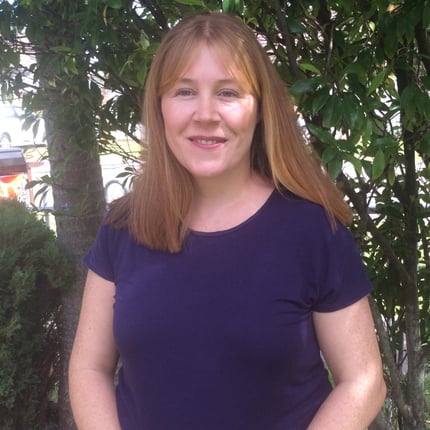
Sarah Ford was 39, healthy and fit. She doesn't smoke, doesn't drink and has no family history of heart disease.
She had no reason to think her life was at risk as she headed to her Monday night netball game.
It was muggy that evening and even muggier at the indoor netball courts. Sarah was playing centre and jumped for the ball when her vision "went wavy".
She felt as though she was going to pass out.
"I crouched for a minute and when I sat up, I was really dizzy, my vision was weird, and I couldn't catch my breath," she told Mamamia.
A friend told her she didn't look well, and she stepped off the court. She called her dad to pick her up — her husband was home with the kids — and when he and Sarah's mum arrived they noticed all the colour had drained from her face.
They drove her straight to the emergency room.
There, she says, nurses and junior doctors told her she was most likely dehydrated. They took a blood test and parked her in a chair. When they ended up keeping her overnight, she thought it was just a precaution.
It wasn't until medical staff woke her up in the middle of the night, hurrying around her bed to keep her alive, that Sarah learnt what really happened: she'd had a heart attack on the netball court and was about to have another.
"I knew something was wrong," Sarah said. "But it did not occur to me that I was having a heart attack."
It should have occurred to her nurses and doctors when she first arrived at the Emergency Department.
Watch: Well podcast hosts discuss the gender disparities in CPR and heart attack recognition. Post continues below.

As Sarah sat with her parents in the waiting room she was, as she would later find out, in the middle of a heart attack. One that she says lasted about an hour.
She was given some aspirin and a blood test. Her troponin levels — a marker that indicates trauma to the heart — came back higher than normal, Sarah said.
A second blood test came back even higher. She says she was told she was "probably fine" and would likely be sent home.
Sarah pushed back. The numbers were still climbing and, even without a medical background, she could see something wasn't adding up. She asked to stay.
At the same time, Sarah recalls seeing a man in his "mid to late 40s" who was brought in with the same symptoms. He was, in Sarah's words, "treated like a rock star" — surrounded by medical staff, emergency tests ordered without hesitation.
As for Sarah, medical staff were thinking of sending her home until they called a cardiologist, who advised that Sarah should be kept for monitoring as her troponin levels continued to rise.
By the time she had a third blood test, Sarah says her levels had skyrocketed.
It was at that point that she was admitted to the coronary care unit (CCU). Sarah was told she could shower, change into her pyjamas and get some rest. No one seemed concerned, Sarah said, so she thought she was probably fine.
She wasn't.
"They stopped me from having a second heart attack which would have been catastrophic," Sarah said.
"So had I gone home or stayed home that probably would have been it."
The next morning, Sarah had an angiogram which revealed that she had experienced a Spontaneous Coronary Artery Dissection, also known as SCAD, which is a life-threatening heart emergency where a tear suddenly forms in the wall of a coronary artery, according to The Heart Foundation.
The tear can restrict or completely block blood flow to the heart, causing a heart attack.
While a SCAD heart attack can occur at any age and also in men, those most at risk are women in their 40s and 50s, according to the Victor Chang Cardiac Research Institute.
Those who develop SCAD are also most often healthy individuals and don't present with the typical risk factors associated with heart disease like high blood pressure, diabetes or high cholesterol.
Because it most often occurs in people who are otherwise completely fit and healthy, it is vital that individuals and medical professionals are across the warning signs so that people, like Sarah, get the urgent care they need.
Those warning signs include chest pain or pressure, pain in the arms, shoulders, back or jaw, shortness of breath, unusual sweating, extreme tiredness, upset stomach, a rapid heartbeat and feeling dizzy, according to the Mayo Clinic.
Thankfully for Sarah, she did eventually get that care. She spent three days in hospital before being sent home with strict instructions: do virtually nothing.
No vacuuming, no driving, no carrying groceries. Anything that could strain her heart was off the table.
It sounds manageable in theory. But in practice, Sarah had a two-year-old and a five-year-old at home. At one point, she had to ask a neighbour for help carrying her sleeping toddler into her house.
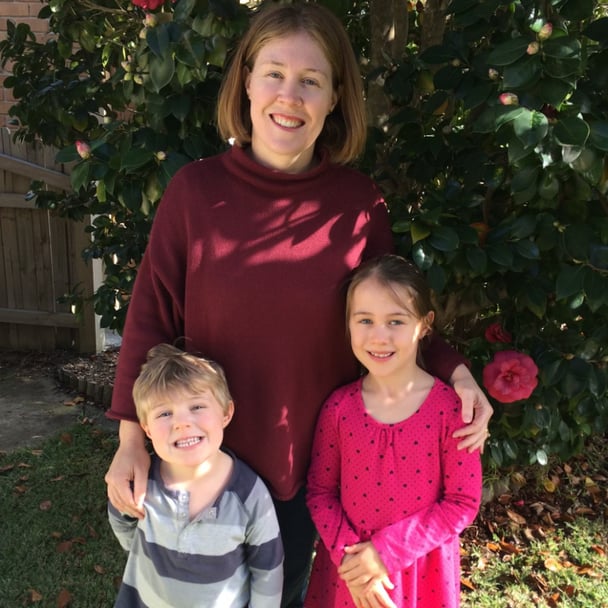
Six weeks later, a cardiologist confirmed that her tear had healed. The relief was coupled with the realisation that Sarah's SCAD heart attack forced her into a new reality. Sarah was told she would need to take precautions for the rest of her life. No hormonal treatments. No heavy lifting. No exercise that spikes her heart rate or puts pressure on her chest.
The netball games, the ease of carrying her child without a second thought, the physical life she had always known — gone.
"We joked that it was a career-ending injury which, for most people, is like a twisted ankle or a sore back and, for me, was a heart attack, which is very dramatic," Sarah said.
Eleven years on, Sarah knows everything she can about the condition but when she was first diagnosed, she had no idea what it was. At the time, she says she couldn't even find information about SCAD on the Heart Foundation Australia website.
After struggling with her own research, Sarah established SCAD Research Inc Australia — a charity dedicated to raising funds and awareness for the condition.
What started as small community walks, known as 5k SCADaddles, quickly spread across the country as others touched by SCAD got on board. Today the charity has partnered with Australian cardiology researchers and raised over $330,000 for SCAD research. Research that can make a big difference.
A newly-launched SCAD-ALIGN trial will, for the first time, directly compare two antiplatelet (blood-thinning) treatment strategies to determine which is safest and most effective for people with SCAD.
"SCAD is very different from a typical heart attack, and it does not affect typical heart‑attack patients," Professor Jason Kovacic, Director and CEO of the Victor Chang Cardiac Research Institute said.
"That mismatch means it's frequently overlooked, and patients may receive treatments that are not designed for their condition. While awareness has grown in recent years, evidence‑based treatments and guidelines are limited, which is why this trial is a critical step toward getting SCAD care right."
Listen to the Well podcast episode, recorded live, discussing why women are consistently told that pain is "part and parcel" of the female experience. Post continues below.
On top of raising funds and pushing for research, Sarah wants to make sure other women don't have to fight as hard as she did for her concerns to be heard. And she feels for those who have even more trouble advocating for their own health.
"I'm privileged and I found it hard. I was a white woman in my 30s, who's educated and has access to treatment, and it was still awful," she said.
"To not have the language to communicate what might be going wrong or to not have the physical access to a hospital. Some people who are like an hour, two hours away, that could be fatal at times, which is horrifying."
Sarah knows she is lucky that her parents were concerned enough to take her to the hospital.
"If my parents hadn't seen my colour and taken me to the Emergency that second heart attack would have killed me for sure," Sarah said.
She says it's always better to go to the hospital and risk feeling "dramatic" than to ignore symptoms that could be serious.
Feature image: Supplied.
Win a $1000 voucher!
We want to hear about how you prioritise your mental health. Complete our 8 minute survey for a chance to win a gift voucher in our quarterly draw!
Take survey →Gabrielle Oehlmann
Author
No Comments
Be the first to leave a comment