If you want to support independent women's media, become a Mamamia subscriber . Get an all-access pass to everything we make, including exclusive podcasts, articles, videos and our exercise app, MOVE.
I had my first heart attack at 31. I know that now.
At the time, no one knew.
Not me, not the emergency department, not the cardiologists who treated me during the five nights I spent in hospital afterwards.
They diagnosed me with myocarditis and pericarditis and sent me home.
Watch: An expert explains why being a woman is a risk factor for pain. Post continues below.

One cardiologist told me, "you're too young to be here".
She was right about that. But she was wrong about what put me there.
It took two more years, a second cardiac event on the other side of the world, and emergency surgery for anyone to realise what had really happened: a rare heart attack called SCAD, Spontaneous Coronary Artery Dissection. It's the leading cause of heart attacks in women under 50.
It disproportionately affects young, otherwise healthy women. But almost nobody has heard of it.
The medical system isn't the only reason it was missed. I didn't believe it either. It didn't match anything I thought I knew. Not what a heart attack looks like. Not what it feels like.
Not who it happens to.
It started at a yoga class. Right at the beginning, I felt a sharp pain between my shoulder blades. Then heat. Then nausea and dizziness.
One second I was on my mat, and the next I was grabbing my stuff and leaving the studio.
Outside, I couldn't stay upright. I lay down on the pavement. I called my partner, crying, and asked him to come get me.
He got there quickly. He was worried. I could see that. But I couldn't tell him what was wrong, because I didn't know. All I knew was that I was lying on the ground outside a yoga studio on a Tuesday night, crying. Five minutes ago, I was fine.
He asked if I wanted to go to the emergency department. I said no. I just wanted to go home.
I sat on the shower floor, letting the cold water hit my back. I wanted the burning feeling to stop. After a while, it eased. I went to bed and told myself it was nothing serious.
I'd already diagnosed myself. I've had reflux issues my whole life. Heartburn is familiar.
Indigestion is familiar. So I took antacids and told myself this was just a new, worse version of the same old problem.
The next morning, I saw my GP. I asked for a gastroenterologist referral. He listened, agreed, and then he did something that annoyed me at the time: he didn't treat it as purely a gut problem.
He ordered an urgent troponin test, "just to rule out anything heart-related".
I did the blood test. I wanted the referral, and I wanted to move on.
Not long after, the phone rang.
A woman from pathology got straight to it. "Your troponin is extremely high. We think you've had a serious cardiac event. You need to call an ambulance immediately."
She told me she was contacting the nearest emergency department in Brisbane and sending my results ahead.
I told her I would call an ambulance right away.
We hung up.
And then I didn't.
I stood there in my apartment thinking: there's nothing wrong with my heart. What would I even say? Hi, I'm having a heart attack, but I can stand up. I can walk. I can take my dog outside.
So that's what I did. I took my dog out for a quick toilet break. Then I ordered an Uber to the emergency department.
I wasn't calling an ambulance for this. I'd made enough of a scene already.
I was 31. No family history of heart disease. No diabetes. Not obese. Active. Non-smoker.
None of the common risk factors applied to me. Except stress.
Was I guilty of stressing too much? Oh yeah, no doubt. But a heart attack? Please.
At the hospital, I walked up to the triage window and gave them my name. The nurse repeated it back to me, disappeared, and less than a minute later, the doors opened.
She reappeared with two other staff and a gurney. Pathology had called ahead. They'd been expecting me, probably by ambulance, not on foot from the drop-off zone.
They wheeled me straight inside. Cut my shirt open and attached electrodes for an ECG.
I smiled in that confused, polite way you do when something feels ridiculous, but you don't want to be difficult.
The doctor's eyes met mine. She asked if I had taken any drugs. Alcohol. Anything.
"No," I said, and the smile fell off my face.
They did an ultrasound. "It's not a heart attack," the doctor said. "But something has happened to your heart. Troponin doesn't go this high for no reason."
I ended up staying in the hospital for five nights. The answer they landed on was myocarditis and pericarditis. I went home with steroids, anti-inflammatories, and the quiet relief that I could go back to my life as if nothing had happened.
I believed that answer for two years. Long enough for it to become part of my medical history. Long enough that I never questioned it — it fit perfectly with what I already believed: that nothing was wrong with my heart.
When I thought back to the night outside the yoga studio, I cringed, embarrassed by how much of a scene I'd made over something that turned out not to be a big deal.
Listen: Here's how constant phone use can affect both our mental and physical well-being — and what you can do to build healthier habits. Post continues below.
Then, on my 33rd birthday in Sweden, the same pain came back.
This time, it nearly killed me.
Emergency surgery, a cardiac arrest on the operating table, and a diagnosis that rewrote the whole story: SCAD. The first event had been a heart attack all along.
I think about the version of me who stood in her apartment, listened to someone telling her she'd had a cardiac event, and took her dog out instead of calling an ambulance.
I don't blame her. Nothing about what she was feeling fit the version of a heart attack she had in her head.
So she did what women are trained to do: minimise, apologise, perform okay, don't be difficult, don't be dramatic.
And she was good at it. She convinced her partner on the pavement. She convinced herself on the shower floor. She convinced the pathologist she'd call an ambulance.
The doctors missed my heart attack. But by the time I got to them, I'd already made their job easier. I'd talked myself out of my own emergency before anyone else could.
I arrived smiling. Apologising. Already convinced I was wasting their time.
I was so good at making myself so small, so agreeable, so convincingly fine, that everyone believed me.
Maybe it was just indigestion. Maybe I was dying. Hard to tell at 31.
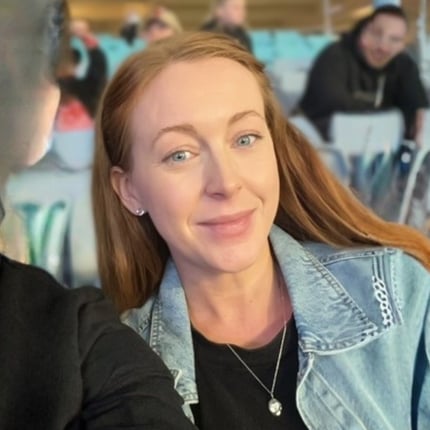
Feature Image: Supplied.
Calling all past 3 months retail shoppers!
Complete our survey for a chance to win a $1,000 gift voucher in our quarterly draw!
Take survey →Elin Nilsson
Author
No Comments
Be the first to leave a comment