If you want to support independent women's media, become a Mamamia subscriber . Get an all-access pass to everything we make, including exclusive podcasts, articles, videos and our exercise app, MOVE.
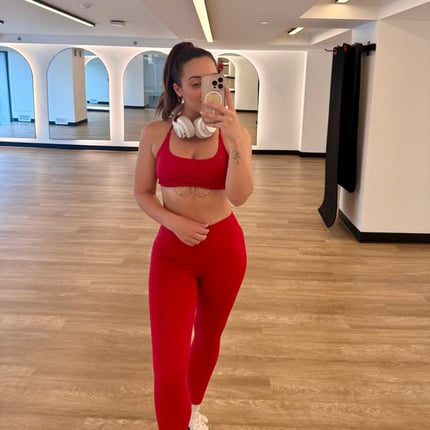
For most of my life, my relationship with exercise has been… dramatic.
I have only ever known two speeds: elite athlete or woman lying horizontally on the couch wondering if walking to the fridge counts as cardio. There has never really ever been a middle ground.
As a teenager, movement was easy. I danced a few times a week, sometimes more. I spent hours in studios with mirrored walls and sticky floors and teachers yelling counts over music. Back then, it didn't feel like exercise. It was just something I did, like going to school or hanging at the mall with my friends.
Watch: Why exercise is the drug doctors never prescribe. Post continues below.

Then adulthood arrived and, as it tends to do, dismantled that routine.
Between university and work and life, the dancing stopped and, without really noticing when or how, movement just… disappeared. I never really thought about it much (I was still in my 20s, after all), but then my marriage broke down and my entire life felt like someone had picked it up, shaken it violently and tipped the contents out onto the floor.
Enter: bodybuilding. Which doesn't sound like the kind of thing that enters your life completely by accident, but is exactly what happened to me.
My mum had hired a personal trainer and thought maybe joining her sessions might help me. Give me something to focus on. Something to rebuild my confidence. Something, to be quite honest, to simply get me out of the house.
At that stage, I would have agreed to anything that promised to make me feel slightly less emotionally feral, so I said yes.
The first week of training nearly ended me. On day one, my new trainer had handed me a meal plan and exercise routine and by the next morning, I was calling mum in tears.
"I cannot do this," I sobbed. "This is not sustainable for a human being."
But somehow, I did it anyway. And slowly, things started to change. I got stronger, I started feeling proud of my body in a way I hadn't before and most importantly, I had structure, which at the time, was what my brain so desperately needed.
A few months later, my trainer asked a question that would send my life down a very specific rabbit hole: "Have you ever thought about competing?"
The bodybuilding league was small. Friendly. Slightly chaotic in the way that niche sporting communities often are. And the idea of standing on stage in a sparkly pink bikini after months of hard work sounded, frankly, kind of fabulous.
So, I said yes.
What I didn't realise at the time is that bodybuilding prep isn't something you just casually add to your life. It becomes your life.
This was not a "three workouts a week" situation. Competition prep is a full-time commitment. Your meals are weighed and timed. Your workouts are long and structured. Cardio is mandatory. Steps are counted. Everything revolves around it.
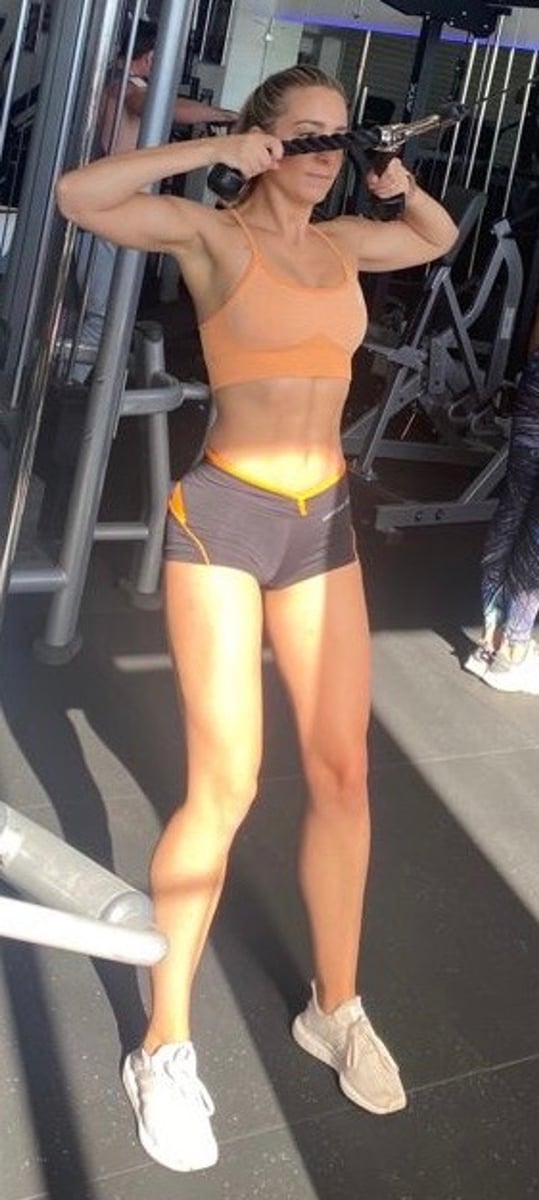
My days became a blur of work, training and meal prep. Ten-hour work days. Straight to the gym for two or three hours. Dinner at 10pm. Alarm at 6am for cardio.
It was exhausting.
But when I finally stepped on stage, under the lights (and yes, with the full-on tan), it felt worth it. I was proud. Really proud. And like most adrenaline-heavy experiences, it was also extremely addictive.
After my first competition, I was told to take a week off.
One week became two. Two weeks became a month. And when I decided I wanted to compete again, it felt like I had slid all the way back to the beginning.
So, naturally, my solution was to go even harder.
Another show. Then another. And another.
Eventually, I earned my professional athlete status and even won my first pro show. On paper, it looked incredible. I was in the best physical shape of my life. My confidence was sky-high.
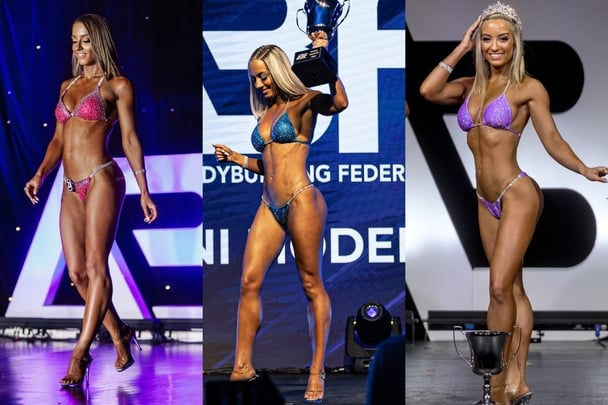
But by that point, I was also completely burnt out. And when I stopped competing, I genuinely had no idea what " normal exercise" was meant to look like.
Someone suggesting I go for a walk felt borderline insulting. Compared to my old routine — hours of weights, strict diets, relentless cardio — a Pilates class or a casual workout in the gym felt pointless.
My brain had quietly adopted a rule: if it's not intense, it doesn't count.
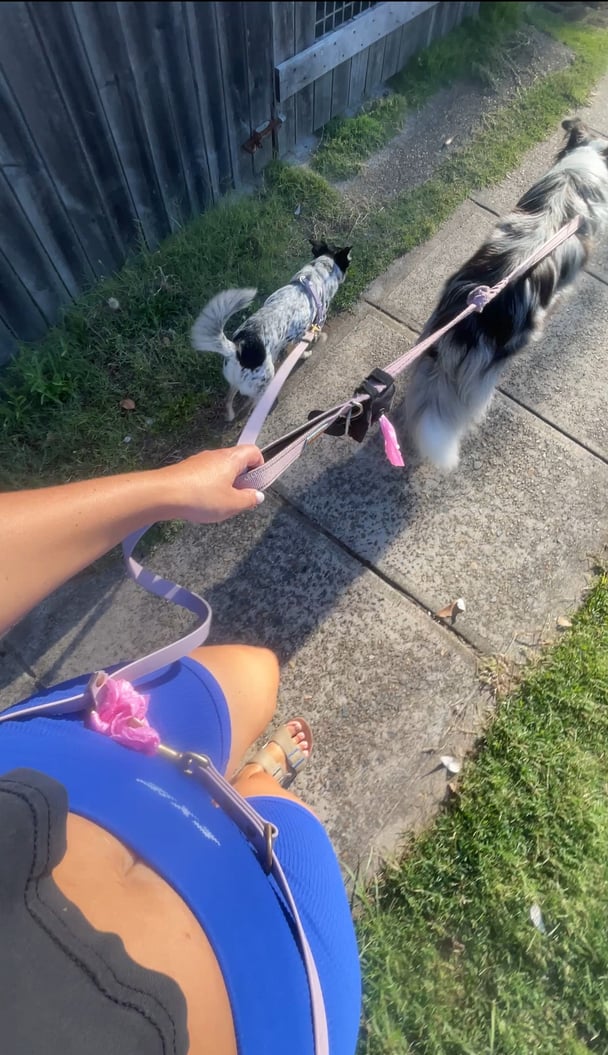
For a while, I drifted. Walking my dogs, doing the occasional class, but always constantly feeling like I wasn't doing "enough."
Then, another breakup happened — because apparently, emotional chaos is my body's preferred catalyst for lifestyle change — and this time, something shifted.
Exercise stopped being about how I looked or what I could achieve. There was no competition, no coach monitoring my progress, and no one telling me what I should be doing.
For the first time in years, movement became something I did purely because it made me feel better.
I still avoided gyms for a while. Walking back into that environment felt intimidating. I'd wander around, doing random sets of things, slightly overwhelmed by the little voice in my head saying, 'remember when you used to be a professional bodybuilder?'.
Slowly, I started noticing something. Every time I moved my body, even just a little, my brain felt calmer. The fog lifted. My mood improved. I slept a little better.
I had finally learnt what exercise physiology has been telling us for years: it doesn't actually have to be intense to work. In other words, your body benefits even if you're not pushing it to its limits.
Which feels wildly obvious now, but was a genuinely revolutionary concept for someone who once believed a workout only counted if it involved suffering and three-to-four days of struggling to walk afterwards.
Funnily enough, just as I was finally starting to rebuild a strength routine again and reacquaint myself with the gym, life threw in another plot twist: I got pregnant. Suddenly, the goal shifted from "get stronger" to "get through the day without vomiting."
These days, exercise looks different once again.
Sometimes it's a walk. Sometimes it's a swim or a gentle workout or some stretching. Sometimes it's simply accepting that today is not a movement day and that is also fine.
And weirdly, I feel more relaxed about exercise than I ever have before. Throughout my whole chaotic relationship with fitness, I have learnt this: movement does not need to be extreme to matter.
Different phases of life call for different approaches. What worked as a teenager doesn't work now. And what was possible when I was single definitely will not work with a newborn.
But the core truth remains the same: I feel better when I move.
Sometimes, that movement is big. Sometimes, it's small.
And both count just the same.
Listen: Mamamia's health and wellness podcast, Well, asks if you can you actually "reset" your brain chemicals with a five-minute walk.
Feature image: Supplied.
Well, Mamamia's health brand for women is shaped by the health experiences of women just like you. Sign up to the Well newsletter to receive your weekly dose of trusted health expertise without the medical jargon, ask a question or share your story.

Calling all women!
We want to hear about your health, fitness, and wellness journey! Complete our quick 3-minute survey for a chance to win a $1,000 gift voucher in our quarterly draw!
Take survey →
Sign up to Mamamia Daily
Sent daily
Jessica Clark
Food and Travel Editor
No Comments
Be the first to leave a comment