Want to support independent women's media? Become a Mamamia subscriber and get an all-access pass to everything we make, including exclusive podcasts, articles, videos and our exercise app, MOVE.
"Not being able to feed your child hits differently."
This is the reality Tracey Jewel — Married At First Sight alum and now passionate advocate for parents of neurodivergent children — shares with Mamamia.
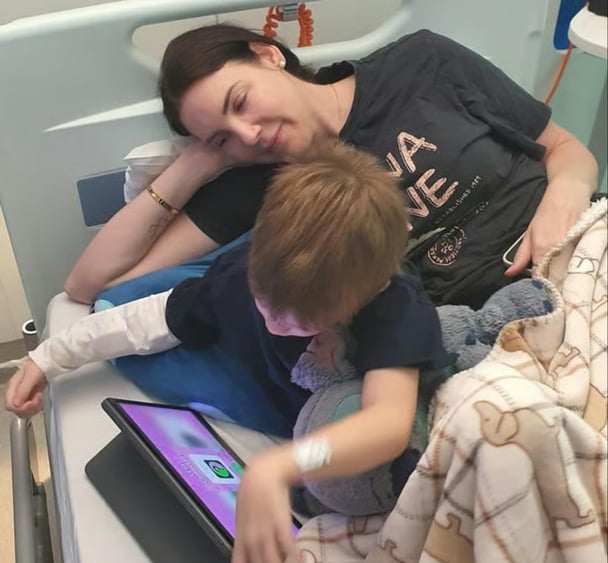
She wrote to us as her son Frankie sat in a hospital bed, hooked up to a feeding tube, while celebrating his fifth birthday.
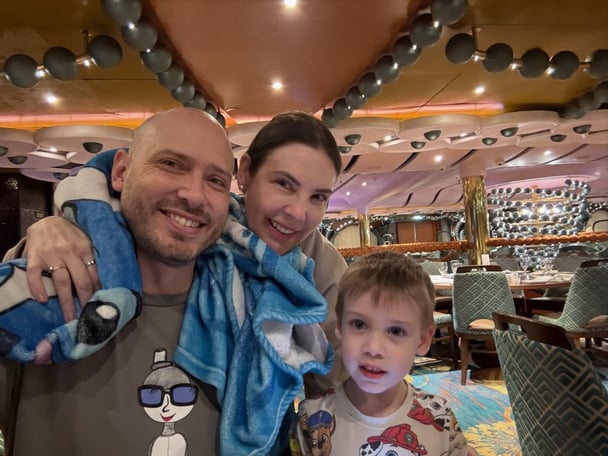
It's not what she envisioned when she found out she was expecting a child with her husband, Nathan Constable.
Yet, it's a battle she fights every day, to get Frankie the nutrition he needs to stay healthy.
It hasn't always been this way.
Listen: Chloé Hayden on the cost of being an advocate for neurodivergence.
At first, it was just that Frankie wasn't meeting his milestones. Then at three-and-a-half years old, the diagnosis came.
Frankie was diagnosed with Level 2–3 autism, meaning he struggles with transitions, sensory needs (things are too bright or too noisy) and needs routines to manage high anxiety.
"From the age of two, we noticed his speech wasn't developing, and it was difficult to get him to eat. We ruled out hearing issues with grommets, eating issues with tonsil removal and teeth surgery, and still his speech wasn't developing," Tracey shared on social media.
"He doesn't like to be changed, washed or hugged, which makes daily life difficult," she added. "I'm so grateful to be his mummy, despite the challenges we face together as we navigate this path.
"He lights up my world every day."
Frankie would later be diagnosed with Avoidant Restrictive Food Intake Disorder (ARFID), which can go hand-in-hand with autism. On the surface, it might sound like fussy eating, but parents of children with ARFID will tell you it's anything but.
"ARFID is not picky or fussy eating," Tracey tells Mamamia. "Food is scary and unsafe and unpredictable."
She adds, "He will cry and tell us he is hungry… sometimes he will even tell us what he wants to eat, but when it's in front of him, he can only tolerate a bite or two.
"[He says] it's 'not fresh' or 'doesn't look right.'"
Watch: What life is like with Autism spectrum disorder. Post continues below.
Tracey is all-consumed with thinking about Frankie's food intake.
Every calorie is measured.
She has to make the right safe-foods, presented the right way, six times a day or more, only for them to be nibbled at or thrown out.
Because ARFID intersects with the sensory issues of autism, sometimes Tracey has to prepare the same meal multiple times to alay Frankie's food fear.
It's a burden she's happy to carry, but recently, his avoidance spiralled further.
Over the summer holidays, she watched her son begin to slip.
"Frankie started really regressing in his eating," she explains. "The safe foods that he once ate, he started rejecting, or only having a bite or nibble.
"The emotional and mental worry, and pressure I feel to get Frankie to eat takes its toll, and I know Frankie can feel it too, which leads to a circle of him wanting to eat less."
Right now, crêpes are one of Frankie's very small number of safe foods, and Tracey has to make them two to three times for him to consider eating them.
Alongside crêpes he accepts vegemite toast, strawberry wafers and fruit bars. Roast chicken and pasta or rice have variable responses.
But the regression isn't just about food.
"He became more and more fatigued and disinterested. He didn't want to play or go out," Tracey explained.
When his BMI began dropping to dangerous levels, Frankie was referred to hospital where he was placed on a nasogastric tube, a thin, flexible tube inserted through the nose to deliver food, hydration and medication directly into the stomach.
Tracey said it's been a big relief for the whole family to not have to worry about Frankie getting the nutrition he needs.
"Today… is the most alert and awake I have seen him in months," she explains. "Now he's being nourished… he will start to feel better to engage in life.
"It's going to be a long road."
Since our interview, Frankie has been released from hospital with the tube insitu, but he has pulled it out twice requiring two further admissions.
As a mother of a neurodivergent child, Tracey is worried about the trauma of having to visit hospital repetitively. However, she says she felt very supported by the hospital staff, especially as Frankie celebrated his birthday.
"The nurses decorated his room and he got presents from Captain Starlight and played Mario Kart all day! He had the best day ever!" she tells us. "Me, on the other hand? I still feel the grief… wishing it was different.
"Frankie won't blow out candles or eat a birthday cake… and I need to reconcile that."
When asked what this journey has been like, Tracey has one word.
"Endless."
"It's a moving journey with ups and downs. It's also hard to implement what the therapists tell us to do. Plus, therapy is hard when you're exhausted and busy," she says.
"But what else can I do? I will do anything for Frankie to help him."
Despite ARFID being a recognised condition, Tracey has had to fight hard to get Frankie properly diagnosed.
"I've been advocating and pushing a LOT for a long time," she says. "Medical support is piecemeal, and it's up to me to find the answers and support.
"There's been a lot of passing the buck — blaming the autism, saying it's just anxiety, or pointing to ENT issues — rather than looking at this as a complex, holistic situation."
Tracey says she's seen it again with the nasogastric tube.
Some experts already wanted to remove the tube, while it's her belief that Frankie needs the support until he can eat enough orally to sustain himself.
She's real about the reality of this life and its impact on her wellbeing and relationships. When asked about how she's adjusted, she answers honestly, "Lol. Not well."
"Today I've had to reduce my hours even more than they were, take a few weeks off work entirely and say no to some commitments I had."
She's even postponed her PhD. But despite the sacrifice, she describes her son as, "the greatest gift."
"He is the reason I have gone into not-for-profit social impact and advocacy work. Last year, I graduated with a post grad in social impact and got accepted onto a PhD pathway and totally changed careers. It's all because of him and for him."
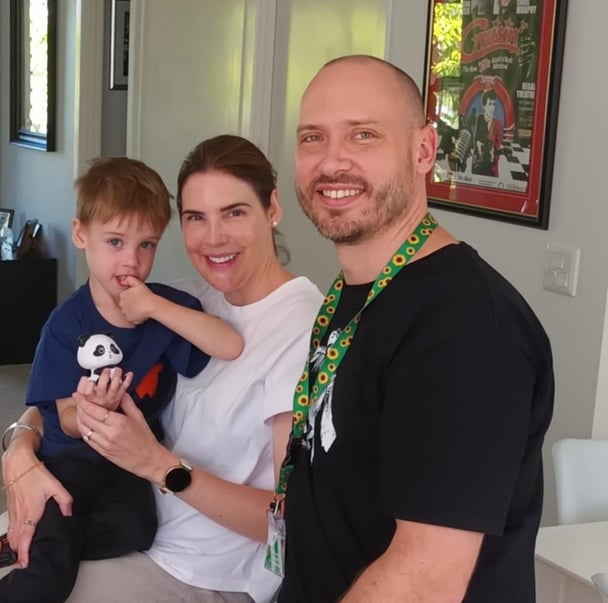
Her husband has also scaled back work from four days to two days, and she says he is nothing but "amazing" to her and Frankie.
"He sleeps next to Frankie every night. He does a lot of the physical stuff while I do a lot of the mental, emotional and logistical planning for our family. We are a great team," she says.
It's not easy. There are no date nights now. They're like passing ships, revolving around Frankie and his needs.
"But we accept that. Embrace it even," she tells us. "That's what family is now."
Tracey wants other mums of children with neurodivergence to feel seen. She has started the Inclusive Mamas Club, to offer peer support to other mums.
If there are mums out there who are worried about their child's food intake, she says to just focus on keeping track.
"Start writing a journal of your concerns. A food diary of what is happening around food with your child," she counsels.
"Seek an allied health professional, a dietitian or feeding therapist with ARFID or neurodivergence experience."
And mostly, seek your village.
"I feel so isolated and alone at times. Living this life is very lonely," she explains. "It's too hard or tiring to go out and catch up with friends and Frankie is pretty much home-or school-bound right now, so that's how I can stay connected.
"If a mum is following me and going on the same journey, or is worried about her child eating, I want her to know there are others of us out there – doing this often invisible work."
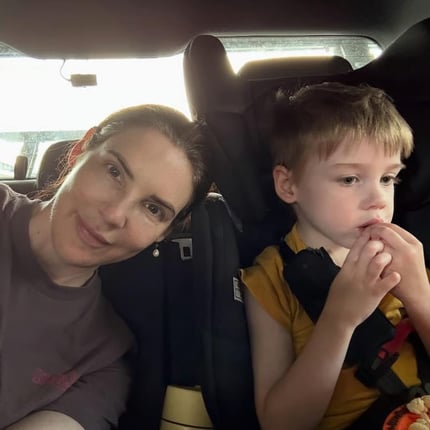
Featured image: Tracey Jewel.
Calling all past 3 months retail shoppers!
Complete our survey for a chance to win a $1,000 gift voucher in our quarterly draw!
Take survey →
Sign up to Mamamia Daily
Sent daily
Cassandra Green
Acting Deputy Editor
No Comments
Be the first to leave a comment