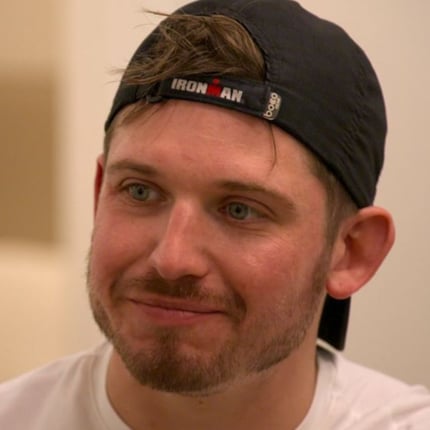
There was a time when hearing a man talk about his boundaries or emotional capacity felt like progress.
We spent decades begging for a generation of men who didn't view vulnerability as a weakness, but in 2026, we've entered a new era.
The era of weaponised therapy speak.
From the pods of Love Is Blind to the dinner parties of MAFS, reality TV has become a masterclass in how to use the vocabulary of healing to inflict maximum psychological damage.
Now no one is 'being a jerk'. They're just 'honouring their truth' while quietly dismantling someone else's
Watch: An unpopular opinion about MAFS' Tyson | Mamamia Out Loud. Article continues after video.

Take this year's season of Love Is Blind.
When Chris sat Jessica down to deliver what can only be described as a verbal wrecking ball, he did so under the guise of radical honesty.
"Just to be totally honest, and without sounding f**king d**khead," he began.
He then went on to list off the reasons why she wasn't his usual type of "crossfit" girl and how her body was not what he would usually go for.
'Just to be totally honest.'
Four words that should feel reassuring, but on reality TV, so often precede some sort of verbal assassination.
By fixating on his own need to 'be honest,' Chris sidestepped the real impact his words had on her.
In our modern world, it seems if you express a toxic thought but wrap it up in therapy speak, it is suddenly framed as 'beyond reproach'.
It's the ultimate loophole.
A person can be casually cruel while claiming they're being 'vulnerable'. It's a monologue designed to protect the speaker from the consequences of their own behaviour.
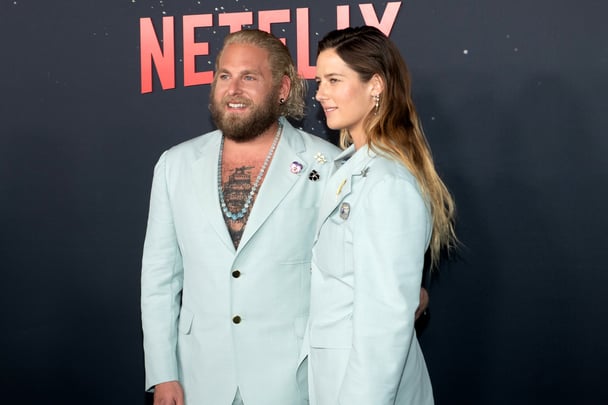
We cannot discuss this trend without acknowledging the 'Jonah Hill text saga' of 2023.
Hill's former girlfriend, professional surfer Sarah Brady, accused him of using clinical language — terms like 'boundaries' and 'triggers' — to emotionally manipulate her.
She released a series of texts she claims Hill sent, which appeared to dictate who she could interact with and what she should wear. Hill did not publicly comment on the allegations.
It was a turning point in pop culture.
The conversation shifted to recognise that 'protecting your boundaries' can sometimes dismantle someone else's walls.
While the 'therapy speakers' may seem enlightened, it's often the other party who is left to pick up the pieces.
Over on Married at First Sight, the phenomenon takes a slightly different shape.
In past seasons, words like 'gaslighting' have been thrown around so frequently they've almost lost their meaning.
Sometimes they're genuinely calling out toxic behavior. Other times, therapy speakers wield it as a weapon, making a partner's reaction to their own lies or inconsistencies look overblown.
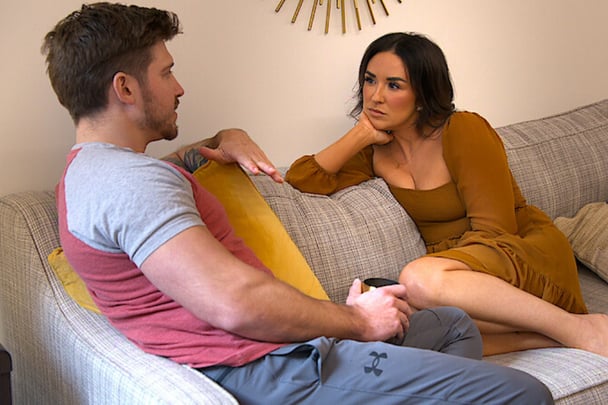
It reminds me of Ryan from last season. Both he and Jacqui had their fair share of issues, but there were moments when listening to him speak to her felt like hearing someone lecture from a pedestal.
"For me, as a man, I've done a lot of work. I'll compromise when it helps us as a team, but when it comes to expressing myself, no way," he said. "We're just on two different maturity levels."
Therapy and self-improvement have become a linguistic shield. If you can frame a disagreement in these terms, you win by default because the other person looks irrational.
If someone reacts to your lies, you're a villain. But if you tell them they're "gaslighting your lived experience," you sound like the one who's done the work.

The reason this trend is more insidious than old-school chauvinism is that it is designed to make the victim feel like the problem.
When someone uses therapy speak in a toxic way, it invalidates the victim's reaction. It suggests that any pushback is a violation of the speaker's safe space.
It creates a false moral high ground where the speaker appears evolved while the victim appears messy.
The pods and the altars of reality TV have shown us that knowing the difference between 'a trigger' and 'an insecurity' isn't always a green flag.
In fact, if he is using those words to justify being a nightmare, it is the biggest red flag of all.
True communication is about empathy, which is something that no amount of clinical vocabulary can ever manufacture.
Feature Image: Netflix.
Calling all skincare lovers!
Complete our 3 minute survey for a chance to win a $1,000 gift voucher in our quarterly draw!
Take survey →Chelsea Hui
Entertainment Producer
No Comments
Be the first to leave a comment