Become a Mamamia subscriber today and save 30%. By supporting independent women's media, you get an all-access pass to everything we make, including exclusive podcasts, articles, videos and our exercise app, MOVE. Offer ends June 30.
Imagine millions of microscopic, serrated blades sliding down your throat every single day, slicing into the delicate lining of your stomach and lungs.
It sounds like something from a sci-fi thriller, but experts warn it is the invisible reality of modern life.
"These microplastics — or we might like to think of as 'micro knives' — have got little serrated edges on them," explained environmental chemist Dr Paul Harvey on a recent episode of Mamamia's WELL podcast.
"When we ingest them or when we breathe them in, those little serrated edges cause scrapes and scratches and damage to our internal tissues."
The conversation has officially shifted from the health of our planet to the physical health of our own guts. But once you look at the data, it becomes impossible to unsee.
Watch: What microplastics are actually doing to our bodies on WELL. Post continues below.

The slow build.
We've all heard the claim that we ingest "a credit card's worth of plastic" every single week.
While the exact mass is frequently debated, the long-term presence of these materials in our bodies is undeniable.
"It's a terrifying thought that for decades, every sip of bottled water or cup of tea has been depositing microscopic shards of plastic into our bodies," host Grace Rouvray noted.
As women's health GP Dr Mariam explained, microplastics are defined as tiny synthetic particles measuring less than five millimetres.
"They come from the breakdown of bigger plastics, and we are consuming them. Full stop," she said.
"Through our food, our water. And that's not me being an alarmist. That's just where science is at the moment."
The hormone problem.
The danger of these tiny particles is twofold: physical and chemical.
Dr Mariam admitted that even as a medical professional, she is not immune to the sudden realisation of exposure.
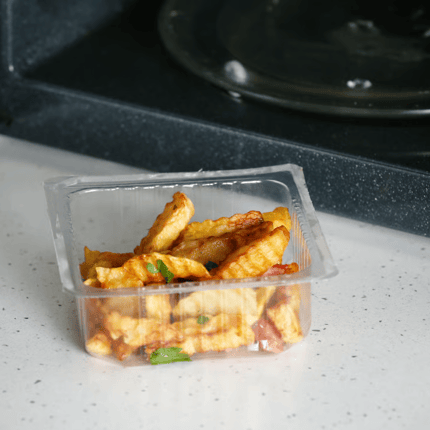
She recalled sitting in her kitchen, heating three-day-old take-out in its original packaging, before catching herself and immediately moving the food to a glass dish.
As a women's health GP, Dr Mariam's concern is 'endocrine disruption.' When microplastics enter our digestive system, they leach chemicals that actively interfere with our natural hormones.
Dr Harvey explained that our bodies are essentially being tricked by the molecular structure of these synthetic chemicals.
When our digestive tract works to absorb nutrients, it struggles to differentiate between genuine sustenance and toxic plastic additives.
"These chemicals look chemically similar to the good nutrients that our body wants. It goes, 'Oh, I've got some of that. Let me have that.' It takes it in, and then it distributes it around," Dr Harvey said.
For women, whose health is governed by highly sensitive, fluctuating hormonal balances, this internal chemical mimicry carries unique risks.
Listen to the full conversation on WELL. Post continues below.
Do you need to overhaul your kitchen?
Given the stakes, the instinctual reaction might be to strip your kitchen bare and throw out every container.
However, the experts agree that a total lifestyle overhaul is not realistic, and the resulting anxiety might actually do more harm to your gut than the plastic itself.
Food and nutrition scientist Dr Emma Beckett urged people to embrace 'plastic with purpose' rather than striving for an impossible plastic-free ideal.
"If we take those plastics away, we do lose something," Dr Beckett explained.
"We lose things like food safety aspects of plastic packaging. We lose accessibility, safety, and longevity aspects."
Dr Beckett also pointed out that stressing over absolute purity backfires biologically.
"It's wild to me how many people are stressing about gut health, because stress is definitely not going to have a good impact on our guts," she said.
This collective anxiety has also birthed plenty of viral internet fixes. Grace highlighted a popular social media trend claiming that fermented drinks like kombucha can actively 'flush' microplastics from your system.
According to Dr Harvey, the trend should not be written off entirely, but the underlying science is widely misunderstood.
Kombucha can't physically remove plastic fragments. But because plastic exposure causes inflammation and disrupts the gut microbiome, the good bacteria in fermented drinks can help repair the damaged environment.
"If you're having an issue with your gut microbiome because of the presence of plastics, then anything that promotes good gut bacteria may help," Dr Harvey noted.
The 3 simple swaps worth making.
The official advice is to exercise caution without giving in to dread. You don't need to throw out everything you own.
Instead, Dr Harvey recommends focusing on a few high-impact changes to lower your daily exposure.
Ditch plastic cooking utensils. Dr Harvey strongly advises against using plastic spatulas or spoons on high heat.
"You end up with half your utensil gone and wonder, where did that go? That's what's in your food," he warned. Swap them for wood or stainless steel.
Change your water habits. Instead of routinely buying bottled water, switch to regular or filtered tap water. Not only is it better for sustainability, but it's also better for your gut. Dr Harvey explained that plastic naturally sheds particles easily, especially when subjected to friction or movement. Meaning bottled water is highly susceptible to contamination because of the container it is stored in.
Prioritise whole foods. Dr Harvey warned that "almost every food item" you buy will contain microplastics unless it is a whole food.
He explained that these particles enter our food from both environmental inputs and plastic packaging.
To lower your exposure, he recommends making the switch to "organic whole foods" to reduce the opportunities for microplastics to enter your diet through processed foods.
As the experts concluded, we are simply learning how to better navigate a 'plastic-saturated' reality.
Make the easy swaps, and try not to catastrophise the rest.
Disclaimer: The information in this article is for general educational purposes only and does not constitute medical advice. Every woman's health journey is individual; always consult a qualified health professional about what is right for your specific body and history.
Well, Mamamia's health brand for women is shaped by the health experiences of women just like you. Sign up to the Well newsletter to receive your weekly dose of trusted health expertise without the medical jargon, ask a question or share your story.
Feature Image: Canva.

Want to win $1000?
We want to know how you stay connected online. Complete our quick 3-minute survey for a chance to win a gift voucher in our quarterly draw!
Take survey →Annaliese Todd
Lifestyle Producer
No Comments
Be the first to leave a comment