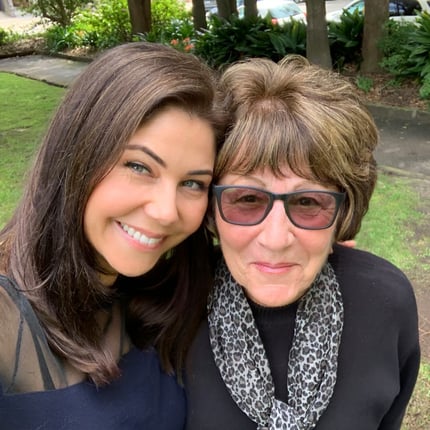
Nobody tells you that when someone dies, everyone around you becomes a little... strange.
Not unkind…
Not uncaring…
… Just unsure.
Some people avoid eye contact because they don't know whether to hug you or pretend everything's fine.
Or they feel so desperate to make you feel better that they accidentally make you feel worse.
Watch the trailer for Very Peri, Mamamia's exclusive perimenopause series. Stream it now.
Others try to force positivity, logic and timelines onto a situation so unimaginably non-linear and deeply visceral that it feels as though they're telling you to send your emails from a bowl of noodles.
Just try it, it'll work, they urge.
And then you're left with a metaphorical mess of noodles everywhere, burnt fingertips and countless drafts sitting in your brain.
I was one of those people.
Then my dad died five years ago.
My mum died in January this year.
Both times, not that I had given it any prior thought or had any conscious expectations, I was surprised by those around me.
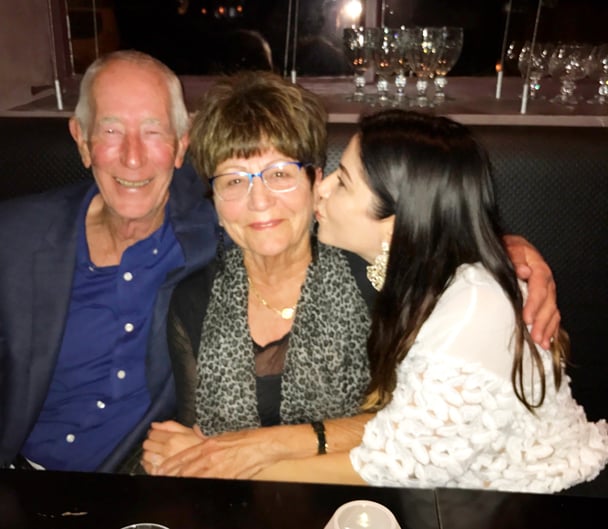
Some showed up in ways I'll never forget. Others disappeared completely. Most landed somewhere in the middle - wanting to help, but not quite knowing how.
It also made me realise a simple truth. You don't know until you know.
I'm still very much in the thick of grieving for both of my parents. I always will be.
Slowly, the days when the fog is so thick I can't see my hand in front of my face are slowly outnumbered by days when it lifts just enough for me to see the road ahead.
If someone you love is somewhere on that road, I'd like to help. Not because I've figured grief out. I haven't.
Because those who helped me most were friends who'd walked this path before me. They made the track a little less weedy and a little more sure under foot.
I'm further down the unmarked trail now, and so I will clear a few more weeds, and shine a little light, to help guide those who must walk it next.
Say something.
Anything.
People freeze because they think they need the perfect words. You don't. And they don't exist.
I personally don't say "I'm so sorry for your loss" because to me, it feels like someone misplaced their luggage, but I appreciate it's common and comes from kindness.
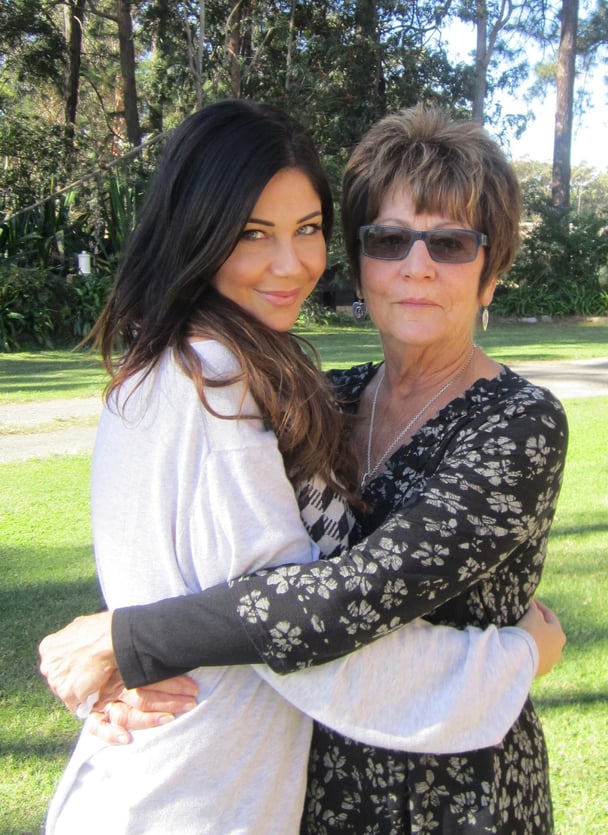
For me, short and simple was often the most comforting.
"I'm so sorry."
"My heart hurts for you."
"I honestly don't know what to say."
Those messages didn't make my grief disappear, or even feel any better. They made me feel less alone in it for a tiny moment.
Let it be awful.
People think grieving people want to feel better.
I mean, we do, but short of having a time machine, there's really nothing you can say or do to take the pain away.
I just want to feel understood.
You don't need to tell me my mum is at peace. You don't need to tell me everything happens for a reason. And please don't tell me she's in a better place.
While well-meaning, platitudes like this make me feel even more alone in my pain. They're trying to change how I feel instead of meeting my pain where it is.
My grief isn't looking for perspective. I'm looking for company.
"This is f—king awful" is perfect.
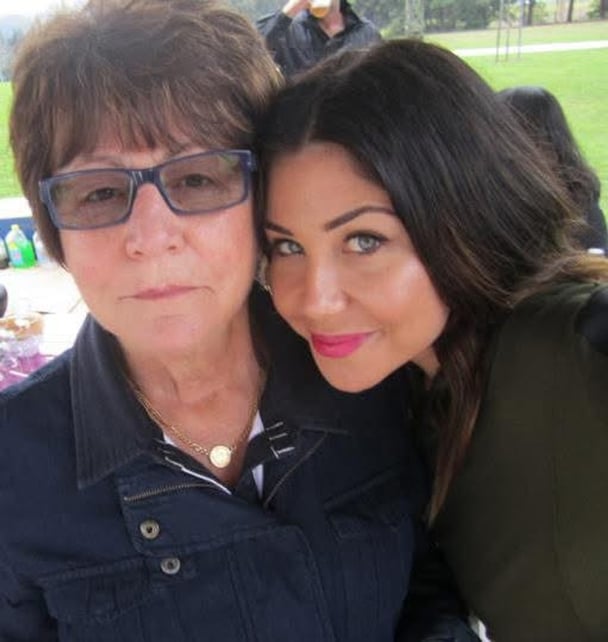
Please say their name.
Most people stopped mentioning my parents pretty quickly, almost as though they were frightened to say their names.
I get it. You don't want to make me sad. You don't want to remind me.
I promise you, I'm already sad.
Spontaneously hearing something like, "I was thinking about Pam today," or, "Your dad would've loved this" doesn't make me sad. It lets me go somewhere I don't often get to visit anymore.
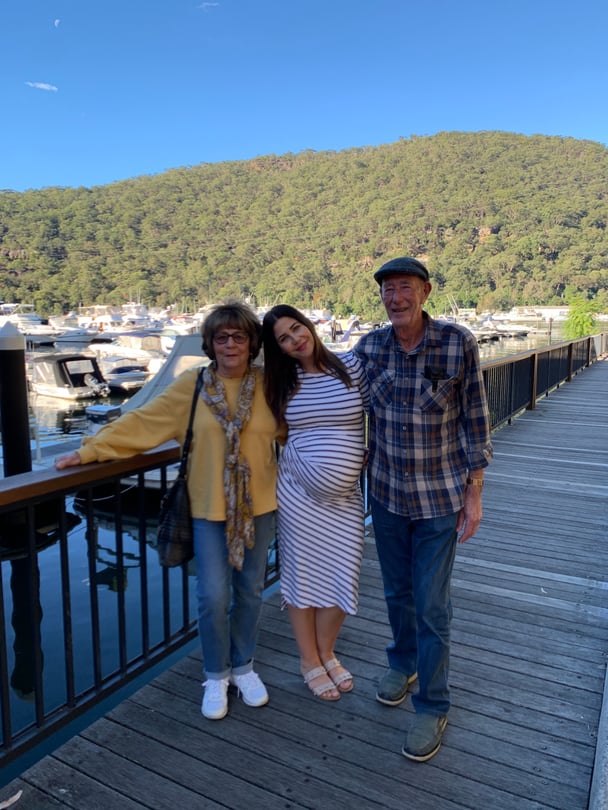
Because, and this is one of the sharpest shards of grief…
…there are no new stories. Only the old ones.
Please ask. Even if you never met them. We don't need you to have known them. We just need to know they still matter.
Come back there with me.
Just do it.
One more thing.
Grief takes the place of your capacity for ordinary life.
Because how can emails still need answering? What is Woollies still open for? Why is there still school drop-offs to do, washing to sort and dinner to cook when my mum isn't here?
Ordinary things feel completely insignificant and impossibly hard.
So when someone says, "Let me know if there's anything I can do," I know exactly why they're saying it. They want to help. But they've inadvertently given a grieving person another thing to do.
Instead, take some decisions away.
"I'm making heaps of pasta tonight. I'll drop some around."
"We've got room in the car so we'll pick Alex up for footy training.
"I'm free on Saturday. I'm coming to wash and fold the laundry."
Listen to this episode of Mamamia's mental health podcast, But Are You Happy? Post continues below.
Friends who quietly folded themselves into my life instead of asking permission saved me.
In the smallest, sometimes silent ways.
They're still saving me.
Feature image: Supplied.

Sign up to Mamamia Daily
Sent daily
Leigh Campbell
Executive Editor
No Comments
Be the first to leave a comment