If you want to support independent women's media, become a Mamamia subscriber . Get an all-access pass to everything we make, including exclusive podcasts, articles, videos and our exercise app, MOVE.
Here's something most people get wrong about the people in their lives who seem to cope well: they assume coping well means things are easy.
I've always been the person who stays for one more drink, takes on the extra project, and squeezes every last drop out of a day. I love my work and I love the people around me even more. The joy I experience every day is something I cherish, and so is the love I have for the people in my life.
What isn't visible is everything running underneath it.
I have chronic fatigue.
Watch: Ella Engel stands up for the first time in years after battling severe chronic fatigue syndrome. Post continues below.

The path to my diagnosis was a process of elimination. I had been unwell for years before anyone gave it a name. I saw specialist after specialist, and ruled out everything else until what remained was the truth. When it finally came in 2025, the diagnosis was one of the most validating moments of my life.
Obviously, I didn't want to be sick, but I had spent years knowing something was wrong and being unable to explain it; both to other people and to myself.
Having a name for it felt like finally being believed, including by myself.
Living with chronic fatigue.
I'm living a reality most people do not see: every single day, I wake up feeling exhausted and foggy. Still, I get myself up, go for a walk, and show up to work in the best way I possibly can. And then I come home and lie completely flat because I have given everything I have and there is simply nothing left, and that is not an occasionally difficult day.
That is just a Wednesday.
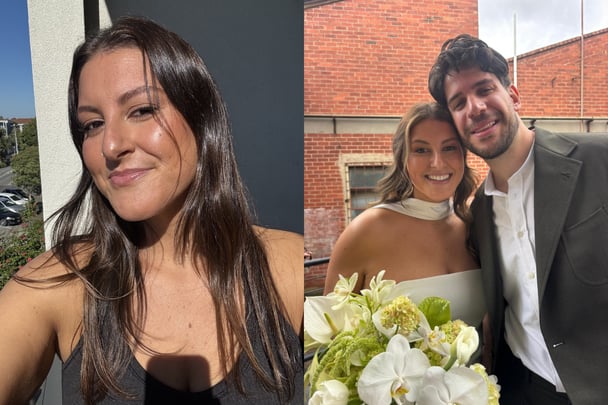
The first thing most people ask is: but what does that actually feel like?
The honest answer is that I can't tell you the last time I woke up and didn't feel exhausted and foggy. There's a fuzziness that sits behind my eyes and a heaviness that doesn't lift after rest, one you eventually stop waiting to go away because it simply doesn't.
What feels normal to me would probably feel pretty miserable to most people. You know that feeling of coming down with a cold, or dragging through a particularly rough week? That is close to my everyday.
But the physical symptoms are only half of it. The part that is harder to explain — the part that produces no visible symptoms — is the internal battle that runs on a loop underneath every single day.
I really want to go to that dinner, but if I do, what will the next three days look like?
I want to go for that walk, but will I pay for it tomorrow?
Every invitation, opportunity, and spontaneous plan gets filtered through a cost-benefit analysis that most people never have to run, and that relentless mental arithmetic of energy and consequence is its own exhaustion entirely.
Nobody asks you how your inner monologue is going. Nobody thinks to.
The wedding.
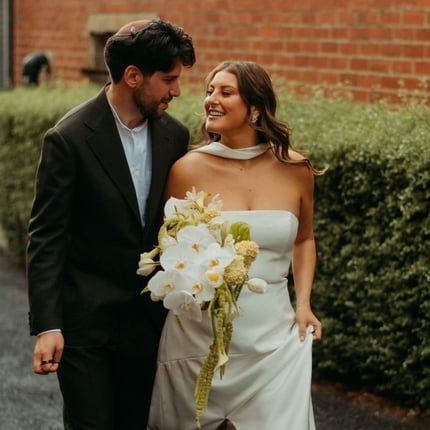
My chronic fatigue didn't even have the decency to take a day off for my wedding.
I was unwell in the lead-up, the night before, and the morning of, which at that point felt less like a surprise and more like a reminder of exactly what I'm dealing with. I had to cancel plans and scale back parts that I was really excited about.
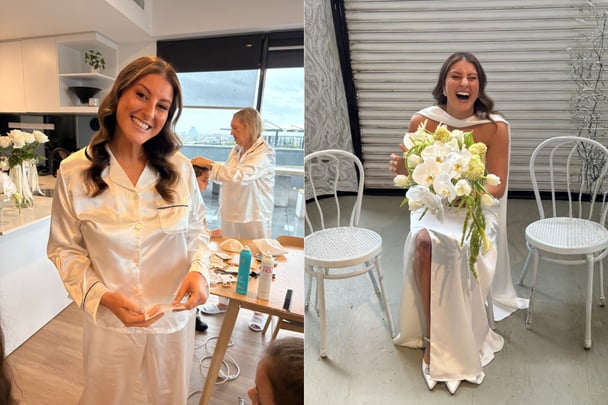
That was hard. When you're planning what is meant to be one of the biggest days of your life, there is a sadness that comes with realising your body still isn't going to cooperate.
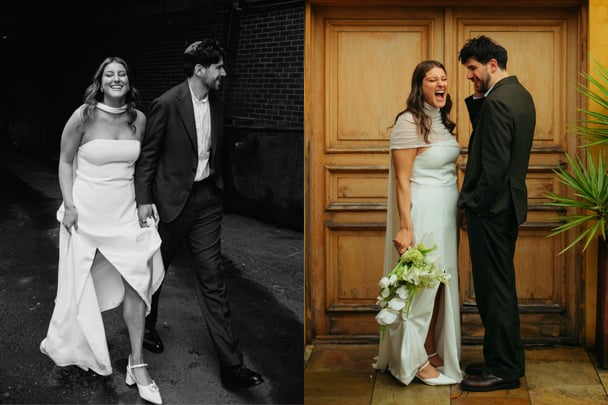
On the day itself, I did what I always do; I pushed through. And naturally, it was the best day of my life.
I wouldn't change a thing about my wedding day. It was joyful and emotional, and I got to marry Zac, the most brilliant person. But my conditions were just there too — dancing with me in the background, waiting for me once the celebration was over.
There is a grief that comes with all of this, though probably not the kind people imagine.
I don't spend my days wishing for a different life. It's wondering how much more room there might be for spontaneity if my energy wasn't something I had to ration, and what a truly rested version of myself might feel like, when I've spent so long forgetting that was ever an option.
Working in the disability sector has made me a better observer of people. You learn quickly that masking is one of the most common and least acknowledged things people do. The ones who are best at it are often the ones carrying the most.
I was raised with a tough-it-out mentality, which gave me resilience and drive and the ability to keep moving when things get hard. But it also meant I spent years not fully recognising how much I was asking of myself, because when endurance becomes your baseline, you stop asking whether something is sustainable and only ever ask whether it's survivable.
We celebrate the ones who keep showing up without ever asking what it costs them. We confuse output with well-being. We treat "they always manage" as a compliment, when sometimes it's just evidence that someone has been running on empty for a very long time.
Listen: How to identify, treat and recover from burnout. Post continues below.
My life is full and rich and mine, built with intention around a body that has never made any of it easy.
But I'm more proud of learning, finally, to ask a better question — not can I do this, but what does this actually cost me, and is it worth it.
It took a body that fights me every day to teach me that. And the life I've built on the other side of that question is the fullest one I can imagine.
Feature Image: Supplied.
Win a $1000 voucher!
We want to know your opinion on clothing. Complete our 3 minute survey for a chance to win a gift voucher in our quarterly draw!
Take survey →Bianca Stern
Author
No Comments
Be the first to leave a comment