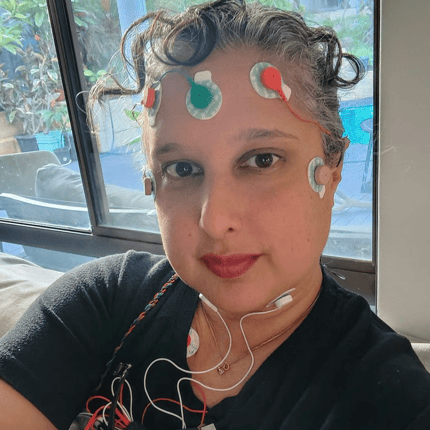
Earlier this year, I started feeling off.
Tired. Fuzzy-brained. Just not right.
This wasn't me. I'm usually the person juggling work, kids, family, friends, and whatever my latest passion is.
Watch: The hosts of BIZ discuss burnout and micro-retirement. Post continues below.
A few tired days turned into a day off work here and there, some naps, and sleep-ins.
That had helped before, but not this time. I couldn't get enough rest. I'd sleep until midday and still be exhausted.
My brain kept getting fuzzier. I couldn't find the right words. My body felt heavy and sluggish. My head was always throbbing. Everything seemed too loud and way too bright.
After trying to keep going for a few weeks, it became too much to push through. I took a week off work… then another… then a month.
I was scared. I still am.
I started the first of many doctor's appointments: blood tests, a stress ECG, specialist appointments, an MRI, a sleep study, and then more blood tests.

Apart from low iron, everything was — and I quote — "normal".
Apparently, I was a "healthy" person. A "healthy person" who just needed a four-hour nap to recover from dropping her kids off at school.
I had an iron infusion and hoped for a magic turnaround.
No luck.
In between naps, I freaked out full-time. What was going on?
Slowly, doctors started mentioning something I didn't want to hear… Chronic Fatigue Syndrome (CFS).
I thought I knew what that meant… someone who slept a lot, right?
It turns out, CFS isn't just being tired. It's your body treating the simplest things in life — the school run, a work meeting, making dinner — like you've run a marathon.
And then punishing you for it afterwards.
There is no cure.
There is no test to diagnose it.
Just symptoms. Guesswork. And waiting.
Here is a short list of maddening things about this chronic condition:
- It makes you doubt your own thoughts and question your own body.
- It makes people tell you to try "going for a walk" a lot. A lot.
- It makes you say, "Sorry baby, Mummy is too tired to play" when you desperately want to.
- It makes you explain what CFS actually is. Constantly.
- It makes you see 'the face' all the time – the 'are you sure?' or 'doesn't sound real' face.
The hardest part is that from the outside, you can still look mostly normal. People see you answering emails, picking up your kids, and assume you're okay.
They don't see the crash afterwards. They don't see what it costs.
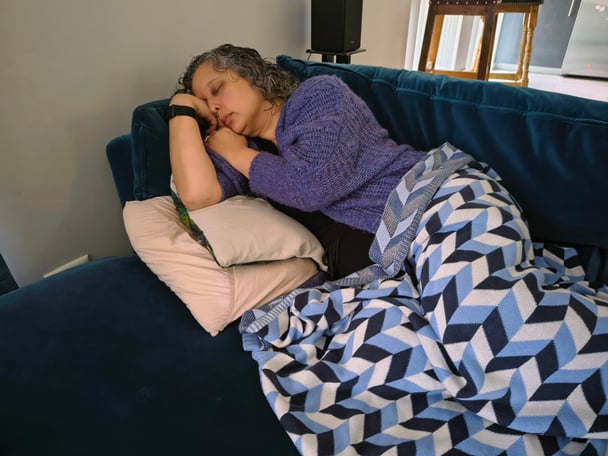
So I am now an expert in all things chronic fatigue.
After all, nothing motivates quite like the pure panic that "this might not get better."
I've learnt that 75 per cent of people with CFS are women, and that 20–30 per cent of us also have ADHD, which is far higher than the general population.
I've learnt that pacing is essential for managing chronic fatigue, which honestly feels like a bit of a cosmic joke. The all-or-nothing, go-go-go wiring I've built my life on? Turns out I need to unlearn that.
I've learnt that being heard and believed is often the only comfort anyone can provide.
I have researched, reached out and sometimes just flat out pushed my way through the healthcare system to try and find the right supports and confirmation that I did in fact have CFS.
When I finally got a diagnosis, it came with little fanfare, just a letter via email. It didn't really change anything... but it meant so much to me. I felt seen. Validated. Believed.

I'm sharing my story because women already spend so much of life pushing for the world to listen to them. Add an invisible illness to that, and suddenly you are defending your own reality to everyone; your friends, employers and even doctors.
It's a fight that can feel hard at the best of times, but nearly impossible through the fog of fatigue.
During the last few months, I've started listening to audiobooks. I love reading, but even that has been hard some days. While listening to a book by the wonderfully pensive John Green, he shared advice a mentor once gave him:
"Don't just do something, stand there."
That line has stayed with me.
When someone is unwell or struggling, our instinct is often to fix it. To offer solutions. To suggest a walk, a vitamin, a better routine.
Listen: What's the difference between burnout and extreme tiredness? Learn how to identify, treat and recover from burnout. Post continues below.
But trust me, the most powerful thing you can do is just show up. Just listen.
Don't just do something.
Stand there.
Listen, believe them and help make invisible illnesses a little less invisible.
…and remember not to tell them to try going for a walk.
Feature image: Supplied.
Win a $1000 voucher!
We want to hear all your shopping secrets! Complete our 5 minute survey for a chance to win a gift voucher in our quarterly draw!
Take survey →Melissa Cashman
Author
No Comments
Be the first to leave a comment