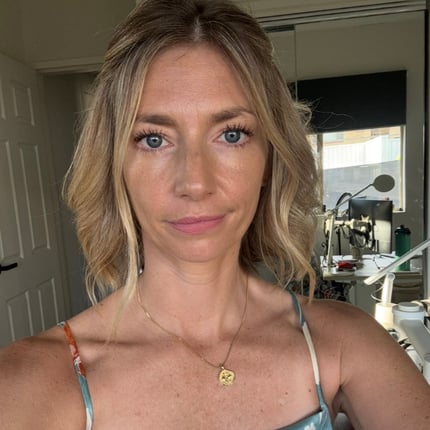
It arrived as a Christmas gift from my in-laws. A small box. Simple. Harmless, I thought.
An Ancestry DNA kit.
I spat in the tube, sealed it up, and sent it off like millions of people do every year — curious about my heritage, expecting maybe a few distant relatives, but nothing life-altering.
I wasn't looking for anything.
And that's the thing about the truth. Sometimes, it finds you when you're not looking.
Watch: Is happiness a myth? Let's talk. Post continues below,
'AncestryDNA results are ready.'
It was a Monday morning in late November. The summer heat was already pressing through the windows, and the smell of Palo Santo was curling through my office. I'd settled onto my meditation cushion, telling myself I'd sit in stillness.
Instead, I checked my email.
Your AncestryDNA results are ready.
I clicked on it, expecting percentages. Celtic. English. French Canadian. Germanic. A small trace of Ashkenazi Jewish.
No Eastern European.
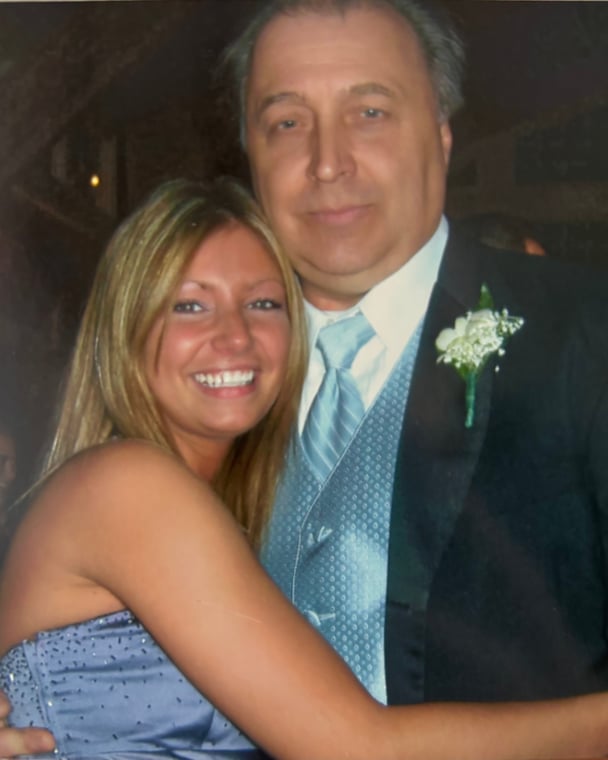
I frowned. The man who raised me is 100 per cent Polish. I'd grown up proud of that — my blue eyes, I always said, came from his side. I was the only kid in the family who had them. I'd seen our name etched on the Ellis Island Wall of Honour on a fourth-grade field trip. That immigrant story was mine.
I wore it like an heirloom.
I clicked on my matches.
And there it was.
Jerry Badeau Jr*. — 19 per cent DNA shared — either a half brother or uncle.
It was a name I didn't recognise. Yet, somehow, I did.
Jerry.
Jerry Badeau. A man from my mother's past who had hovered at the edges of my childhood.
We called him "the beach guy" — a friend of hers from years before I was born, someone who appeared occasionally in the summer, on the periphery of our family in ways I never thought to question.
If this was his son, that could only mean one thing…
I'd written about Jerry in my first memoir, Trust the Flames — describing the way he made me feel uneasy before I even had language for it. I'd always assumed that discomfort was just a child's instinct about a strange adult.
Now, I understood it differently.
My breath didn't quicken. It vanished.
My body had known before my mind dared to.
There was a drop in my stomach. A flash of heat in my chest. A stillness that didn't feel peaceful — it felt like something inside me had gone quiet from shock. I slid off my meditation cushion and pressed my back against the cool floorboards. Palms tingling. Vision narrowing.
It felt like something old finally being seen.
Both my mother and my biological father had passed away before I discovered the truth.
Every question I might have asked them is buried with them. That grief — the grief of realising you'll never have an authentic conversation with the people who made you — is its own particular kind of loss. It doesn't have a name yet. It should.
I called my brother first to confirm Jerry's last name. Then a lifelong family friend who had known my mother for 40 years — someone I trusted to tell me the truth. Her shock was immediate and genuine. She had no idea.
But as the days unfolded, I began to understand that others had. The silence hadn't been accidental. It had been maintained — carefully, collectively, across decades. And yet the question that sat heaviest of all was the one I still couldn't answer: did the man who raised me know?
Listen: Ashani Dante and clinical psychologist Anastasia Hronis unpack the very question that inspired the podcast. Post continues below.
'The DNA test didn't create a rupture.'
There was a whispered conversation when I was 18 — someone who loved me tried to tell me then.
I remember sitting on my bed, shaking my head so hard my earrings jingled, insisting it was impossible.
"I have his blue eyes. Look — I have his legs, too." I pointed to my bow legs as evidence.
My nervous system had done what it always does when the truth feels like too much: it built a wall around it and called the wall protection.
I didn't speak of it again for 20 years.
What strikes me now — what I couldn't have articulated then — is that the DNA test didn't create a rupture. It named one that had always existed.
I had spent my whole life feeling slightly out of frame. A little too loud. A little too different.
The one who asked uncomfortable questions. The one who couldn't release the resentment she didn't fully understand. I carried chronic fatigue, anxiety, a body that seemed to be bracing for something it couldn't name.
When those results loaded, something unexpected happened alongside the shock.
Clarity.
Not the tidy, Instagram-ready kind. The raw kind — the kind that arrives like a diagnosis after years of unexplained symptoms. Suddenly, patterns I'd carried my whole life had a context.
The hypervigilance. The over-functioning. The way I'd always felt like I was living slightly adjacent to my own story.
I wasn't broken. I was just carrying something that was never mine to carry alone.
But what I did have was the man who raised me. Still alive. Still the calm in every storm I'd ever weathered. The man who showed up quietly, consistently, for my entire life — not because biology demanded it, but because he chose to.
That, I was beginning to understand, is its own kind of truth.

My family begged me not to tell him. They worried about his age, his health, the shock of it.
"It doesn't change anything," they said. "He's your dad. That will never change."
They were right about the last part. But they were wrong about the silence.
I flew 15,000 kilometres to have the conversation no one wanted me to have.
Because here is what I know after a decade of healing work, and what that Monday morning confirmed in my bones: what we don't speak, we store. Silence doesn't protect us. It just makes us smaller. And I had spent enough of my life making myself small just to keep everyone else comfortable.
The truth didn't destroy us.
It set us both free.
Katie Delimon is a trauma-informed coach, keynote speaker, podcast host of Inner Self-Confidence, and author of Trust the Flames. She is currently working on her second book, Lies We Inherit. Learn more at katiedelimon.com or follow her on Instagram at @katiedelimon.
*Names have been changed to protect privacy.
Feature Image: Supplied.
Katie Delimon
Katie Delimon
No Comments
Be the first to leave a comment