Image via Thinkstock
Look, I’ll be honest here. Yin Yoga isn’t exactly a workout. It’s not going to rip through calories, it’s not going to leave you ripped either. But it is going to make you feel the kind of amazing that was previously only achievable with a Deep Tissue Massage.
Because that’s what Yin Yoga works, not your muscle, but your tissue. It deeply stretches your fascia, the connective tissue that wraps around your muscles and nerves.
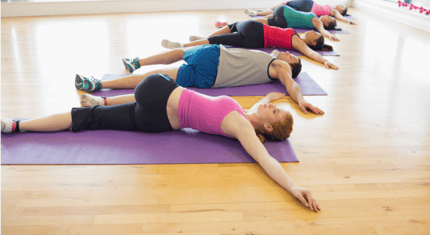
How does this work? Unlike regular yoga where you’re guided at a pace through a series of poses that stretch, activate and strengthen your muscles, in Yin, your goal is to melt. Each pose is held for a very long time – sometimes up to ten minutes – and you use blocks and straps to support yourself so your muscles can completely relax.
In Yin, you'll spend a lot of time on the floor slowly opening your hips, or folded in half, stretching out your legs and shoulders. Every pose will stretch you out in dozens of different ways. Sometimes the feeling is juicy and fantastic. But sometimes trying to touch your nose to your knees for seven solid minutes gets really uncomfortable. The trick? Just breathe until you find your edge.
This discomfort is one of the beauties of Yin. You very quickly learn the difference between a pain you can breathe through - something you'll come out the other side of just fine - and a pain that's unbearable. Learning when you should sit with your discomfort, and when you absolutely shouldn't is one of those life skills that's transferable off the yoga mat.
Yin is the most meditative form of yoga, and I'd strongly recommend it for people who are interested in meditation, but find it difficult to get into. Focusing on your body as it slowly uncoils and eases into poses is a great way to clear your mind.
And yes, at the beginning of an hour long class, there's an excellent chance you'll have a voice in your head singing "Bored bored bored", but by the end of the class, you'll be astonished a whole hour has passed. Then you'll walk out and feel so, so relaxed and fantastic, you'll want to go every day.
Yin props explained:
While props are sometimes used for other kinds of yoga practices, in Yin they're essential. Here's what you're likely to find in a class.
Straps: These act as extensions of your arms. If there's a move that requires you to say, wrap your hands around your feet while your legs are extended, and you like a totally normal person, cannot do this, the strap will help. It will let you loop the strap around your foot, so you still get stretched out, without having to do something that's physically impossible. Your instructor can help.
Soft blocks: These are comfortable against your skin, and great for squeezing between your knees if you've got lower back pain, slotting under your thighs in certain hip openers, and just generally letting you relax into poses.
Hard blocks: These aren't as comfortable to lie on as soft blocks, but they're a lot more stable. They're ideal for lying on, and particularly for putting between your shoulder blades for heart opening poses (aka: every desk job worker's most needed movements).
The basics
Lots of yoga studios around the country now offer Yin classes. Search on findyoga.com.au to find a class near you.
You will need:Very stretchy clothing, a towel and depending on your studio a yoga mat. Because Yin is all about finding what works for your body, people of any fitness and flexibility level can do it.
You will not need:Anti-perspirant deodorant. This is not a class you will sweat in.
How much is it:from $15.
Have you tried a new fitness class recently?
5 yoga poses that'll fix your dodgy back
Legs up wall
This pose has a multitude of benefits for your mind and body. If you suffer from arteritis, headaches, high blood pressure or insomnia, the legs up move can be therapeutic. It can also relieve lower back pain and tired or cramped legs, and ease the symptoms of PMS, menstrual cramps and menopause. Added benefit: itll give you an energy boost and help ease anxiety and stress.
Puppy pose
The Puppy pose (best name ever) does great things for your upper body. Itll expand your chest, improve flexibility in your spine, and relieve any tension in your upper arms, shoulders and neck. It also stretches out your abdominals, opens your hips and stretches your hamstring. In terms of wellbeing, doing the Puppy pose will calm your mind and relieve symptoms of chronic stress, tensions and insomnia.
Corpse pose
It sounds morbid, but the corpse pose is the ultimate relaxation pose and will rejuvenate your body and mind. It can physically relax you, help to lower blood pressure, and reduce the symptoms of headaches, fatigue and insomnia. The pose can also calm your brain and help to ease stress and mild depression.
Standing forward fold
This pose positions your head below your heart, so straight away the rush of blood to your head will give you a big boost of oxygen. This has some great results - it can help to ease feelings of nervousness, stress, anxiety, depressions and fatigue, and relieve symptoms of asthma, menopause, headaches and insomnia. Physically, it stretches your hips, hamstrings and calves, keeps your spine strong and flexible, and strengthens your thighs and knees.
Enjoyed this? Check out the rest of our Class Reports:
Author
No Comments
Be the first to leave a comment