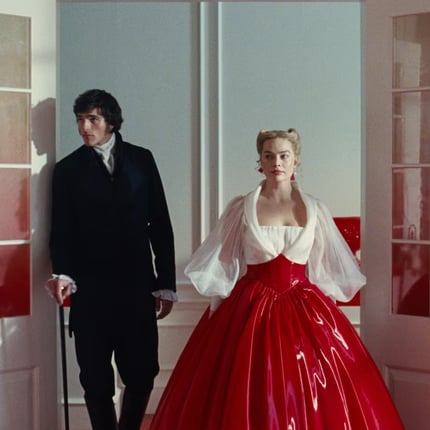
Emerald Fennell's Wuthering Heights has officially arrived, and in true Fennell fashion, it has set the internet — and the moors — on fire. Starring Margot Robbie and Jacob Elordi, this is not the period piece you were assigned in high school.
Watch: Wuthering Heights Official Trailer. Article continues after video.
If you're heading to the theatre (or reeling from a first viewing), here are the facts that will change how you watch this polarising reimagining.
The caged animals in Thrushcross Grange.
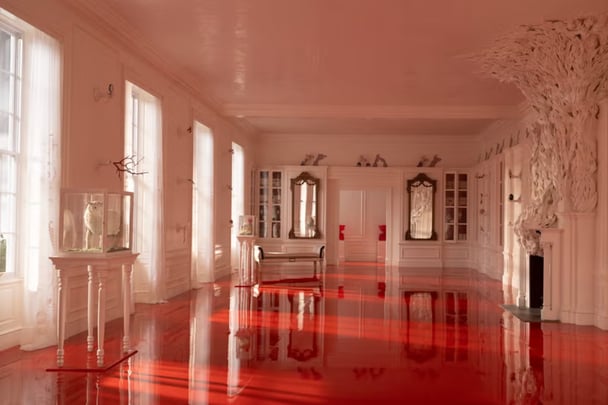
While the moors represent a chaotic, untamable freedom, Thrushcross Grange is presented as a sterile museum of captivity. Pay attention to the unsettling decor throughout the house: goldfish frozen in resin vases and a taxidermy lamb encased in glass.
These eccentric design choices are quirky and fun, yes, but they also signal that the Grange is a gilded cage where nature is suffocated by Victorian propriety. For Cathy, moving here isn't an upgrade — it's a life sentence in a curated prison.
Grim.
The dollhouse.
Miniatures and dolls serve as a common motif throughout the film. In Cathy's youth, we see macabre dolls suspended from her ceiling, but at the Grange, the symbolism matures into a literal dollhouse replica of the Linton estate.
Besides being eerily creepy, this serves two purposes: it highlights the infantilisation of Cathy as she is "played with" by the Lintons, and it suggests that every inhabitant of the house is merely a puppet being moved by social expectations and unseen hands.
The red in the costumes.

Cathy's wardrobe marks her tragic evolution. She begins the film in functional, earthy milkmaid corsetry suited for the wild outdoors, but as she transitions into the opulence of the Grange, her silhouette becomes sharper and more restrictive.
The colour theory is particularly aggressive: as Cathy's psychological state fractures, the palette shifts into increasingly angry shades of crimson.
The ending is not the ending.
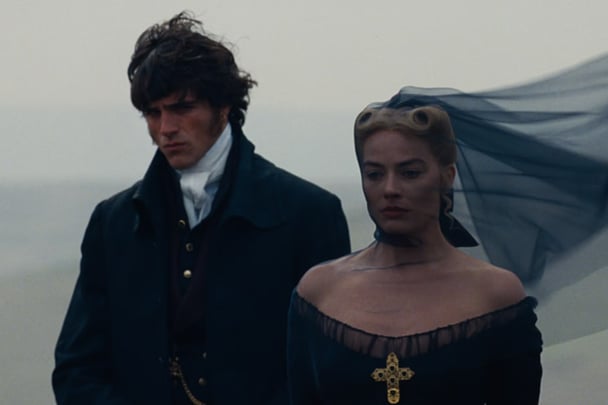
Purists should be prepared: Fennell has sliced the sprawling epic in half. By completely removing the second generation of the novel (the story of Cathy's daughter and Heathcliff's son), the film abandons the book's ultimate theme of generational healing.
Without the second half to break the cycle of abuse, the movie focuses solely on the claustrophobic, high-octane reality of the original pair's mutual destruction.
The BDSM twist.
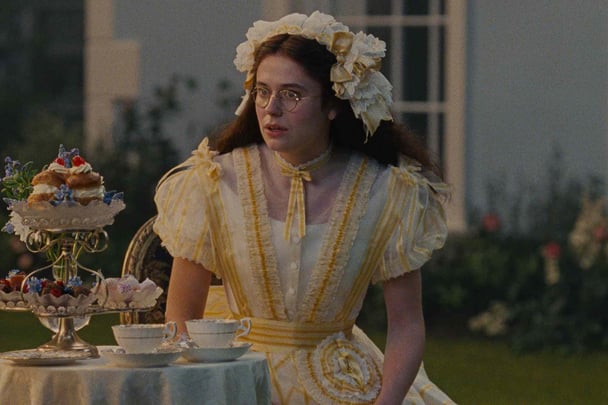
Perhaps the most controversial departure is the reimagining of Isabella Linton, played by Alison Oliver. Rather than a helpless victim of Heathcliff's cruelty, this Isabella seems gleefully unhinged, finding a dark, erotic thrill in their toxic dynamic.
By turning a narrative of domestic abuse into one of consensual sadomasochism, the film complicates the power balance, though many argue it dangerously blurs the lines of the original text's critique of control.
Cathy's dad and brother are combined.

To streamline the narrative tension, the film merges the roles of Mr. Earnshaw and his son, Hindley. In the book, these are two distinct figures of authority and antagonism. Here, their characteristics are fused into a single entity.
This consolidation heightens the domestic pressure on Cathy and Heathcliff, making the family unit feel even more predatory and inescapable.
The walls in Cathy's room are actually Margot Robbie's skin.
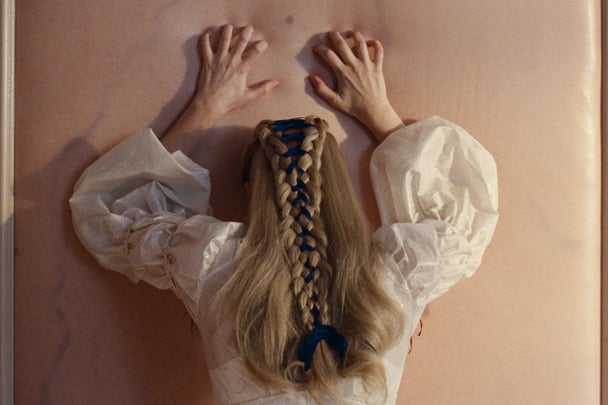
This is the film's most surreal and literal take on becoming a housewife. If the walls of Cathy's bedroom look suspiciously organic, it's because they are.
The production team used high-resolution scans of Margot Robbie's own skin to create veiny, latex-covered walls complete with pores and moles. With curtains made of hair matching Cathy's own, the room suggests that the house has literally consumed her.
The sweating dining room.
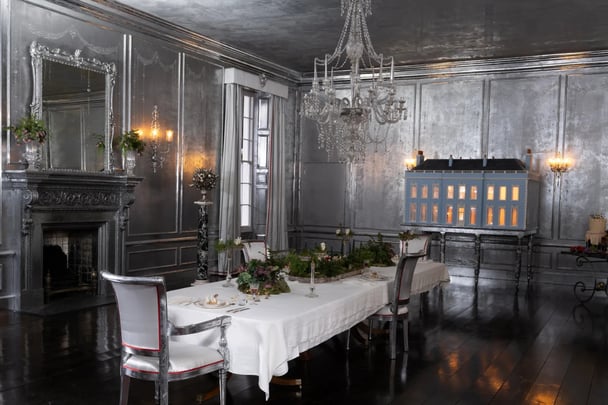
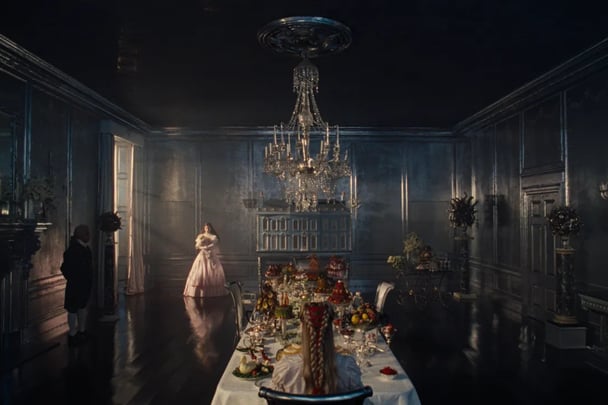
The production design at the Grange is doing a lot of heavy lifting for the film's hornier subtext. In the dining room, the walls are covered in ornate silver jewels with a hemispherical effect, but they aren't just there to look expensive. Under the candlelight, the placement of these stones makes the room look like it's literally breaking into a cold sweat.
It's a deliberate move by Fennell to mirror the steamy tension between Cathy and Heathcliff; the architecture itself is reacting to the chemistry. They even mirrored this in Margot's makeup, using similar jewels on her face to show that she's physically merging with the high-strung, sensory-overload environment of the estate.
Feature Image: Warner Bros. Pictures.
Calling all skincare lovers!
Complete our 3 minute survey for a chance to win a $1,000 gift voucher in our quarterly draw!
Take survey →Chelsea Hui
Entertainment Producer
No Comments
Be the first to leave a comment