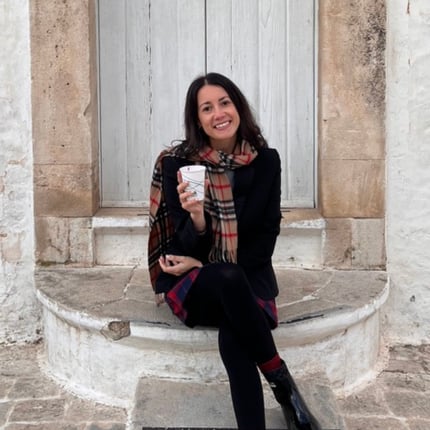
This is an edited extract from The Day I Died Lost Everything, Survived Anyway by Krysti-Glory Gallo . You can purchase the book at Amazon and Booktopia .
January 30 is the last day I remember. After that, there is nothing.
Not flashes. Not fragments. Not a single memory. The next three to four weeks of my life are completely gone.
That entire period of my life exists through other people's memories: my husband's, my mother's. Doctors' notes. Fragments of conversations retold to me later.
While my body was shutting down, I was disappearing with it. So, when people ask what happened, I cannot give them a neat first-person account.
Watch: The cost of a lifetime of being misdiagnosed. Post continues below.

I cannot tell you what the ambulance ride felt like because I do not remember being in it.
I cannot tell you what was said in emergency, because I was no longer mentally present in a way that allowed memories to form.
There is a gap in my life where those weeks should be.
What I know is what my family had to witness. My husband and my mum were the ones taking me to doctor appointments while I deteriorated in front of them.
I do not remember one of those appointments. I was barely responsive by that point. All the lights were turning off, one by one, day by day…
They were the ones speaking for me, answering questions for me, explaining my symptoms, trying to convince doctors that something catastrophic was happening while I sat there unable to properly advocate for myself.
They were repeatedly being told it was probably post-COVID and that I needed to go home and rest. But resting was already all I had been doing for weeks.
My world had reduced to lying in bed, barely responsive, while my body continued shutting down in front of the people trying to save me. And still, they kept hearing reassurance instead of urgency. They were the ones being told my blood tests were "normal".
And they were the ones who had to fight for me when I no longer could.
Symptoms started slowly.
In 2022, I became critically unwell after COVID.
At first, the symptoms were subtle enough to explain away. Exhaustion. Weakness. Brain fog. But then my body started deteriorating rapidly.
My legs felt heavy. My speech slowed. I struggled processing conversations. Walking across the house became difficult.
Still, appointment after appointment, GP after GP, ended the same way.
"Your blood work looks normal, go home and rest."
Doctors reassured my husband and mother that it was probably lingering post-viral symptoms. And this is the dangerous thing about medicine sometimes: once one explanation enters the room, every symptom after that gets filtered through it.
Especially for women.
Women are conditioned to downplay pain. To avoid sounding dramatic. To apologise for taking up space in medical settings.
So when doctors repeatedly tell you your results are fine, you start questioning yourself.
Maybe I was anxious. Maybe I was overreacting. Maybe I just needed a rest. But my body kept getting worse.
What terrifies me now is knowing how close I came to leaving my children without a mother.
By the time I reached the hospital for the first time, I was no longer fully responsive. My husband and mother later told me the ambulance almost refused to take me.
Because of COVID restrictions, my husband was not allowed in with me. That part still hurts.
Not just emotionally, but practically. To have to watch his wife be wheeled into the hospital knowing she has no idea what's going on and where she has or hasn't been for weeks, was gut-wrenching for him.
I could not advocate for myself at all. My cognition was severely impaired. I was not properly processing what was happening around me, and later, none of it remained in my memory.
Yet the person who knew my symptoms best, the person who had watched my deterioration in real time, was forced to stay outside.
There is something terrifying about being severely unwell without an advocate. Especially when you have already spent weeks being told you are probably fine.
This hospital appointment didn't go as my family hoped. My mum got a call to say I was being discharged as everything seemed "normal".
My mother drove to the main entrance, to find me sitting there by myself, in the early hours of the morning. Her daughter. The one who couldn't speak for herself, was a shell of a human.
Just sitting, vacant and alone.
I still struggle to comprehend that image. Not because I believe anyone intended harm, but because it reveals how easily vulnerable people can disappear inside overwhelmed healthcare systems.
That is the part of medical trauma we do not talk about enough. People imagine medical trauma as dramatic surgeries or catastrophic diagnoses.
Sometimes it is quieter than that.
Sometimes it is the trauma of not being believed.
Sometimes it is hearing "normal" while your body collapses.
Sometimes it is the psychological aftermath of discovering how close you came to death, because one person finally decided to trust what they were seeing instead of what a pathology report suggested.
And sometimes it is trying to piece together your own near-death experience through the memories of your family because your brain protected you by erasing parts of it.
Then, one GP, one man, one human… diverted from the script.
Because if this GP had not ignored the paperwork sitting in front of him and didn't pay attention to the human being in the room instead, I would likely be dead.
Or worse.
I still try and picture myself in that appointment, even though I can't remember it myself. Did I feel relief or hopeful that someone was finally listening?
My family says the GP looked alarmed almost immediately. While previous doctors focused on my blood results, he focused on me. The way I was vacant. And my lack of response.
The fact that something about me clearly did not match the word "normal".
He told my husband and mother to take me to emergency immediately. That decision saved my life. Later, we would learn just how serious my condition actually was.
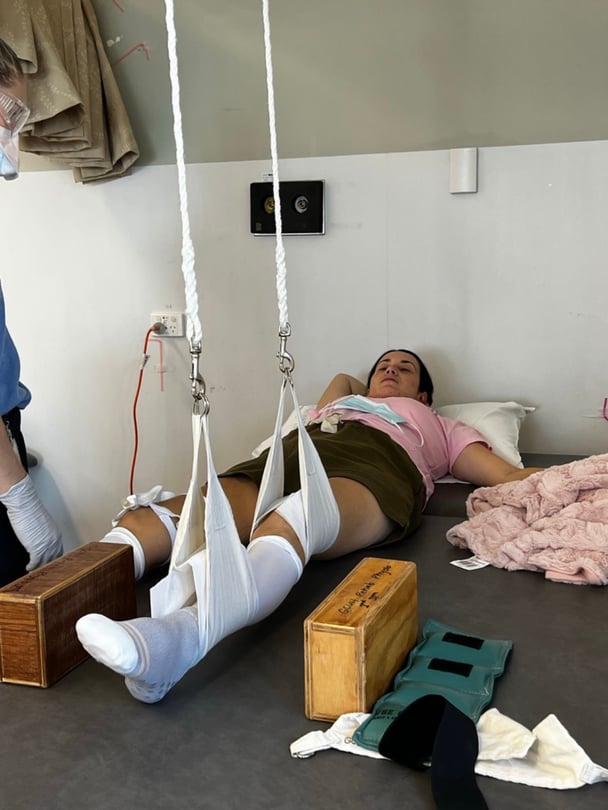
On my arrival to the second hospital and second emergency room, where my family now had more support to advocate and push to keep me inside those hospital walls, I was finally put into a coma and when I woke up, I was paralysed from the waste down.
I was told that without treatment and the fight my family put up on my behalf, I would have become paraplegic, suffered severe brain damage, or died.
And yet before that moment, multiple medical professionals had sent me home. That reality is difficult to sit with.
Not because I think doctors are villains. I don't. I owe my life to more than one of them.
But modern medicine relies heavily on data, and sometimes people fall through the cracks when their bodies don't present "correctly" on paper.
What happens to patients when intuition disappears from healthcare?
What happens when exhausted systems become so overwhelmed that doctors stop seeing the person and start seeing only test results?
I think about that now more than ever.
Because while one doctor chose to trust his instincts, the surrounding system often felt frighteningly impersonal.
I wasn't vaccinated at the time. That became part of the conversation before I even reached hospital.
I want to be careful saying that, because this story is not about vaccination status. It is not political. It is not an argument. But it is a big part of what happened. And why my symptoms were ignored. I believe it was pure fear.
And when you are critically ill, you become painfully aware of how quickly people can make assumptions about you.
This GP did not perform some dramatic act of heroism. He listened. He looked beyond the numbers. He trusted his instincts.
That single decision changed the future of my children's lives.
There is a version of this story where my husband loses his wife. Where my children grow up without their mother. Where my family spends the rest of their lives wondering whether more could have been done sooner.
Instead, I am here writing this.
And I need to be clear about something I didn't understand at the time.
I did not survive because of one moment alone. I survived because of a chain of people refusing to let me be dismissed. It was because my husband and my mum kept pushing when they were being told to take me home and rest again.
It was because they refused to accept that 'normal' blood results meant nothing when they could see me deteriorating in front of them. But it was also, crucially, because of one GP who didn't accept the results at face value and instead listened to them.
He changed the script. He told them to take me to emergency immediately, and that instruction gave them the opening they needed to keep pushing for me once we got there.
Without that escalation, without that moment where someone finally acted on instinct instead of paperwork, I don't believe I would have even reached hospital care in time.
Listen: Why are women consistently told that pain is "part and parcel" of the female experience? Post continues below.
Even in hospital, I was almost sent home again.
But that GP's decision meant my family had the authority and urgency behind them to keep fighting for me to stay. I owe a lot of my chances of survival to that one doctor who was willing to trust what he was seeing over what the system was saying.
And I am still here because enough people, at the right moments, chose to look at me rather than my results.
This is an edited extract from The Day I Died: Lost Everything, Survived Anyway by Krysti-Glory Gallo . You can purchase the book at Amazon and Booktopia .
Feature Image: Supplied.
Win a $1000 voucher!
We want to know your opinion on clothing. Complete our 3 minute survey for a chance to win a gift voucher in our quarterly draw!
Take survey →Krysti-Glory Gallo
Author
No Comments
Be the first to leave a comment