
Want to support independent women's media? Become a Mamamia subscriber and get an all-access pass to everything we make, including exclusive podcasts, articles, videos and our exercise app, MOVE.
I've realised we're living in the golden age of skincare, and somehow, our skin has never been more confused.
Scroll SkinTok for five minutes, and you'll be told you need a vitamin C serum for glow, retinoids for anti-ageing, a mix of acids for texture and pores, and at least three hydrating serums. It's very overwhelming.
It's no surprise, then, that more people are dealing with something now dubbed " skincare burnout" — a term born from this exact cycle of overconsumption, over-layering and overdoing it in pursuit of perfect "glass skin".
Trust me, I know, because I was one of them.
WATCH: Leigh Campbell recommends the best retinols for beginners. Post continues below.

As a beauty writer, testing products is literally my job. But when your work exists in the same ecosystem as viral routines, trending ingredients and constant product launches, it's easy to blur the line between what your skin needs and what the internet tells you it does.
So when my skin started breaking out for the first time at 29, I did what I thought any skincare-savvy person would do: I doubled down.
I piled on everything the internet promised would fix texture and redness, and instead, my skin spiralled.
What started as a few small bumps turned into inflamed breakouts, persistent redness and sensitivity so intense, even gentle products stung. My skin was in absolute shambles, and I was so ashamed of it.
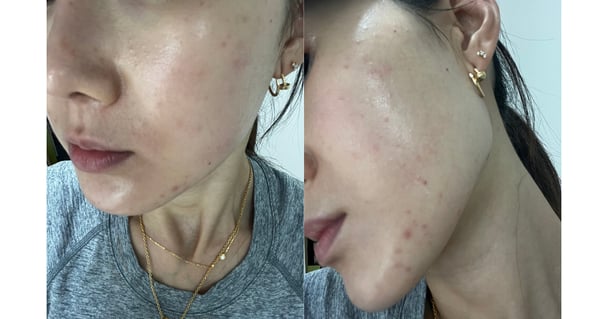
At the time, I thought I had adult acne, but it was really… skincare burnout. ( You can read about my full traumatic experience here.)
So you don't end up in the same mess I did, I spoke to specialist dermatologist Associate Professor Dr Deshan Sebaratnam to explain everything you need to know about skincare burnout.
What is skincare burnout?
"Skincare burnout is a non-clinical term," Dr Sebaratnam explained. "But in social media, it's often used to describe a phenomenon when the skin barrier becomes compromised from overusing active ingredients."
That last part is key: overusing.
Basically, the problem isn't skincare itself but rather the way we're being encouraged to use it. Layered routines, high-strength actives and the idea that more steps equal better results have become normalised online.
But when that barrier is overloaded and compromised, Dr Sebaratnam explained, it can lead to redness, flaking and increased sensitivity.
Why your skin can suddenly turn on you.
If I'm being honest, part of what drove my skin to shambles was unrealistic expectations. Ya know, the flawless, glowy skin you see all over TikTok… often achieved with filters and great lighting.
Dr Sebaratnam simply said: "If you have unrealistic expectations and follow complicated skincare regimes with multiple actives… you can overdo your skincare."
I was layering products without purpose, adding steps because they were trending and treating my face like an experiment, and obviously, my skin paid the price.
What I really found confusing was reacting to products I'd used for years and recommended to many people.
But it turns out that's not unusual.
"Your skin changes with time," Dr Sebaratnam said. "Things that didn't cause problems before can as your skin changes."
"If the skin barrier is damaged, products that were previously used without issue can irritate. Your immune system can also become sensitised to a product you've used your entire life, which can lead to allergic contact dermatitis."
In other words, blindly sticking to a routine just because it's "worked before" (or because it's trending) can backfire.
This is especially true when you stack "good" ingredients. For example, retinol, vitamin C and chemical exfoliants are all great on their own. But when stacked together, you get a recipe for disaster.
"Many actives can irritate the skin," Dr Sebaratnam says. "This can lead to redness, stinging and flaking."
Is it acne, rosacea or a weakened barrier?
One of the biggest misconceptions I had was quickly assuming my symptoms were acne. But I was dealing with a compromised barrier that no acne product was going to fix.
"A damaged skin barrier suggests your skin is no longer providing the protection it should," Dr Sebaratnam explained.
"Things that wouldn't normally penetrate can get in and can cause problems. In contrast, acne and rosacea are not thought to be related to skin barrier deficits but rather are caused by inflammation within the skin."
If you're unsure of what you're dealing with, please seek help from a skin specialist instead of trying to do an online self-diagnosis.
How to fix skincare burnout.
After six months of trial-and-error (and a lot of tears), I ended up in a dermatologist's clinic in Seoul. She took one look at my inflamed skin and simply told me to strip my routine all the way back.
That. Was. It.
It was the complete opposite of everything I'd been seeing online, and exactly what my skin was craving.
And according to Dr Sebaratnam, that advice checks out.
"A 'reset' routine is essentially about giving the skin a break and allowing the barrier to repair," he explained.
"Less is really more during this phase… simplifying your routine for around two to four weeks."
For me, that meant using a gentle cleanser, a basic AM and PM moisturiser, sunscreen and NOTHING ELSE.
How long does it take to fix skincare burnout?
After dialling it all back down, my skin started calming down within 24 hours, and within weeks, it looked and felt like mine again.
"It takes about four weeks for your skin to regenerate its top layer," Dr Sebaratnam said. "But if damage has been done to deeper layers, scarring can sometimes be permanent."
Yep, you can overdo skincare to the point of long-term damage…
How to avoid skincare burnout.
These days, my routine is super boring compared to what it used to look like, and when it comes to testing products to review and write about, I'm extremely cautious.
However, my skin has never been better, and Dr Sebaratnam's advice aligns closely with what I've learnt.
"Cut out all unnecessary products," he advised. "Skincare doesn't need to be complicated or have multiple steps. Vitamin C, then sunscreen in the morning. A gentle soap-free cleanser at the end of the day, along with a Vitamin A product."
Also, every product should serve a purpose.
"Be intentional with your skincare and only add additional products if there is a particular problem you are trying to address."
So, from one skincare girlie to another, the best thing you can do for your skin isn't to add more (no matter how tempting those viral trends are!). It's that less really is more.
For more tried and tested beauty recommendations, subscribe to the weekly You Beauty newsletter, join our You Beauty Facebook group, listen to the You Beauty podcast or watch You Beauty on YouTube.
Feature image: Supplied.
Want to win $1000?
We want to know how you stay connected online. Complete our quick 3-minute survey for a chance to win a gift voucher in our quarterly draw!
Take survey →Juna Xu
Author
No Comments
Be the first to leave a comment