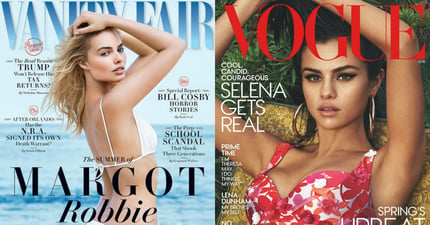
Imagine this.
In recent months, we have seen a spate of high-profile male journalists come under fire for the tone of their interview profiles.
Listen: Why it was important for Taylor Swift to call out the man who sexually harassed her. (Post continues after audio.)
“She is blonde but dark at the roots. She is tall but only with the help of certain shoes. She can be sexy and composed even while naked but only in character.”
A post shared by Selena Gomez (@selenagomez) on
Mar 16, 2017 at 8:39am PDT
Why were they cooking together? Was she in his house? Why? They are questions we almost can’t bear to ask, but Haskell would love you to anyway. The interview is leery in its fatherly gaze, dripping with sexual nuance.

There's no place for Mad Men-esque antics in modern journalism. (Image: Debmar-Mercury 20th Television)
The temptation to judge the older male reporter in his plight to portray the beautiful young starlet hangs heavy. But can you really blame Cohen, or Haskell, or the hordes of other male writers for falling to the knees in the presence of a star? Do they know any better? Is this simply the comet’s tail of a tradition, an understanding of gender roles, that traces itself back to almost the beginning of time?
One thing is certain. The tone of these articles is uncomfortable to read. The gushing descriptions of their beauty, the numerous references to their age… it’s a style that feels dated, a relic of a bygone era. A lingering wink that belongs inMad Men, not modern journalism.
Margot told 'The Project' she felt her Vanity Fair interview had a 'creepy undertone'. (Image: Getty)
Maggie Kelly
Author
No Comments
Be the first to leave a comment