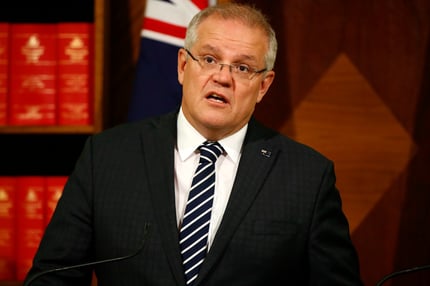
Last Tuesday, Prime Minister Scott Morrison and Attorney-General Christian Porter released a second and final draft of the Religious Discrimination Bill.
The second draft, which was released after the government received widespread criticism from businesses, churches, community groups and individuals alike, included a number of key changes.
But while the second draft has been amended, the bill has been described as “incredibly harmful” and “unnecessary”.
In a new campaign video for Equality Australia, retired athletes Ian Thorpe and Lauren Jackson and author Benjamin Law have spoken out against the proposed legislation.
Watch Equality Australia’s explainer on how the Religious Discrimination Bill will affect us all below.
“The Religious Discrimination Bill will give people a licence to discriminate,” Ian Thorpe said in the video.
“What constitutes discrimination today will be considered okay tomorrow. It will take away your rights at work, at school and at hospitals when people say offensive things,” Benjamin Law added.
The updated bill, which was originally introduced in August, prohibits discrimination on the grounds of religious belief.
“This Bill will wind back hard-fought protections for women, LGBTIQ+ people and people with disabilities,” Anna Brown, the CEO of Equality Australia toldMamamia.
“Every person, religious or not, should be able to live, work, study, and access healthcare with dignity. This bill undermines that. Our laws should protect us all, equally.”
Here’s exactly what could happen to ordinary Australians if the Religious Discrimination Bill is passed:
Statements of Belief
Under the Religious Discrimination Bill, statements of religious belief will not be found to breach other discrimination laws.
As a result, this could lead to potentially unsafe workplaces and schools for women, the LGBTIQ+ community, single parents, people with a disability and more.
Here are some specific examples, according to the Public Interest Advocacy Centre (PIAC):
Listen to the latest episode of Mamamia’s daily news podcast, The Quicky, below. Post continues after podcast.
Workplace
In the workplace, the Religious Discrimination Bill removes protections when colleagues, an employer, or manager make certain religiously-based statements to single parents, women or unmarried/divorced people.
According to Equality Australia, potential real-life examples of this could include:
Healthcare
The Religious Discrimination Bill prioritises religious views over patient health needs by strengthening the ability of health professionals to refuse treatment to patients on religious grounds.
This means, for example, that a doctor or pharmacist could refuse to dispense certain drugs on the basis of their religious beliefs.
The bill also removes discrimination protections for LGBTIQ+ people, people with disabilities, women and others, when health professionals make statements that are discriminatory.
According to PIAC, this means that a pharmacist could refuse to dispense hormone therapy, contraception or pre-exposure/post-exposure prophylaxis (against HIV) on the basis of their religious beliefs.
Here are some potential scenarios, according to Equality Australia:
Education
The bill also impacts education and schooling. For example, religious schools would be able to discriminate on the basis of sexuality, marital or relationship status or gender identity.
Here’s an example, according to PIAC: “A student attends the same religious school through their primary and secondary education. At 16, they lose faith in the religion of the school and tell a teacher that they are now agnostic. The school would be able to expel, suspend or otherwise punish the student.”
Here are some more examples, according to Equality Australia:
Public comment on the Religious Discrimination Bill is open until January 31st.
Until then, Equality Australia are urging people to email their local MP to voice their concerns on the bill.
Feature Image: Getty.
You can find out more about the new Religious Discrimination Bill by following Equality Australia on Facebook and Instagram.
You can follow the Public Interest Advocacy Centre on Facebook.
Sign up for the “Mamamia Daily” newsletter. Your morning hit of the top news stories, to be consumed with a coffee in hand.
Jessica Kingston
Author
No Comments
Be the first to leave a comment