Thanks to our partner, Be RSV Aware with Pfizer Australia
There's an inexplicable brain zap that hits after each stage of pregnancy and new motherhood.
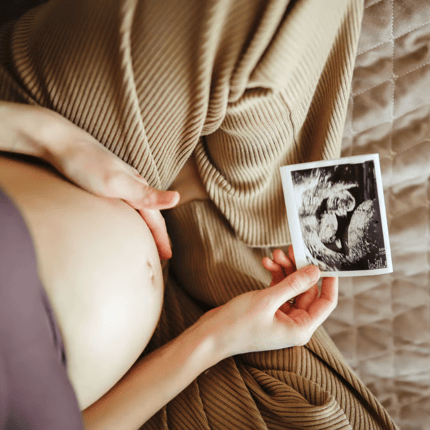
I'm pregnant for the second time, and sure, it's been a good five years since I first handed my body over to a tiny human, but I swear I've forgotten everything that happened up until about eight minutes ago.
Luckily, old 'type-A' over here kept notes the first time, and now that I'm back for round two, I'm so glad I did.
There are a few big things I really wish I'd known back in that hazy, crazy first pregnancy. So, here's my second-timer's guide to getting your health, home and headspace ready for day one.
Health prep (for you and the baby).
Yes, your pelvic floor matters (a lot).
As soon as you see that positive test, the wellbeing of your baby becomes project number one on your daily to-do list. But it's easy to forget that your own health is the most important thing you can focus on right now.
I saw a pelvic floor physio during my first pregnancy and again during my birth recovery, and let me tell you, it's worth it. I learnt so much about how everything works (everyone needs a footstool for their toilet!), and I credit her with helping me avoid the need for haemorrhoid removal surgery (yep, it's all connected).
Depending on your situation and health cover, you might also be eligible for a decent rebate, which always helps.
Protecting your little love from day one.
During your antenatal appointments, make sure to chat with your doctor about everything you can do to protect your tiny little love in their first few months of life.
RSV (respiratory syncytial virus) is definitely worth keeping on your radar. It's a very common and contagious respiratory virus, particularly among babies and young kids, which can sometimes land little ones in hospital. Newborn lungs are so vulnerable and tiny, and it can be tricky to tell RSV apart from other illnesses that look like a cold.
Another to equally have on your radar is whooping cough, a bacterial infection that can also be serious for little ones. I don't say any of this to worry you, but the more you know, the more you can bring up with your doctor — and then relax, knowing you're prepped for just about anything.
Setting up the nursery.
The big-ticket items you actually need.
My pram pretty much took the place of my car in the first six months of new mum life, and even if you're not a big walker like me, it's something you'll likely use every day. My biggest tips are to look out for a model with excellent underneath storage, smooth handling (you should be able to steer with a coffee in hand), and a good-sized canopy for sun protection.
The next big one, of course, is a cot or bassinet! You might think to jump straight to a big, beautiful cot as your nursery centrepiece, but many people just start off with a smaller bassinet since little ones don't need such a roomy bed to begin with. I had my son in his bassinet next to my bed for the first eight months, so I saved space in the nursery until then. My biggest tip? Get one on wheels! That way you can settle bub in any room of the house.
Finally, if you're anything like me, you won't want to wrangle your tiny little bean in and out of a multi-piece wardrobe nine times a day. Onesies are all you need in those early months, and a double zip is the only way to go. You'll want enough to keep laundry loads light, but there's no need to go overboard — around 10 will be perfect for the early days.
The 'wait-and-see' stuff.
I got so overwhelmed by my baby shopping list I broke down in tears and my sister had to come over with a highlighter to calm me down. As she explained, you don't need everything the day you bring home your newborn. The shops will still be open when the baby arrives. You will likely also have multiple people who are more than happy to pop down to the shop for you (and online shopping doesn't follow business hours!).
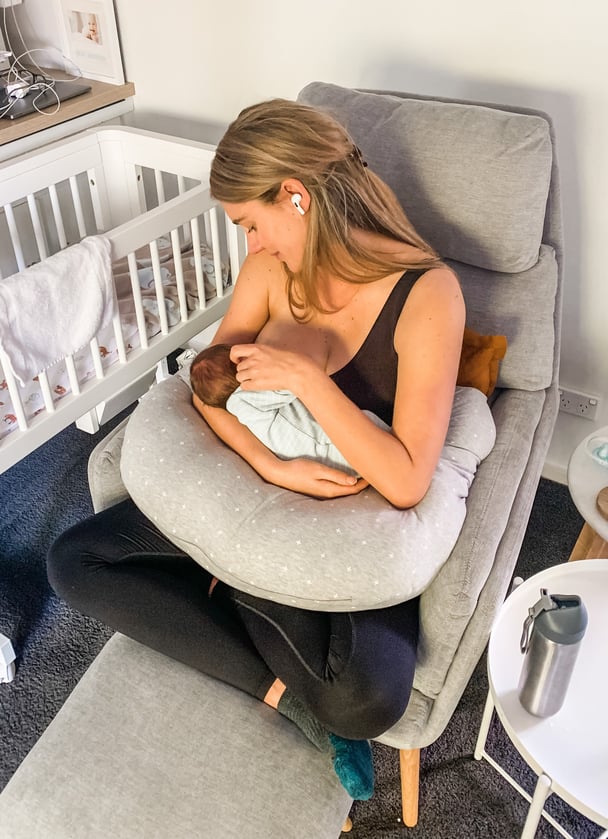
For example: I absolutely loved my breast pump, but I waited until a month or so into new mum life before buying it, as I wasn't sure how my breastfeeding journey would pan out. If you do end up pumping, I recommend a double pump — ideally wireless and hands-free, so you're not chained to a powerpoint and are free to multitask.
Another one is a baby carrier. Some little ones just won't settle in a carrier, so it can be a good idea to get to know their temperament first, or trying borrowing from a friend first.
Do it now, pat yourself on the back later.
Get your car seat sorted early.
You're probably across that it's illegal to drive your newborn anywhere without a car seat fitted! This is a good purchase to sort early because it's a non-negotiable and then you're prepped for a potential surprise-surprise "my waters just broke" plot twist happening ahead of schedule.
Another big decision is your plan for childcare. If you're planning to use a childcare service, it's never too early to start exploring local options, and getting your name on those (often long) waiting lists while you're pregnant.
The free government resource, Starting Blocks, is an excellent place to start. It's developed by ACECQA, where you can find and compare early education and care services by quality ratings, fees and vacancies.
Create a food prep stash.
You really don't know what's coming in those early postpartum days. I was shocked when I temporarily lost my appetite for those first couple of weeks after birth. It made cooking feel like the absolute last thing on my priority list. This is where a freezer full of pre-made meals is absolutely golden. I did a little cooking day with my mum and sister in the week before I gave birth and those meals kept me nourished even when the last thing I cared about was food.
The mental game.
Everyone is different, but one universal truth is that new parenthood can be overwhelming. It's a good idea to talk through the following before you're in the thick of it:
- When are you happy to start inviting visitors? Family only or is the wider friendship circle welcome from day one?
- Do you want visitors in hospital, or would you prefer people wait until you're home?
- What are your boundaries around visiting with a cough or sniffle? How do you want to approach reminding visitors if they're unwell not to come until they're symptom-free?
- Would you prefer anyone with toddlers or little kids to leave them at home for visits?
- Are there any friends or family members who make you feel overwhelmed in their presence? You might want to ask someone you trust to speak with them to ensure they are on their best behaviour.
- How will you ensure you'll balance ample rest time with much-needed company?
- What would feel safe and comfortable as a first outing? Somewhere local where you know the terrain?
Establishing these scenarios and protocols early gives a necessary layer of protection for your baby's health while giving you the mental space to recover, without the anxiety of potential germ exposure.
Remember, you might be a 'new' parent, but you are the parent and you are in charge. During your pregnancy and in the early months, it's okay to put your needs and the needs of your precious little family above the feelings of anyone else.
This information is for educational purposes and is not a substitute for professional medical advice. Always consult your healthcare professional for advice on medical conditions or treatment pathways.
Featured image: Getty.

Respiratory syncytial virus (RSV) can pose a risk to your baby from the moment they are born. A newborn's immune system is not fully developed after birth, placing them at increased risk of infection. In some cases, RSV infection can lead to serious illness and hospital admission. Talk to your antenatal care provider about RSV, and learn more at rsvaware.com.au
Hannah Vanderheide
Author
No Comments
Be the first to leave a comment