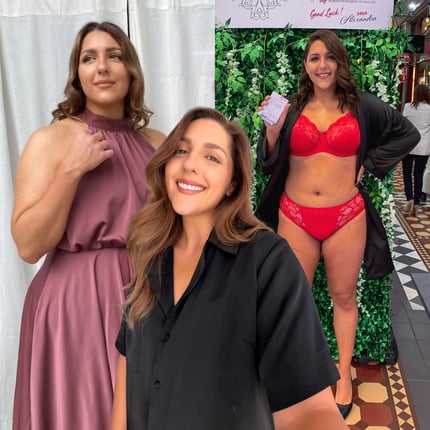
Want to support independent women's media? Become a Mamamia subscriber and get an all-access pass to everything we make, including exclusive podcasts, articles, videos and our exercise app, MOVE.
In my early 20s, I was the biggest advocate for the Body Positivity Movement. It became part of my identity as a young woman trying to figure out what ' body confidence' felt like.
I had always been on the curvier side; I remember riding the stationary bike after school in our living room while watching TV. I would pray that my tummy would just go away, that it was a 'phase', ultimately developing an eating disorder in my mid-teens.
Body dysmorphia took control of my life; what I ate, what I wore, how I exercised, and how I talked to myself.
Watch: Dr. Merriam explains nocturnal sleep-related eating disorder. Post continues below.

When I discovered a new movement gaining traction on Instagram called Body Positivity when I was 22, I felt an instant sigh of relief.
Finally, this was my invitation to accept myself, be confident, and love my body. At the same time, I was building a curvy dress hire business (the first of its kind in Australia) called 808 Threads, that I ran for three years.
The connection between the brand and the body positive movement was natural and effortless.
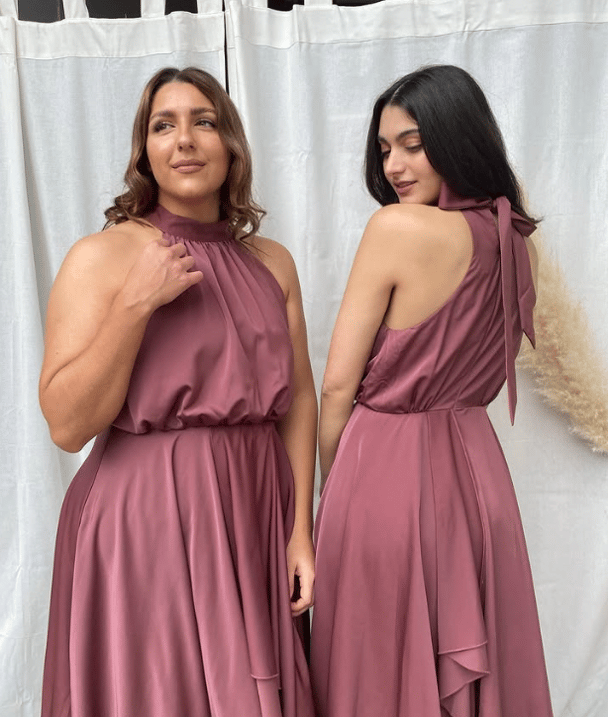
During this time, I became a plus-size model and was publicly advocating for body positivity.
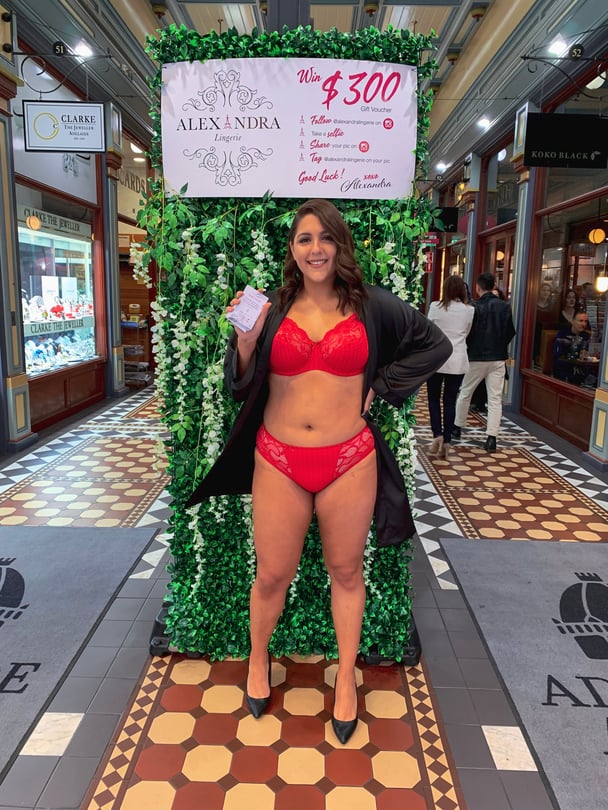
I walked around Adelaide's Rundle Mall in lingerie, ran my own fashion shows, and became a well sought-after curve model in South Australia.
I spoke out about issues like body confidence and championed self-acceptance; I believed that if women just loved how they looked, inner confidence would follow.
A few years on, I started seeing a shift in the body positive movement online.
Some started wielding it like a weapon. I saw conversations in which plus-size people would shame people who fit the 'beauty standard' for expressing their own negative thoughts about their bodies… like they weren't allowed to feel how 'we' felt because of how they looked.
A similar exclusionary tone was conveyed to people who were part of the movement, but their body composition changed, or they had lost weight.
They were no longer part of the club.
A movement that began with intentions of inclusivity of all bodies and shifting beauty standards online, suddenly turned exclusive.
While it helped broaden the spectrum of models and size offerings in retail — as well as providing both women and men a space where they are seen and celebrated — I felt my own shift away from the movement as I began to realise I was working backwards when it came to confidence.
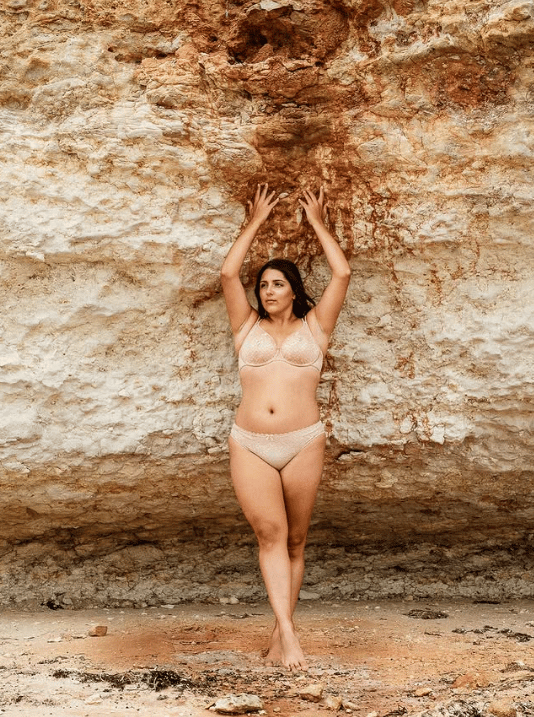
I'd love my body on a Monday and still question my worth on Tuesday.
I was outsourcing my self-love to Instagram likes and external validation. I tried so hard to work from the outside-in, looking at the 'fruit' of body confidence instead of looking at the 'root' of self-worth. As much as I focused on loving my body to love myself, it didn't fix how I felt within.
I did the 'body confidence' work but still felt unsettled underneath. Posing on Instagram, yet I was people-pleasing in my relationships. Advocating love for my body online, yet I avoided looking in the mirror. Something had to change. I couldn't keep up the facade anymore.
The "fake it 'til you make it" advice wasn't enough, but I wasn't ready to go to talk therapy, so I found an alternative that felt less intimidating and booked in with a Hypnotherapist. I don't know what came over me that day, but I used the motivation of being so uncomfortable in my 'comfort zone' to make the booking… and I'm so thankful I did.
It helped me identify, break, and rewire the spiralling thoughts that were keeping me stuck in comparison cycles and never feeling good enough… even though, externally, I looked successful and happy.
Listen: Clinical psychologist Dr. Anastasia Hronis unnpacks how to reframe the idea of the "ideal body" on the But Are You Happy podcast, post continues below.
I don't say this lightly — doing this work completely changed my life in ways I never thought possible. It was a HARD reset on my life. I completely reinvented how I saw myself in a matter of weeks and noticed changes in my external world as a result.
I had finally addressed the root causes that brought me decades of low self-worth!
It was the catalyst that created the life I live now at 30; enjoying running my businesses, happily married to my partner of 10 years, embodying real confidence, and knowing what deep love and trust for myself actually feels like.
Going through the journey from faking it to real self-worth inspired me to help other women have the identity-level changes I had; so I studied what gave me my life back.
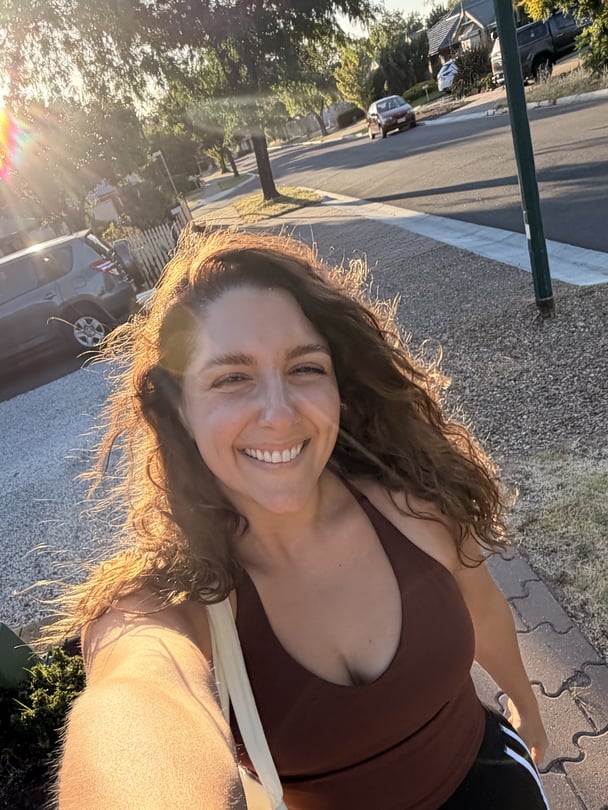
In my work as a qualified Hypnotherapy Practitioner and Master in Neuro Linguistic Programming, the goal is empowerment to be the real you. Not because you're broken, but because you deserve to truly love yourself.
Learning about the body positivity movement was a sliding door moment for me. Though I've outgrown the movement itself, it opened my awareness to body confidence, ultimately leading me down the path of knowing that doing the inner work is where real self-love is ready to be discovered.
If you or anyone you know needs support for eating disorders, please contact the Butterfly Foundation National Support Line and online service 1800 ED HOPE (1800 33 4673) or email support@thebutterflyfoundation.org.au .
For more from Alexia, find her on Instagram @alexia_monda and TikTok @alexia_monda .
Feature Image: Supplied.
Mamamia wants to hear about how you study, learn and upskill!
Complete our 3 minute survey for a chance to win a $1,000 gift voucher in our quarterly draw!
Take survey →Alexia Eleni Monda
Author
No Comments
Be the first to leave a comment