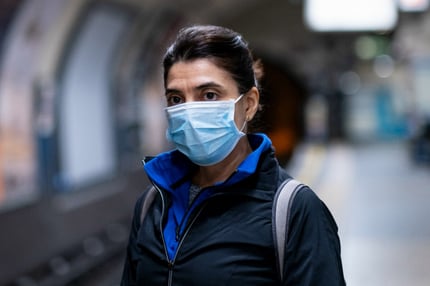
Since the COVID-19 pandemic began, one thing has been clear: international travel will most likely be the last industry to return to normal.
While domestic travel is likely to resume before the end of the year, the International Air Transport Association (IATA) – the top industry body for air travel worldwide – has confirmed that overseas travel is unlikely to return to normal until 2023.
Speaking toABC News Breakfaston Thursday morning, IATA chief executive Alexandre de Juniac delivered the forecast for future international travel.
Side note: These are the types of people you always run into at the airport. Post continues below.
“We have published today a new forecast about the potential recovery of air traffic, and what we see is that things should come back to normal in 2023, which is later than our previous forecast,” he said.
“That shows, you know, the importance and the severity of the crisis on air transport,” he added.
He also confirmed that plans are underway to reboot air travel slowly and in stages.
“We have planned is to restart the industry, first by reopening the domestic markets, then regional continental markets, such as Asia-Pacific, or Europe, or North America,” he confirmed.
“At the end of 2020, the traffic should be between 50 to 55 per cent of the same level that was in place in 2019. So, we would lose something like half the traffic for 2020.”
While some international travel will likely restart next year, things won’t return to normal for a few years.
It’s also likely that international travel will initially only open for essential or professional reasons, meaning international holidays will be off the cards for a little longer than expected.
But although things are looking grim for international travel, Australians may have the opportunity to travel to New Zealand in the near future.
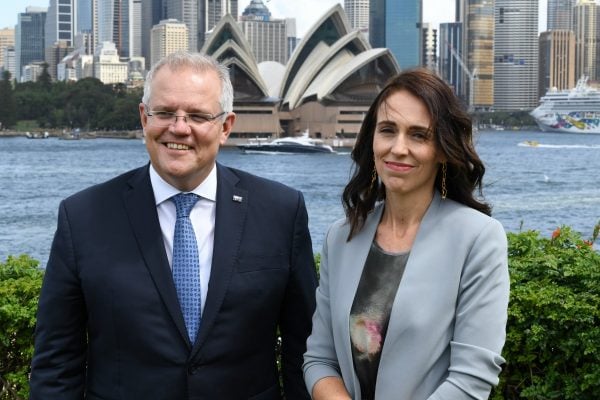
Image: Getty.
At the moment, Prime Minister Scott Morrison and New Zealand Prime Minister Jacinda Ardern are reportedly working on a trans-Tasman travel bubble between the two countries, which would allow Australians and New Zealanders to travel without mandatory quarantine measures.
"Once we have established effective travel arrangements across the Tasman, we will also explore opportunities to expand the concept to members of our broader Pacific family, enabling travel between Australia, New Zealand and Pacific island countries," Morrison and Ardern said in a joint statement.
Opening up travel routes would be majorly beneficial to both economies: New Zealanders are the second biggest visitors to Australia after China - 1.43 million Kiwis made the trip and injected a total of $2.6 billion into the economy in 2019, according to Tourism Australia data, and New Zealand is the number one outbound destination for Australian travellers.
Outside of the trans-Tasman bubble, however, we can expect international travel to look very different in the coming years.
Here's what overseas travel could look like:
What is a 'health' passport?
Some destinations are looking into introducing a 'health' passport, which would ensure that tourists are virus free.
The Italian island of Sardinia, for instance, is looking at introducing health passports to help kick start the tourism industry.
"Whoever boards a plane or a ferry will have to show (the health passport) along with their boarding pass and their identity document," island governor Christian Solinas told Arab News.
Greece, Turkey and Chile are also reportedly considering the option.
Listen to The Quicky, Mamamia's daily news podcast, below. Post continues after podcast.
Where will we be able to go?
Speaking to Mamamia, UNSW’s Dr Tony Webber, a former Qantas Group chief economist, said the natural trajectory for easing travel restrictions would likely be this:
How could air travel change?
As many airlines have struggled financially amid the pandemic, it's likely that plane tickets will cost significantly more.
Social distancing, which will be in place until there's a COVID-19 vaccine, may also impact airfares.
"If [authorities and airlines] believe that social distancing on the aircraft [on a domestic flight] is necessary — which I think they will — the only feasible solution is to leave the seat beside you vacant," Dr Webber toldMamamia. "So you’re looking at a 33 per cent cut in capacity, which will typically translate into a 15 per cent increase in airfares."
Earlier this week, air transport communications and IT specialist SITA released a paper titled,A 'New Normal': The changing face of air transport post COVID-19, which outlined the potential future of air travel.
Image: Getty.
As per Forbes,a number of the paper's key takeaways included:
Other potential changes that have been flagged for airports and aircraft include temperature screening, more frequent cabin cleaning and testing for COVID-19.
Feature Image: Getty.
For more on COVID-19:
Jessica Kingston
Author
No Comments
Be the first to leave a comment