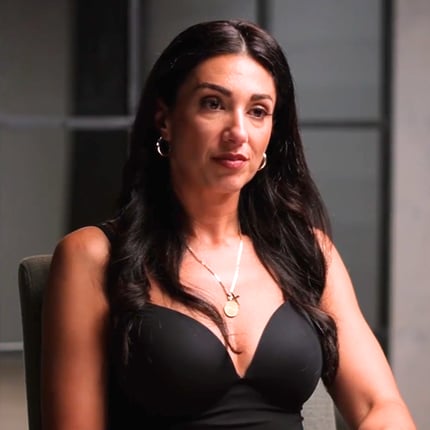
As a neurophysiologist and human performance coach, Louisa Nicola has spent the last decade studying the brain.
She's on a mission to tackle one particular disease. Alzheimer's.
The disease, which is the most common form of dementia, affects approximately 24 million people worldwide, according to Cleveland Clinic, and that number is growing. Nicola believes it should be much lower.
While there are some genetic components to the disease, many of the risk factors that contribute to an Alzheimer's diagnosis can be minimised with certain lifestyle factors, but Nicola says time is of the essence.
Even though the symptoms of Alzheimer's are known to affect people later in life, the early stages of the disease start a lot earlier than many may think and Nicola says it's crucial that we take steps to protect our brain health now before it's too late.
"The fact that so many people are at the mercy of a disease that is preventable is not okay with me. It doesn't sit well with me," Nicola said in conversation with Steven Bartlett on his podcast Diary of a CEO.
Women are also more likely than men to develop Alzheimer's in their lifetimes — they make up 70 per cent of Alzheimer's patients. This is what Nicola wants them to know.
Watch: The difference between dementia and Alzheimer's. Post continues below.
Alzheimer's generally starts in your 30s.
While the symptoms of Alzheimer's typically begin to appear when someone is in their mid-60s or later, Nicola says the disease can start developing from as early as our 30s.
"This disease is a disease of midlife and so it generally starts in our 30s, but the first symptoms start in our late 60s, 70s and beyond," Nicola explained on the February 5 episode of Diary of a CEO.
Basically, as soon as our brains are fully developed around the age of 25, they are at risk of steady decline. If we don't take care of our brain, that decline could be significant.
"Over time, through things such as sleep deprivation, poor diet, lack of physical activity, environmental toxins, this slowly erodes at the functioning of the brain," Nicola explained. "And over time this starts to compound."
According to Nicola, this means we can't afford to wait before we start taking our brain health seriously. Our cognitive health when we're older relies heavily on how we look after ourselves now.
Just one night of bad sleep can affect your brain. It compounds.
Missing a couple of hours sleep every other night may not feel like a big deal but, according to Nicola, it really is.
Speaking to Bartlett, she revealed that even one night of bad sleep can significantly affect your brain health.
Nicola explains that one night of sleep deprivation raises your risk of developing something called amyloid beta, a protein associated with Alzheimer's disease, by four per cent.
As amyloid beta plaques build-up in your brain, the more susceptible you are to developing Alzheimer's.
Missing out on sleep, she explains, also prevents the clearance of brain waste (yes, that's a thing) which can contribute to cognitive decline.
When women go through menopause, poor sleep can combine with stress and hormonal changes, contributing to the buildup of proteins associated with Alzheimer's.
But it's not all doom and gloom, those with a higher cognitive reserve (essentially those who have strengthened their brains) can maintain their cognitive function even with a "head full of amyloid beta", she explained.
So how do we actually keep our brains healthy?
Throughout her chat with Bartlett, Nicola kept referring to this thing called "cognitive reserve", which she says is key for keeping our brains healthy.
Havard Health describes cognitive reserve as the brain's ability to "improvise and adapt" and maintain normal function despite certain brain changes or damage.
"A more robust cognitive reserve can also help you function better for longer if you're exposed to unexpected life events, such as stress, surgery, or toxins in the environment," per Harvard Health.
The stronger your cognitive reserve, the more likely you are to function well, despite brain changes related to Alzheimer's or other conditions.
According to Nicola, it's made of a web of connections in the brain that are strengthened through keeping your brain active with things like reading and handwriting … but also exercise.
The number one exercise for your brain.
"Exercise is one of the most potent stimuli for brain health and Alzheimer's disease prevention and cognitive reserve. The more you exercise, the bigger your brain," Nicola told Bartlett.
But according to Nicola, one particular exercise comes out on top — strength training.
Listen: Louisa Nicola talks to Holly Wainwright about what's important in the space of midlife health, and what's just noise. Post continues below.
When we lift a heavy weight and our muscles contract, Nicola explains, a "whole set of chemicals" called myokines are released into our brains. These little chemicals help our cognitive performance and help grow neurons in our hippocampus, the part of the brain responsible for our memory.
"There's real estate in your brain reserved for lifting heavy, so every time you lift a heavy weight as opposed to a light weight, it takes more neural real estate to lift that heavy weight. So the heavier you lift, the greater the neural drive. The greater the neural drive, the better it is for your brain," Nicola explains.
When Barlett asked which strength exercise in particular is best to protect your brain, Nicola didn't hesitate to answer, "deadlift".
"If done correctly, the deadlift can use almost every muscle in your body," she says.
An "important tool" for the prevention of Alzheimer's disease.
Another reason not to skip leg day.
According to Nicola, "having strong legs is by far the most important tool in your toolbox for the prevention of Alzheimer's disease".
Speaking to Bartlett, she referred to a study where identical twins were tracked for cognitive function over a 10 year period, and they found that the twin with stronger legs had a bigger brain and better cognitive function.
"Being sedentary is a disease."
Whether you're doing strength training or cardio, all exercise is good for you. Skipping out on it completely, however, can be detrimental.
But it's not just a daily workout that's important. Even if you work out every day but then sit for the rest of the day, your health is at risk.
"Being sedentary is a disease," Nicola tells Bartlett.
To combat this, Nicola says you can make a big difference by stepping away from your desk regularly for some movement. She says doing 10 air squats every hour on the hour can help "compensate for the sedentary lifestyle" that a lot of us live.
Nicola is passionate about informing people about the risks associated with Alzheimer's early enough to protect them in the long-run.
The information provided in this article is not intended to replace professional medical advice. Always seek guidance from your GP.
Feature image: Spotify/ Diary of a CEO.
Are you working full-time, or running your own small business?
We want to hear from you! Complete our 3 minute survey for a chance to win a $1,000 gift voucher in our quarterly draw!
Take survey →
Sign up to Mamamia Daily
Sent daily
Gabrielle Oehlmann
Author
No Comments
Be the first to leave a comment