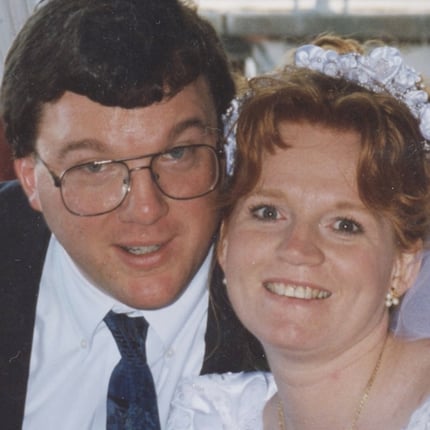
Asa Ellerup lived a normal family life with her husband Rex Heuermann, whom she married in 1996, and their two children. Or at least so she thought.
They had a home in Long Island, New York and Heuermann worked as an architect in Manhattan, but he was hiding a dark secret. One that was haunting the city.
He was the Gilgo Beach serial killer, who has since admitted to killing eight women more than a decade ago.
Seven of whom he killed in his room in the basement of their family home.
Right now, the couple are divorced and 62-year-old Heuermann is sitting in a 60-square-foot prison cell in Long Island, not far from where the bodies of his victims were found.
Meanwhile, Ellerup says she is sleeping in the room that became Heuermann's killing ground while she grapples with the fact that she lived for almost three decades with a serial killer.
On Wednesday, Heuermann's victims' families finally got some sense of justice, with the courtroom erupting into applause as the murderer learned his fate.
LISTEN: On True Crime Conversations, we delve into the case. Post continues after podcast.
Family members of the victims shared memories of their loved ones and described how the brutal murders created "lifelong devastation" for them.
Ahead of his sentencing, Heuermann gave a brief statement claiming responsibility for the murders.
"The words I would say have no meaning," he said, per USA Today.
"There are no words I can say. I am responsible for all that was said in this room."
While Heuermann had no words, Judge Timothy Mazzei chose his carefully, telling Heuermann: "You are a disgusting and despicable, small man, if you're a man at all. And you're a coward."
Heuermann received the maximum sentence — three life sentences for first-degree murder, plus 25 years to life on four second-degree murder charges, all running consecutively, per BBC.
"Get him out of here," Mazzei said, as the courtroom erupted into cheers and applause.
Heuermann's sentencing comes more than two decades after prosecutors say the killings began.
The case of the Gilgo Beach serial killer.
In 2011, the bodies of five women were found near Gilgo Beach on Long Island.
All were escorts in their 20s, and at least four of them were murdered.
The fifth, police said, died by misadventure, but Shannan Gilbert's family wasn't convinced. Gilbert was the reason police were searching the area in the first place, after a frantic 911 call in which she repeatedly told an operator, "There's somebody after me".
There was no doubt, however, about the deaths of Melissa Barthelemy, Amber Costello, Megan Waterman and Maureen Brainard-Barnes, who went missing between 2007 and 2010. All four were found strangled and they soon became known as the 'Gilgo four'.
For 12 years, police knew they were hunting the 'Long Island Serial Killer', but it turns out the clues were under their nose the whole time. Heuermann was arrested in July 2023, a year after a new task force was called in to tackle the case.

It was Costello's roommate who gave a clue that could've led police to Heuermann long before he was finally caught.
Costello's roommate recalled seeing an "ogre" of a man driving a first-generation Chevrolet Avalanche — which could have pointed to Heuermann.
The roommate also said the man had been calling Costello relentlessly and offering her six times her hourly rate on the night she went missing.
It was the combination of this witness testimony — as well as DNA extracted from both a discarded pizza crust Heuermann ate, and a male hair found on a victim, and finally, Heuermann's activity on a series of burner phones used to arrange meetings with the women — that implicated Heuermann.
A year later, he was linked to two more murders: the 1993 killing of Sandra Costilla and the 2003 killing of escort Jessica Taylor, the latter of whom's body was found among six sets of remains discovered just a few months after the Gilgo Beach bodies.
Costilla, however, was discovered back in 1993, a short distance away.
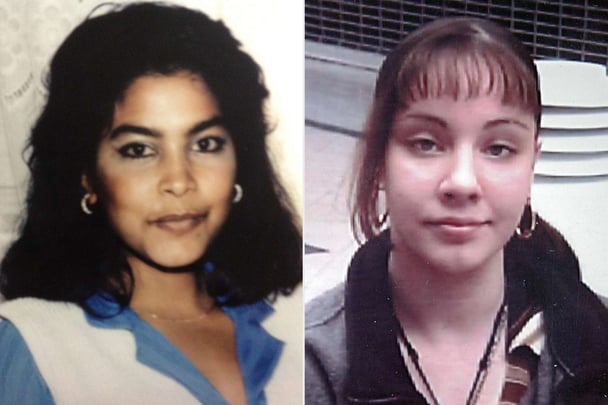
In December 2024, the 62-year-old was linked to the killing of Valerie Mack, an escort who was last seen by her family in 2000 in New Jersey.
They identified her through DNA evidence and connected her to Heuermann due to a device found at his Long Island home.
Heuermann was charged with killing seven of the women whose remains were found on Long Island, but he confessed in court to killing an eighth — Karen Vergata, who disappeared in 1996 — when he took a plea deal on April 8, according to NBC News . Heuermann is not charged with Gilbert's death.
He initially pleaded not guilty and was set to stand trial later this year. However, he changed his plea to guilty in a New York courtroom in April. According to NBC News, Heuermann will not face charges in the death of Vergata in exchange for his admission.
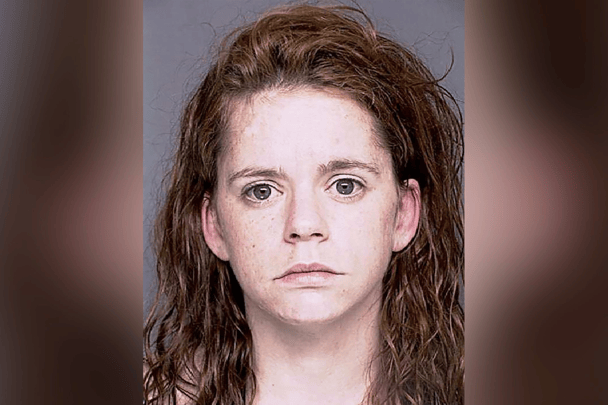
In court, he admitted to meeting the women, strangling them and dumping their bodies where they were found.
NBC reported Heuermann agreed to cooperate with the FBI as part of the plea agreement but said he will not disclose how he committed the crimes.
A new documentary The Gilgo Killer: House of Secrets claims, per The Guardian, that Heuermann maintained a four-day process in the killings of his victims while his family was away. The process allegedly involved murdering them in a basement "kill room" and using a stopwatch to perfect dumping them on a beach about 30 kilometres from his home.
During court proceedings, the prosecution revealed some of their evidence, including the use of more than 100 burner phones, digital shredding software and questionable Google searches — many of which involved checking up on the case itself via the various TV shows and podcasts being made about the 'Long Island Serial Killer.'
Prosecutors also revealed a "planning document" he is accused of using to select, kill and dispose of his victims.
Investigators found the Word document — that had been created in 2000 and modified over many years — on a hard drive in his basement.
According to a bail application, the document included descriptions of 'packaging' of bodies for transport, steps to remove DNA evidence, and a sub-heading titled 'Body Prep', which details steps to clean, dismember and move bodies, as well as steps to avoid apprehension.
Watch: Investigators have released a rendering of what they think the only male victim looked like.
At this stage, Heuermann hasn't been charged in relation to the other bodies found in the area. The remaining victims buried on Long Island include: a toddler girl, an Asian male dressed in women's clothing and an unidentified woman confirmed as the toddler's mother.
Inside the life of the Long Island Serial Killer.
Heuermann was a Manhattan architect who had been married twice. From his marriages, he has a 26-year-old daughter, Victoria, and a 33-year-old stepson, Christopher, who has special needs.
A Long Island local his whole life, his family home was just a 10-minute drive from Gilgo Beach.
According to The Independent , neighbours described him as a "quiet family man" who kept to himself. But they also chose to keep their distance. Kids were told to avoid the house on Halloween, and one local noted he was "not a very nice person".
Heuermann married his second wife, Ellerup, in 1996. She previously said that if he did commit the murders, he was "living a double life" she knew nothing about.
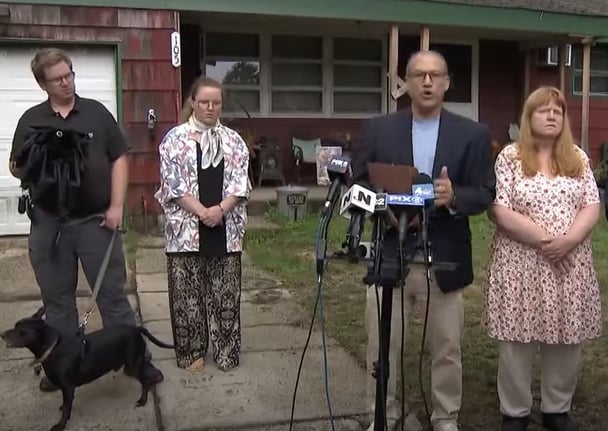
According to Ellerup's account, Heuermann used their home as the killing ground for most of his murders.
The Gilgo Killer: House of Secrets revealed that Heuermann confessed his crimes to Ellerup before he admitted to them in court.
"He looked very nervous. Very, very nervous," Ellerup said to her lawyer in a preview of the documentary.
"And I said to him, 'So, Mr Heuermann, I understand that you are confessing to me on these murders. Can you please tell me how many of these women did you kill? He said eight."
"He said, I wasn't home during all of them," Ellerup added, explaining that he admitted to killing the women in their family home.
"He said yes, they were killed in his room downstairs. All except one."
The preview didn't make clear when this confrontation took place, but Ellerup filed for divorce days after Heuermann's arrest in 2023.
When asked on the documentary, per The Guardian, why he confessed to his family, Heuermann said: "It was something I needed to do face-to-face, and to be honest with each other."
"It needed to be done. Person-to-person, heart-to-heart. I went in, just as an open book."
Speaking to The New York Post in 2023, Ellerup said she had been filled with "anxiety" and that their two children "cry themselves to sleep".
A year after his arrest, the attorney for Heuermann's estranged wife and children said, "They are collateral damage to the alleged actions of Rex Heuermann.
"It's a matter of piecing their lives back together and how they are going to move on."
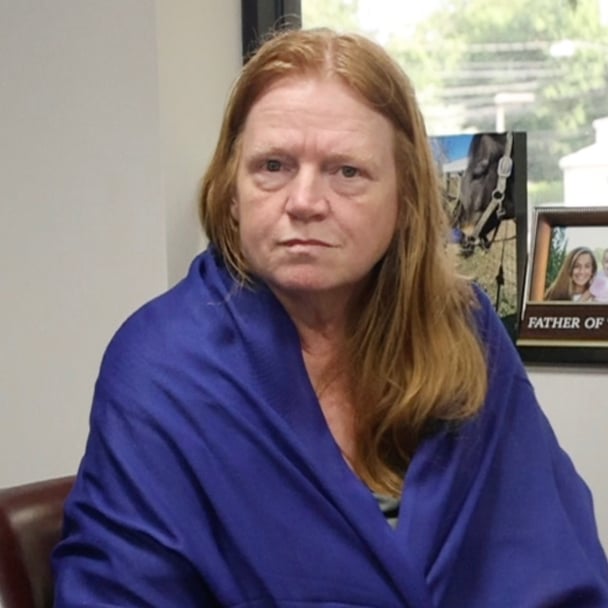
Today, she sleeps in the very basement where Heuermann murdered and dismembered some of his victims — her own version of connecting with the victims of the atrocities.
"The brutal truth is that Rex Heuermann said he dismembered the bodies in this room," Ellerup said in the documentary's final episode, per People.
"That is the brutal truth, okay? Now, there's me. I'm in this room. And I'm here because I do feel spiritual. I am trying to say spiritually, in my own way, that I am really sorry for what these victims went through."
Ellerup said she has remodelled the basement since Heuermann's arrest and that she began sleeping in the room before he admitted to the murders in court.
She added that she was "haunted by dreams every night".
"It will never go away. It will follow me for the rest of my life. It will never be any justice for anyone, and there will never be any way to forget about this."
This article was published in 2024 and has been updated with new information.
Feature image: Peacock.
Gemma Bath
True Crime Conversations host
No Comments
Be the first to leave a comment