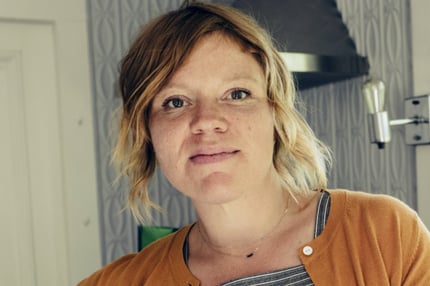
Maybe that’s you up there, sitting in a cafe, soaking up the few minutes of solitude until the old friend you’ve met for coffee returns from the bathroom. You barely slept last night, you’re exhausted, and your body hurts — but you’d never tell your friend those things. You don’t want to be known as the girl who always cancels plans.
Instead, you did your hair, and you put on makeup. You covered up the dark bags under your eyes — an art you’ve now perfected. And you manage to float through your hour-long coffee date, never even letting on that you’re sick.
It’s because you’ve chosen to wear the mask that says “everything is fine.”
If you struggle with chronic illness — whether that’s a mental health condition, chronic pain or fatigue, or an autoimmune disease, among others — I’m sure you’ve grown familiar with situations just like this. I certainly have.
Yet, I can’t help but ask myself — why do we feel so compelled to keep putting up this facade, one that keeps us hiding from our colleagues, our friends, and even our own family?
WATCH: Chronic Pain: Explained. Post continues after video.
Here are three reasons why we likely keep on masking our disease:
1. Many chronic illnesses are misunderstood and not socially accepted.
Perhaps, you have opened up before about your depression, your anxiety, your fibromyalgia, or your chronic fatigue syndrome to those around you. And the odds are fair that you’ve gotten plenty of disheartening responses.
“Oh yeah, I’ve been stressed lately, too.”
Or…
“I’ve heard that’s not a real disease.”
Or…
“Oh, I had that once! I just took more naps.”
For many of these chronic disorders of mental and physical health, society continues to feed us the message that they aren’t real conditions. That we’re not really sick. And this has cultivated a deep, real fear in us that our diseases will always stir up misunderstanding and opposition. So, instead of take the risk, we hide them.
2. We’re scared of personal judgment.
Not only are we afraid others will misjudge our health conditions, but we’re also terrified they’ll judge us. We’re afraid they’ll equate our chronic pain with complaining too much. We’re worried they’ll blame our depression on not getting out of the house. We expect them to attribute our fatigue to being lazy, or too little sleep.
We’re also scared they’ll look at the drastic measures we might have to take to care for ourselves — controversial medications, radical dietary changes, or alternative therapies — and think we’re overreacting. Rather than go there, we pick up the mask, sparing ourselves the personal judgment we fear.
3. We don’t want to be a burden.
This reason has far outweighed the others for me. When I meet up with a friend or go to a family party, I desire more than anything to spend that hour not thinking about my fatigue and my pain. All I want is to experience the fun and the joy of the event as I would have before I was sick — I want to feel normal, and I want to be treated normally. The last thing I want to do is to bring down the conversation or the party with the weight of illness — and to make my friends and family bear the burden of it.
I don’t know about you, but the more time that passes by, the more weary I have grown of the pretending. And the more effort I have made to take off my mask, and to be honest with the reality of my health and how it affects me each day, the more I’ve realised how crucial it has been for my acceptance of my condition. It has fostered my relationships, my growth, and my healing.
Here are three reasons why we need to take off our masks for good:
1. Having real relationships means being vulnerable and letting others see our weakness.
Vulnerability is a crucial part of maintaining depth in our relationships with those we care about. Though appearing weak is often the last thing we would want to do, sometimes it can be the best thing for us — to acknowledge we don’t have it all together, and to let others see the real damage invisible illness can do. Perhaps, taking off our masks can become the stepping stone toward deeper, more honest relationships — which are so important for our emotional health as we battle these physical conditions.
2. The people in our lives who love us want to take care of us.
Sometimes we need to tell ourselves again and again — no matter our fears, we aren’t a burden to those who love us. Taking off the mask can remind us it’s okay to let others in, to let them care for us. Taking off the mask means, when we’re having a difficult day, we can let that old friend bring coffee over to our place instead of having to venture out. It means we can let our parents cook us a meal or let our roommate pick up our groceries. We can allow ourselves to be loved — without guilt and free of shame.
3. The more we dissociate ourselves from our conditions, the more difficult it becomes to accept them, to own them, and to overcome them.
The longer we continue to hide behind our “everything is fine” masks, the more we’ll try to force ourselves to believe everything really is fine. We’ll be frustrated with ourselves on the days we’re too sick, too anxious, or too tired, and we’ll minimise the steps we need to take toward healing. And one of the most important parts of living well with chronic illness is accepting the place we’re in — to acknowledge what we’re up against in the hope of overcoming it.
One in four adults and one in five children currently suffer from anxiety. Listen to Anxiety: A Guide on No Filter. Post continues below.
Overcoming our conditions doesn’t necessarily mean beating them for good. It most often doesn’t mean quick, magic healing.
Rather, it means coming to a point of peace with our illnesses and knowing they don’t define us and they haven’t beaten us. It means making the lifestyle adjustments we need no matter what society may think. It means leaning on the ones we love and letting them see the real us, even on the bad days.
It means taking off the masks — for good.
This article originally appeared on Medium and has been republished with full permission.
For more from Meg Rodriguez, you can find her website here or follow her on Instagram: @megcrodriguez
Feature image: Getty.
Meg Rodriquez
Author
No Comments
Be the first to leave a comment