If you want to support independent women's media, become a Mamamia subscriber . Get an all-access pass to everything we make, including exclusive podcasts, articles, videos and our exercise app, MOVE.
I spent 41 years wondering what was wrong with me. Like I never really fit anywhere. A square peg for a round hole. Then, I finally got an answer.
Being another " ADHD at 40" cliché, at first I felt like I needed to hide it. Not because ADHD is anything to feel shame about. More like I was worried about being accused of jumping on a bandwagon. Like I'm trying to be a part of a trend.
And it's not just in my head. There's been a very public, very cynical narrative running through the media lately: that women aren't actually being diagnosed with ADHD; they're chasing a "Limitless-style" productivity pill.
That stimulant medication isn't treatment; it's a shortcut, a way for overworked women to get an unfair edge on modern burnout.
And I've had all the comments thrown at me.
Watch: Yes, adult acne is normal. Post continues below.

"Oh, they dish out meds to anyone these days."
"Oh no, you just can't concentrate when you don't want to do something."
"Have you thought about changing your diet?"
"But it's not something you can really test, is it? So how do you really know?"
Well, I don't know as much as the psychiatrist who diagnosed me, obviously. But what I can tell you about is my experience.
What Inattentive ADHD actually feels like.
My diagnosis is Inattentive ADHD, a type of attention-deficit/hyperactivity disorder that mainly involves difficulties with attention, focus, organisation and memory, rather than hyperactivity.
It's not that I want to be bad at life admin, following street directions, booking flights with multiple stop-overs and time zones, or choosing a phone plan.
It's that when I am doing those things, the only way I can describe it is that my brain feels overwhelmed.
There is fog and noise and silence all at once. And I feel like crying.
I know I am clever in many ways, but I could never understand why tasks other people seem to find simple set me on the verge of tears.
The signs were always there.
I have always been dopamine-seeking. I have an addictive personality. I partake in high-risk behaviour. I was always told I was "too much". I have always lost keys and phones.
Even if I could have a nice car, I wouldn't because I am constantly swiping it. Parallel parking is difficult.
The thought of small talk makes me want to crawl into a hole and die. But if you want to exchange life stories and trauma in the first 30 seconds of meeting me, I'm all yours.
Listen: The hidden culprit behind midlife weight gain and why your morning coffee can trigger a trip to the bathroom. Post continues below.
I was 24 when I met my ex-husband. I had a warrant out for my arrest for unpaid tram fines, and I had signed up for a credit card shark loan that was charging 20 per cent interest. To be honest, I was a financial mess.
Pretty much from the start, I abandoned all the life admin in the relationship. Bills were not in my name; I didn't fill out paperwork, didn't choose insurance, or decide when and how they were taken care of.
I was terrible at it, and I took care of the domestic side of things. It just worked because it was a case of divide and conquer.
So, when I became single at 38, all of a sudden, I found myself driving around in an uninsured, unregistered car, not being able to understand the different rates and plans for energy providers, not getting my taxes done, and struggling to stick to a very lean budget.
I thought that it was just because I hadn't really had a chance to be a proper, independent grown-up, but in hindsight, I can see it started much earlier.
I was a class clown, talked too much, and was told to stop distracting people in school.
My dad has told me that to get me to complete assignments or study, he pretty much had to nail me to a desk, and even then I would find myself daydreaming, feeling the need to reorganise my wardrobe whilst making a mixtape.
It took me many years to stop jumping headfirst into conflict, to learn not to say everything I thought out loud, and to understand and respect other people's boundaries.
It was my girlfriend, who has multiple children with ADHD, who brought it up with me. I was saying I couldn't understand why I couldn't be a fully functioning adult. And she sent me the details of a psychiatrist.
The relief of finally understanding myself.
When I started taking medication for my ADHD, it was like the thousand tabs in my brain went down to only a few.
I could focus and complete one task without rearranging the Tupperware cupboard and organising a social gathering whilst simultaneously creating a new playlist on Spotify.
For the first time in my life, I could sit through a meeting without my mind wandering to seventeen different topics.
I could finish tasks without getting distracted by a notification, then forgetting what I was reading about. I could have a conversation without interrupting or losing track of what the other person was saying.
I've set up calendar reminders to pay my insurance and rego in advance. I am not driving around in an uninsured and unregistered car. I can now tackle my life admin without having a complete meltdown.
The relief was overwhelming — I am not stupid or lazy, or intentionally disruptive; it's just that my brain is wired differently.
The unexpected gifts of an ADHD brain.
Because my brain is wired differently, it allows me to think creatively. I have divergent thinking and rapid idea generation abilities.
When I am passionate about something, I'm like a dog with a bone. I could write and deliver TED Talks whilst cutting a TikTok video on it. My insufferability has become something I'm proud of, not ashamed of.
Fortunately, I have been able to forge a career out of it. And now that I can properly focus, I have never felt more confident and competent in my work.
I can harness my hyperfocus when I'm passionate about a project, and I can properly structure my day and time effectively.
Why are so many women getting diagnosed later in life?
So, why the trope of so many women like me all of a sudden getting diagnosed with ADHD in our thirties, forties, and fifties?
Experts agree girls are less likely to be diagnosed than boys, given they're far less likely to be "jumping off the walls" (not a clinical term). As a result, ADHD in women has long been underscored.
Dr Ginni Mansberg told Mamamia's WELL podcast that most women being diagnosed now were quietly struggling long before anyone noticed.
"Most of the girls we're diagnosing, in retrospect, have had problems like getting their schoolwork done, underperforming in university, underperforming at work, underperforming in relationships, because they were so scatty," she said.
Without the widely perceived "naughty boy" stereotype to flag it early, Dr Ginni explained, that struggle followed them into adulthood.
"Because they didn't have that stereotype, they missed out on the diagnosis when they were young, and it's all catching up to them now."
She also pushed back directly on the idea that women are being over-diagnosed.
"I don't think there's a lot of evidence that this diagnosis is being scattered around like there's no tomorrow. You can't actually get access to a formal diagnosis or any sort of medication except through a psychiatrist," she said, adding that for most women, a diagnosis finally makes sense of a lifetime of symptoms.
What I'd tell my younger self.
If I could go back and tell my 20-year-old self anything, it would be this: you're not broken, you're not lazy, and you're not "too much". Your brain just works differently, and it will serve you once you learn how to harness it.
I'd tell her to seek help sooner, not to be ashamed of needing support, and to stop trying so hard to fit into a box she's too sparkly for anyway.
I'd tell her that the things that make her different — her creativity, her passion, her ability to think outside the lines — are actually her greatest strengths.
Practical tips for managing ADHD.
For anyone reading this who recognises themselves in my story, here are some game-changers I've discovered:
Technology is your friend: ChatGPT is brilliant for breaking down complex tasks like understanding phone and electricity plans, or giving you step-by-step instructions for anything that feels overwhelming.
Calendar reminders are essential: set them for everything, not just appointments.
Break big tasks into tiny steps: instead of "do tax return", try "find tax documents", then "open tax software", then "enter first section".
Embrace your hyperfocus: When you're in the zone, ride that wave.
Finally, if it feels like you are reading your own life story right now, or you can see your daughter's story in mine, seek help.
There's no shame in getting a diagnosis later in life. In fact, there's incredible relief in finally understanding yourself.
You're not jumping on a bandwagon. You're not seeking attention. You're seeking answers to questions you've been asking your whole life about why certain things feel so impossibly hard.
And those answers are worth finding.
Well, Mamamia's health brand for women is shaped by the health experiences of women just like you. Sign up to the Well newsletter to receive your weekly dose of trusted health expertise without the medical jargon, ask a question or share your story.
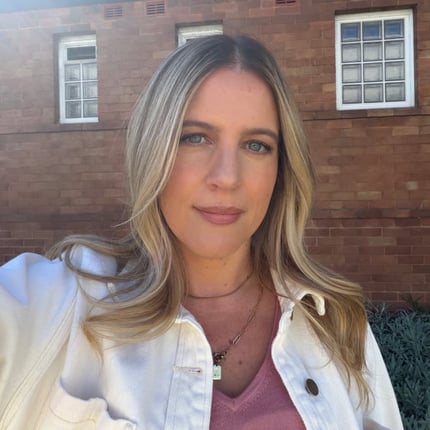
Feature Image: Supplied.

Win a $1000 voucher!
We want to ask you a few questions about laser hair removal and professional skin treatments.… Complete our quick survey for a chance to win a gift voucher in our quarterly draw!
Take survey →Annaliese Todd
Lifestyle Producer
No Comments
Be the first to leave a comment