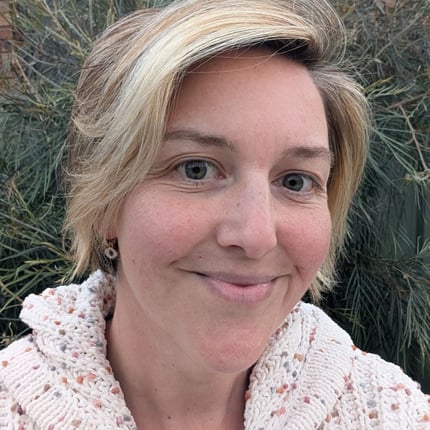
I have a Master's degree in Mental Health. Sounds impressive, right?
I thought so, until at 41 I realised I was burnt out.
Burnt out as a mother, a wife, a friend and a mental health professional.
For the past 20 years, I've worked in Community Services in Education, Disability Services, Drug and Alcohol, and five years ago, I built and scaled a successful counselling practice. I've taught coping strategies, discussed nervous system regulation and spent years helping people navigate life's challenges.
So when my own nervous system finally gave up on carrying the load of a high-achieving perfectionist, I did what any self-respecting wellbeing professional would do. I hid my pain and framed myself as a phoenix.
I just needed to take a quick breath to rise again from the ashes that were now my life.
Watch: What anxiety is actually trying to tell you and why it matters. Post continues below.

I knew I could "get better". I was adamant I could.
Surely there was a podcast I hadn't listened to that had the answers or a habit I hadn't tried. Maybe I just needed a more efficient morning routine or an Etsy-ready, Canva-created booklet that listed my strengths, values and 25 journal prompts to affirm my purpose.
I was convinced I had missed a life-changing insight hiding somewhere between a neuroscience expert, a bestselling author and a woman on Instagram who somehow manages to meditate, journal, exercise, meal prep, and look radiant before 6 am.
I was determined to find the answer.
The problem was that once the adrenaline of having no expectations wore off, I was exhausted. The kind of soul exhaustion when deciding on dinner needed a strategic planning meeting, and leaving the house provoked anxiety similar to coming face-to-face with a rabid wolf.
Alongside exhaustion came the grief.
Years spent pouring my energy into raising a family, supporting others and running a business meant I had adopted the belief that working harder and learning more could solve anything.
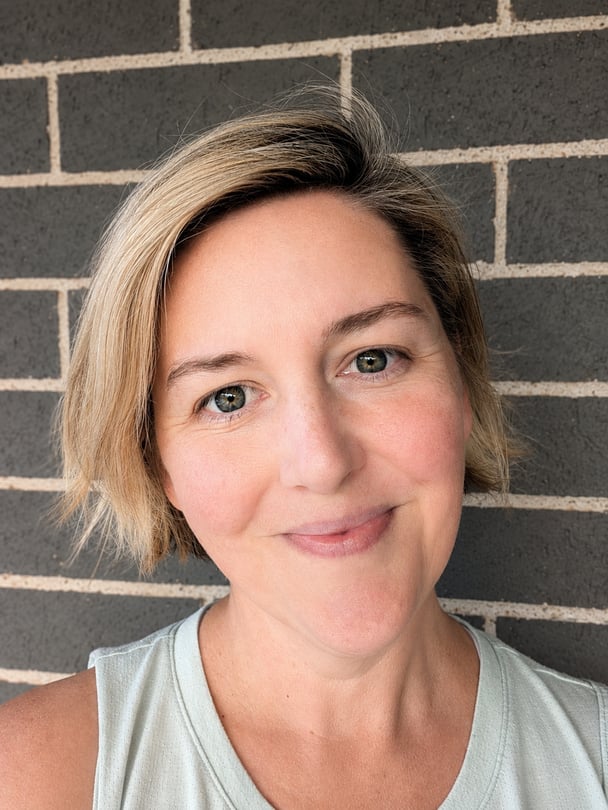
However, I now found myself sitting on the couch guiltily binge-watching Netflix or doing paint-by-numbers until my eyes blurred. And I judged myself harshly for the gap between what this was supposed to look like and what my body was letting me do.
Surely, as a wellness professional, I should be doing yoga retreats. Or journaling. Or cold plunging into the ocean while reading a book about resilience and capturing every moment of my radical transformation on my top-rated podcast.
But there I was painting tiny numbered sections of a canvas and wondering where my motivation, drive and personality had gone.
For the first few months of what I affectionately called my sabbatical, I was consuming an alarming amount of self-help content. Everyone was an expert, and every expert had five things I needed to do immediately if I wanted to be fixed.
Five habits.
Five mindset shifts.
Five morning rituals.
Five reasons I was getting life wrong.
I listened to one podcast to make my marriage perfect, another to address my anxiety and a different one to move through my inertia. All the while reading books on successfully raising boys, raising girls, raising happy cats and raising healthy monsteras from a seedling.
The day I pressed pause.
One sunny Wednesday morning, while in front of my newest canvas, I pressed pause on Mel Robbins explaining the three habits that would change my life and realised I was tired of trying to fix myself.
I was tired of wellbeing being treated as another performance metric. Tired of feeling like there was always another strategy between feeling happy or feeling sad, and tired of wellbeing being performative rather than human.
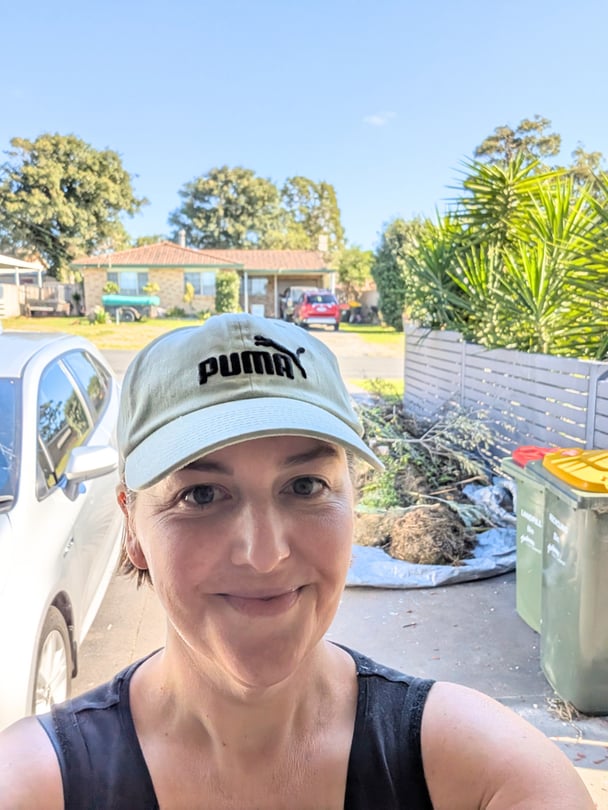
So I stopped the podcasts, and I noticed something interesting.
The ideas that stayed with me weren't the expert episodes packed with neuroscience, productivity hacks or frameworks for transformation. What I kept thinking about were the conversations. People talking about life. Their stories of grief, failure, challenges, disappointments and successes. Stories that were about uncertainty, loneliness, and the fractures that come with being human.
And it challenged something that had slowly seeped into the wellbeing industry and into me: that with the right answers, wellbeing is something to achieve.
As a society, we've become incredibly good at individualising wellbeing. If we're struggling, we look inward, we search for strategies, we download apps, we listen to experts, we buy books, and we optimise. And none of those things is inherently bad. Professional support can be life-changing. Therapy, mental health education and quality support matter. But I wonder if we've started expecting wellbeing to arrive through expertise alone. We've outsourced something that humans have relied on for generations through hundreds of cultures.
Connection.
When I look at my own recovery, not much of it would look impressive on social media. I didn't create a perfect morning routine or productivity system, and I didn't find enlightenment at a wellness retreat.
I started talking to people when I walked. I joined a local writing group, sharing ideas for novels and creative processes. I reached out and invited people for coffee instead of collaboration pitches, where one coffee turned into two and hours of shared stories, experiences and feeling connected to something bigger than myself.
These conversations reminded me that everyone is carrying something, no matter how shiny their front cover is.
Listen: How to identify, treat and recover from burnout. Post continues below.
What my burnout taught me.
For years, I worked in a profession focused on helping people improve their wellbeing. I learnt the theories, practised the approaches and created the resources. But ironically, my own burnout taught me a lesson that no qualification ever did.
Humans are not designed to heal in isolation.
We need information, strategies and professional support when appropriate. But we also need belonging. We need community. We need places where we can show up imperfectly and be reminded that we're not the only ones struggling to figure life out.
Perhaps the answer isn't hidden in a new framework, another workshop or the latest transformation expert. What if, after spending years searching for the next thing that might fix me, I discovered something unexpectedly simple?
Perhaps the answer wasn't another wellbeing strategy.
Perhaps it was each other.
Feature Image: Supplied.
Win a $1000 voucher!
We want to know about your relationship with insurance products. Complete our survey now for a chance to win a $1,000 gift voucher in our quarterly draw!
Take survey →Kat Munson
Author
No Comments
Be the first to leave a comment