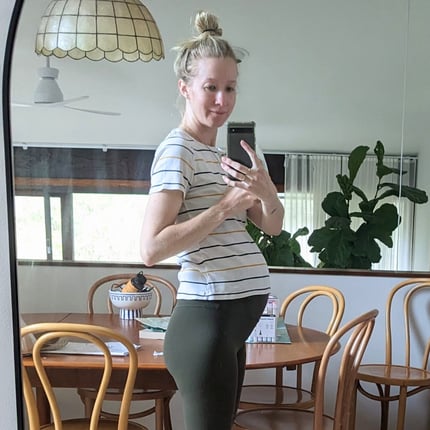
Hannah Fitzpatrick felt the "pop" before she felt her waters run down her leg.
As a midwife, Hannah knew what it meant. She was 22 weeks and three days into her pregnancy and had just had a procedure to strengthen her cervix — a precaution to protect her baby.
When Hannah saw the fluid, the Sydney mother matter-of-factly called for help, and doctors confirmed it was indeed her waters.
The grief was immediate.
Watch: Five things about grief no one really tells you. Post continues below.
"I just went on my side in the bed and sobbed because I knew that it was the beginning of the end," she told Mamamia. "I just broke down."
It was April 2023. Hannah and her husband, Ben, were expecting their second child, a little girl they had named Olive.
The pregnancy had been a difficult one from the start.
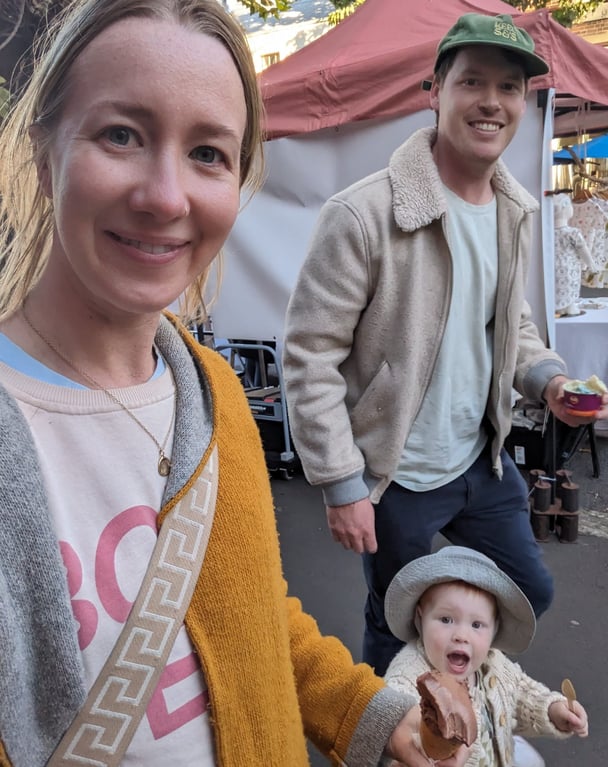
"I was way sicker than I had been with our first, Billie," Hannah said. "That lifted around 18 weeks and I had a few weeks of feeling well, feeling excited. Then we had our 20-week scan, and we found that my cervix was very short.
" From there, we needed to monitor things more regularly, start progesterone pessaries, and then I had a stitch put in."
A short cervix is considered dangerous in pregnancy, as it significantly increases the risk of premature birth and miscarriage.
"I can't say if the procedure caused it, or, if it would have happened anyway," Hannah explained. "We just don't know."
Recovering from surgery and facing a premature birth, Hannah was faced with an impossible choice; continuing her pregnancy risked infection, ending it meant losing her baby.
"The outcomes at 23 to 24 weeks can be dire," Hannah said. "Most don't survive. The ones that do can have significant disabilities, like cerebral palsy, blindness, deafness. We didn't want that for her, or for us, or for Billie, who was two."
Hannah's body kept having on-and-off contractions, which made her feel as if she were in a state of limbo. After consultations with neonatologists at Royal North Shore Hospital, Hannah and Ben decided to induce labour. In the world of pregnancy loss, this is known as Termination for Medical Reasons (TFMR).
"We decided to induce the labour two days later, knowing Olive wouldn't survive, but to protect myself from sepsis and Olive from a difficult life," Hannah said. "I remember just thinking, 'I wish my body would just go into labour' and then it wouldn't have gotten to a point where we needed to make the decision of choosing to end the pregnancy."
Labour was gruelling, both physically and emotionally.
"It was awful," Hannah said, explaining that multiple medications had to be administered to encourage contractions. "It felt so unfair. I kept thinking, 'Why? Why won't my body just go'?"
Finally, Olive was born at 5:58 pm on 28, April 2023. She had a heartbeat, but she was too small to stay.
Finding meaning from grief.
Hannah and Ben spent 24 hours with their daughter in the hospital. The time was simultaneously surreal, painful, yet special.
"I would have been distraught at the thought of not seeing her," Hannah said. "It was as nice as it could be. All our family came and met her."
The days that came after are still a blur, but Hannah remembered grief took both emotional and practical forms. When it came time to plan for Olive's "birthday" — in place of a formal funeral, Hannah hit a wall trying to find an urn that felt right.
"I could not find anything," she said. "Everything I could find felt tacky, or really babyish, or it just screamed 'urn.' There was nothing that felt right for her, and nothing we wanted to have on display in our home."
Hannah had dabbled in ceramics with a friend before, so she asked them if they would consider making an urn for Olive.
The friend had another idea and suggested Hannah make something herself.
The first attempt was a "flop," but a few weeks later, she tried again. This time, she created something beautiful, minimal, and deeply personal.
"I was so happy with it," she said.
She shared the work online and was quickly inundated with messages from other grieving parents.
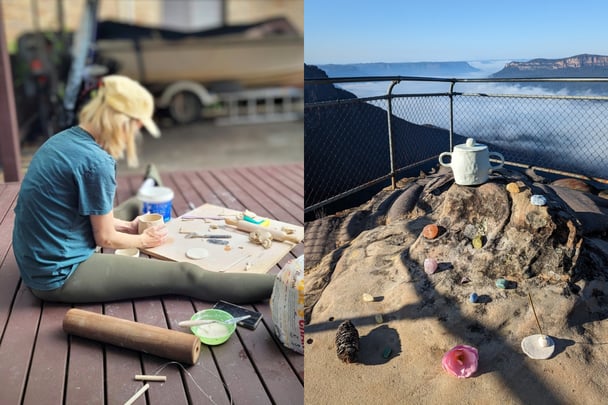
"They still had their babies in the container that the crematorium had given them, because they didn't know what to do with them," Hannah said. "I made some for new friends."
What began as a deeply private act of grief grew into Olive & Kin, a registered charity that has provided more than 230 free, handcrafted, personalised urns to grieving families across Australia.
"The need was so obvious, I had maternity leave with no baby, and the clay became my way of grieving and like therapy, I guess," Hannah said.
Listen: Exploring grief in all its forms, and what healthy versus unhealthy grieving can look like. Post continues below.
The road forward — and breaking a taboo.
The months and years since Olive's passing have not been easy.
Hannah's journey through grief was complicated by several medical traumas, including a severe infection from a retained placenta after Olive's birth that required multiple surgeries.
"You couldn't write it," she said. "It was just so effed up."
Months later, the family faced another miscarriage before finally welcoming their third child, Norah. That pregnancy was a mirror of Olive's — short cervix, hospital stays, and waters breaking early at 27 weeks.
But this time, the outcome changed.
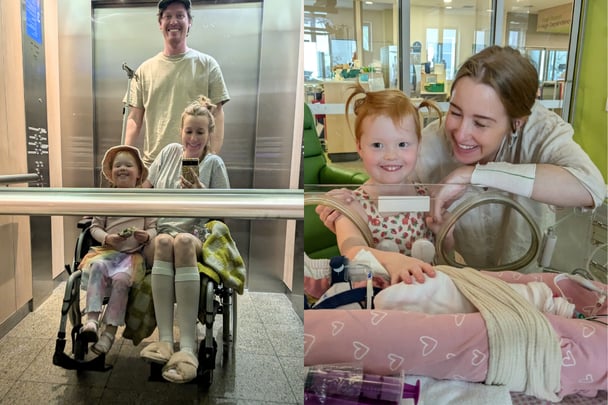
Despite a harrowing start involving sepsis and meningitis, Nora is now 14 months old and thriving.
"She's a miracle," Hannah said. "I feel like we're finally out of the woods.
"Our lives feel like we're finally coming out of the fog. We're finding ourselves again. Billie has started school, Norah is doing well, and we're starting to feel like a family again."
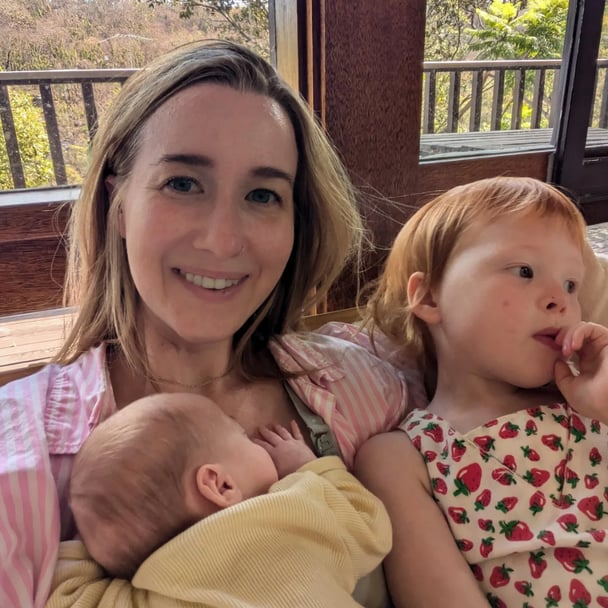
It's estimated around 150,000 Australian women experience pregnancy or infant loss each year, but grief at this stage is still rarely acknowledged publicly.
Hannah hopes sharing her story openly will help break down the stigma surrounding pregnancy loss — and specifically TFMR.
"The baby loss community is already taboo because it's 'uncomfy'. Grief, babies dying — no-one wants to talk about it," she reflected. "TFMR is an extra layer of that. If I can talk about it and help one person feel less alone, then I want to do that."
Red Nose supports anyone affected by the loss of a pregnancy, stillbirth, the death of a baby or child. Call their 24/7 Support Line on 1300 308 307 or visit their website www.rednose.org.au/support .
Olive & Kin hosted their first official fundraising event, Light and Community at the Harbord Hotel in Freshwater, Sydney on Thursday 19 March 2026. This milestone event celebrated the charity's growth and the quiet movement it's building around remembrance, dignity, and connection. You can find more about them on their website , or their Instagram .
Feature image: Supplied.
Do you love trying new skincare products?
Complete our survey for a chance to win a $1,000 gift voucher in our quarterly draw!
Take survey →
Sign up to Mamamia Daily
Sent daily
Raffaella Ciccarelli
News and Weekend Editor
No Comments
Be the first to leave a comment