For too long, coercive control has been the "invisible" reality of domestic abuse, leaving thousands of Australian women without clear legal recognition of their experiences. While NSW, Queensland and South Australia have now criminalised coercive control, other states and territories are still considering or developing standalone offences. In our new series , Mamamia is unpacking the warning signs, the profound impact, and the legal shifts, finally naming this behaviour for exactly what it is.
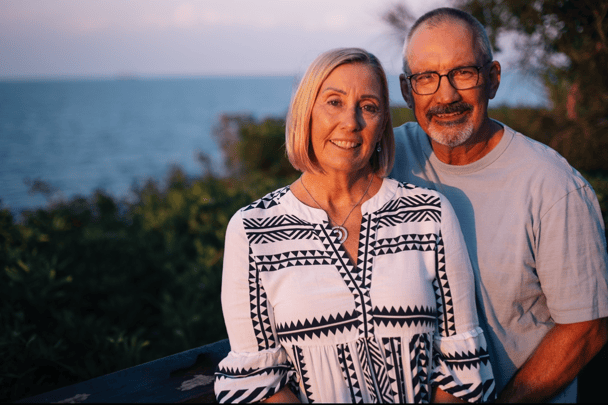
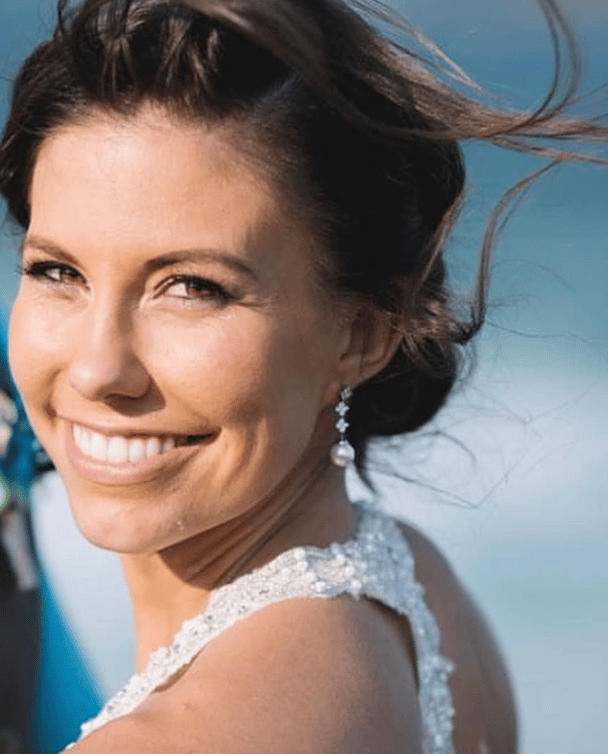
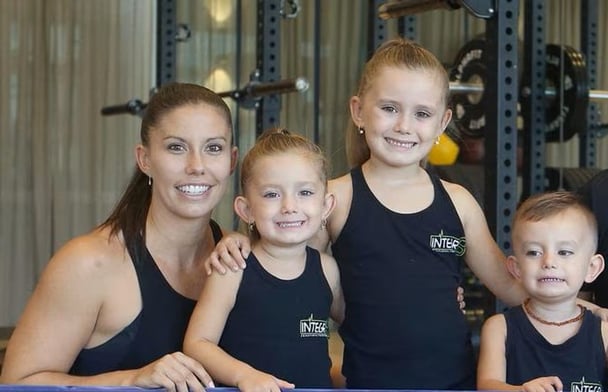
Six years have passed since Hannah Clarke and her three children — Aaliyah, six, Laianah, four, and Trey, three — were violently taken from Sue and Lloyd Clarke.
It's been six years since Sue and Lloyd last saw their daughter and grandchildren's beautiful smiles. Six years of being forced to carry an unimaginable loss, and fighting for other women's safety.
Through it all, Sue and Lloyd have managed to hold onto the small family moments. These, to them, are the memories that matter.
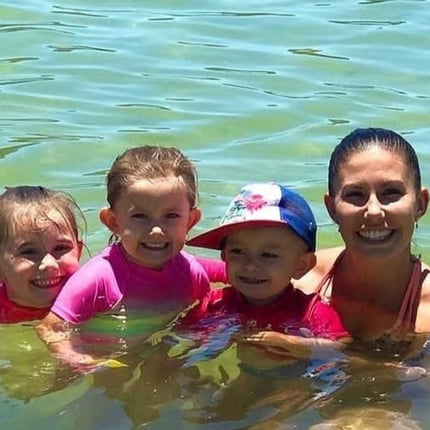
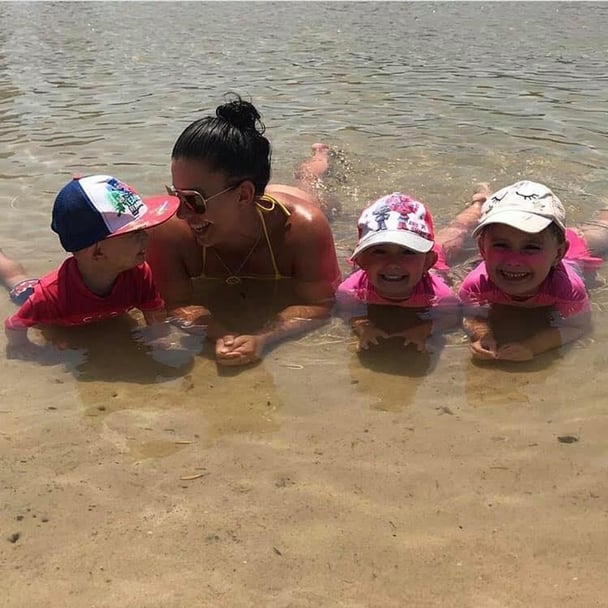
"Little things come up really every day," Sue told Mamamia, explaining that the memories that always come first are of the young family at the beach.
"They loved the beach, they were real water babies, all of them."
Lloyd said one of his fondest memories is the family's love of music.
"They sang the wrong words to songs," he told Mamamia, before Sue added with a laugh, "Hannah was notorious for that."
In February 2020, Hannah, Aaliyah, Laianah, and Trey were killed by Hannah's estranged husband after he ambushed her car on the morning school run in Brisbane. He took his own life by the vehicle.
Much has been written about what happened to Hannah and her children that day. In the midst of the horror, Sue and Lloyd want to make sure Australia remembers them for the vibrant and unique personalities they were.
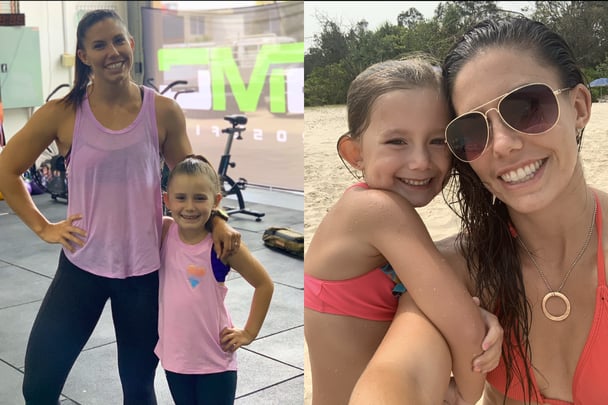
"Aaliyah was a beautiful kid. At six, she was quite sassy. She would have been 13 this year and I imagine we would've had a few arguments," Sue said, chuckling.
"Laianah, we used to call her 'Little Middle', she was the one who would make everyone laugh and was the peacemaker. She always made peace with her father when he was in a mood.
"And then Trey, he was a sweet little boy. He just loved his farm and jungle animals. Hannah, she was bright — one whose smile could light up a room, and she'd put aside her problems to help other people. She adored her children. Everything was for her children."
A pattern of control.
Before her murder, Hannah Clarke had endured years of coercive control at the hands of her estranged husband.
What Sue and Lloyd now understand, and advocate fiercely for, is that coercive control is not one single act. It's a pattern of insidious behaviour that can be easily dismissed.
In Hannah's case, it started with the love bombing.
"When she first started going out with him, he would ring her constantly, every single day. He'd ring her at work," Sue said. "He would drop in on her at work, which we now know was a way of checking that she was actually there."
There were other moments too. Early into the relationship, he encouraged Hannah to shut down her Facebook page and replace it with a joint account. He was extremely competitive and would need to win everything — even when it came to games with the kids. He would control what she wore. Refused to let her wear the colour pink because it was "for kids" — and didn't let her walk off a beach in a bikini.
Watch: Understanding coercive control — some signs of this deliberate pattern of abuse. Post continues after video.

"At the time we thought, 'oh, he's a bit of a prude,'" Sue explained. "But it spiralled after they had the children."
Lloyd said his alarm bells started screaming once he realised how much he would check up on Hannah.
"He was checking up on her a lot," Lloyd said, explaining he created an environment that was impossible for Hannah to win in.
"He would ask the kids, 'what did mummy do today'?"
That pattern — not any single incident — is what defines coercive control. And it's why it can be so difficult for loved ones, and even victims themselves, to see it clearly while it's happening.
Hannah tried to escape with the help of two trusted friends and her parents. She smuggled the children's birth certificates to her parents' house. She dumped the car she drove outside a KFC a few suburbs over, understanding it was likely being tracked.
She sought refuge with her parents.
Sue and Lloyd have now realised this is when Hannah and the children were most at risk.
"We've found that coercive control is the most likely to end in homicide out of any other form of domestic violence," Sue said. " I wish people understood how dangerous it is once the perpetrator loses that control… Women are often killed in the first six months; it's the most dangerous period.
"If we'd realised that, we probably wouldn't have had Hannah and the kids living with us. We would have had her in a hidden location."
The path forward.
Hannah and her children's murders became a "line in the sand" moment in Australia and Sue and Lloyd have campaigned fiercely for coercive control to be criminalised since.
In 2025, coercive control became a criminal offence in Queensland under "Hannah's Law", a year after NSW had also criminalised the behaviour. Earlier this year, NSW was the first state to secure a conviction under the new laws.
"We've just got to keep talking about it. Keep having that conversation that we started six years ago," Lloyd said.
Sue agreed with Lloyd.
" I actually started to get a bit of hope that things might be starting to turn the corner," Sue said. "We've lost, I think, 14 women so far this year. The first conviction, hopefully, is the first of many."
Both Sue and Lloyd are heartened by the education they've seen going into each state's policing units.
But there is still work to be done.
Attrition rates for coercive control are high, meaning that while charges are being laid, cases often fall over once they reach the courts.
"The police are getting the perpetrators, charging them and getting them to court, but we need to get them sentenced," Sue said. "The tricky part is actually getting the judges to go through with it."
Nicolle Edwards, Founder and CEO of RizeUp, acknowledged that the legal system is still evolving to recognise coercive control, but needs to understand that many victims are not in a position to safely document the evidence, which may sway a conviction.
"In these circumstances, the responsibility must sit with systems and specialist services to recognise and respond to abuse in ways that support and protect victim-survivors. No one should have to navigate this experience alone," she told Mamamia.
"No woman should ever feel responsible for gathering evidence of abuse, and nothing should happen that makes her situation any more dangerous. While conviction rates remain low, some people may choose to document patterns of behaviour if it is safe for them to do so. This is never a requirement, and safety must always come first."
For those who can safely record incidents, Edwards suggested keeping a dated record of events, saving threatening messages, emails or voicemails, photographing damage to property, or noting instances where finances, movement, communication, or relationships are being controlled. Over time, these records can help show the broader pattern of behaviour that lies at the heart of coercive control.
Sue and Lloyd want anyone in a controlling relationship to know they are not alone and that help is available.
"If you've been alienated from your family or friends, the first step would be to reach out to them," Sue said. "Then start to devise a safe escape plan, once you have somebody you trust to help you.
"Have things ready for you to go and stored somewhere else. You don't want to have a bag packed in your house, that could be extremely dangerous. Then plan a time a person can safely leave, when the perpetrator is at work or something. Get away and to a place they don't know."
Sue and Lloyd emphasised that escaping coercive control can take time. Patience and understanding are needed on both sides, especially from the support network.
"It's so easy to get frustrated because it's not easy for the victim to leave," Sue said. "It's very hard when you're there as a bystander, and you just want to get them out and get them safe.
"But let them know that you're there and you believe them. Make them feel validated and then talk to them about trying to work out that safe escape plan."
As for their family, Sue and Lloyd want Australians to remember one thing about Hannah, Aaliyah, Laianah, and Trey.
"They all had lovely smiles. They were just lovely kids," Lloyd said.
At the same time, Sue added, "They were beautiful, full of life."
As part of a new series , Mamamia is exploring coercive control — raising awareness of the warning signs, the patterns that often go unnoticed, and the impact they can have on Australian women's lives.
If you or anyone you know needs expert help, please contact 1800 RESPECT (1800 737 732) — the National Sexual Assault, Domestic and Family Violence Counselling Service. If you are in immediate danger, call 000.
RizeUp Australia is Mamamia's chosen charity partner, a nationwide organisation that walks with victim-survivors of domestic and family violence to deliver practical, life-changing support. RizeUp supports women and families as they rebuild safety and stability after violence. Donate here to create safe homes and new beginnings.
Feature Image: Supplied.

Sign up to Mamamia Daily
Sent daily
Raffaella Ciccarelli
News and Weekend Editor
No Comments
Be the first to leave a comment