In 2020, people have been seeking out 'good news' more than ever before.
In a year of collective grief, trauma and sacrifice, with our daily news headlines and social media feeds dominated by negativity, it's easy to see why.
Weneedgood news.
A look at Google Trends really shows just how much. I looked at data over a number of timeframes, but the below graph from the past five years of Google searches for 'good news' across the world is just so telling.
That first major spike? That was from the end of 2019 and beginning of 2020, when the world was celebrating the end of what was widely considered to be a bad year (oh, if only we knew) and entered a new one... to catastrophic bushfires, threats of WWIII, floods, earthquakes and eruptions.
The second big surge on the graph covers the entirety of March and April - and I don't need to remind you of what was going on back then.
From there on, the search term has maintained levels higher than at any other point since November 2015.
So... let's give the people what they need.
Because good thingsdidhappen in 2020 (and many of them, naturally, are animal related). Here are 60 examples you may have missed as proof.
1. In January, Angel the cat's family were forced to flee without her when their property in the Bega Valley caught alight. Somehow, she survived seven days in the middle of the firestorm, before making it back to her owners – singed but okay.
2. Truces between nations have more chance of succeeding if women are involved in peace talks, according to research by UN Women and the Council on Foreign Relations, which found that armistices were 64 per cent less likely to fail when women had a seat at the table.
3. In April, British Veteran Thomas Moore raised more than £32 million (AU$58 million) for the country's National Health Service by walking 100 laps of his garden before his 100th birthday during the first lockdown. His birthday was marked with flypasts by the Royal Air Force and the British Army, and he received over 150,000 birthday cards. In July, he was knighted by the Queen. Since then, Sir Thomas has spent his time speaking to lonely people over the phone.
4. Kindergarten will be free across the state of Victoria in 2021.
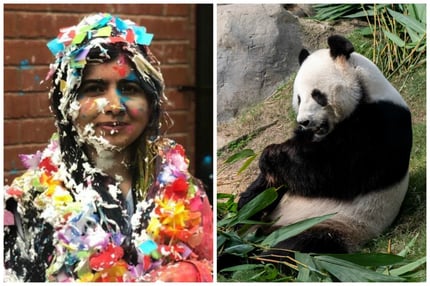
5. Eight years after Taliban gunmen shot Malala Yousafzai in the head due to her criticism of the group’s belief that girls should not attend school, Malala graduated from Oxford University in June.
6. A research team has been using 'Coral IVF' to fertilise sections of bleached coral in the Great Barrier Reef. The Marine Ecology Research Centre at the Southern Cross University believes kilometres of damaged reef could be re-seeded with the process in three to five years.
7. Kamala Harris was elected the United States' first-ever woman and woman-of-colour Vice-President.
8. South Korean filmParasitebecame the first non-English language film to win the Academy Award for Best Picture, the first South Korean film to be nominated, and first non-English language film to win Best Original Screenplay since 2003.
9. Malawi has successfully eliminated elephantiasis, a disease spread by mosquitoes which infected nearly 80 per cent of the population just over a decade ago.
10. LGBTQ conversion therapy was banned in Canberra.
11. A study by Canine Cottages found that a dog's heart rate increases when their owners tell them 'I love you'.
12. A farmer from the Northern Territory told the ABC in October he had received more rain over three days than he did in all of 2019.
13. In fact, in February 2020, 99 per cent of New South Wales was affected by the dry conditions provoked by the drought. Now, figures from the NSW Department of Primary Industries show that nearly 90 per cent of the state is either no longer in drought or is in recovery, according to the Canberra Times.
14. Mexican entrepreneurs Adrián López Velarde and Marte Cázarez launched their company Desserto after discovering how to turn cactus leaves into leather, offering a sustainable and biodegradable vegan leather alternative.
15. In their October election, New Zealanders elected one of the world's most diverse parliaments. 48 per cent of MPs are women (the highest rate in the OECD), 11 per cent are LGBTQ and 21 per cent are Māori.
16. Homeless student Gordon Wayne walked more than 800 kilometres from central Virginia to Massachusetts, raising more than AU$186,000 for the National Alliance to End Homelessness. He received a full scholarship to Boston College, which will also cover his board.
17. When Australia entered nationwide lockdown in March, millions of litres of the unused beer was sent to the Glenelg Wastewater Treatment Plant in South Australia where it was converted into renewable energy.
18. In November, the World Health Organisation launched its global strategy to eliminate cervical cancer, estimating successful implementation of vaccination, screening and treatment could reduce five million deaths by 2025. It is the first time that WHO's 194 member countries have committed to eliminating cancer.
19. In August, Giuseppe Paternò became Italy's oldest graduate after he was awarded first-class honours in philosophy from the University of Palermo in Sicily, aged 96. He said it was the realisation of a lifelong dream, and "one of the happiest days of my entire life".
20. Sudan's government outlawed female genital mutilation, a historic change in a nation where the United Nations estimates about nine in 10 women are subjected to FGM.
21. Blind inventor Kursat Ceylan developed the 'Smart Cane' to make getting around easier for the world's 250 million visually impaired people. The cane uses Google Maps and ultrasonic sensors to warn the user of nearby objects and obstacles through vibrations in the handle.
22. The Dutch ci
Chelsea McLaughlin
Author
No Comments
Be the first to leave a comment