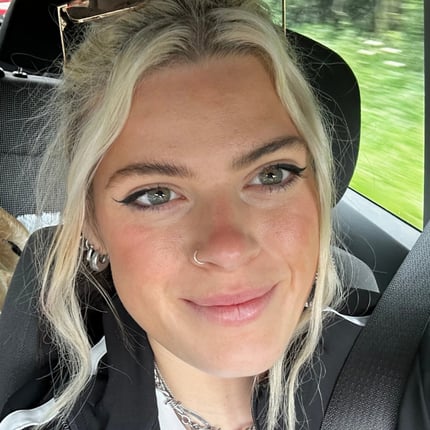
For years, I was a gregarious, outgoing and almost insufferable socialiser. I was the friend who never said no.
It gave me life and brought me vitality.
But eventually, the very thing that provided me with comfort became the very thing that stripped it all away.
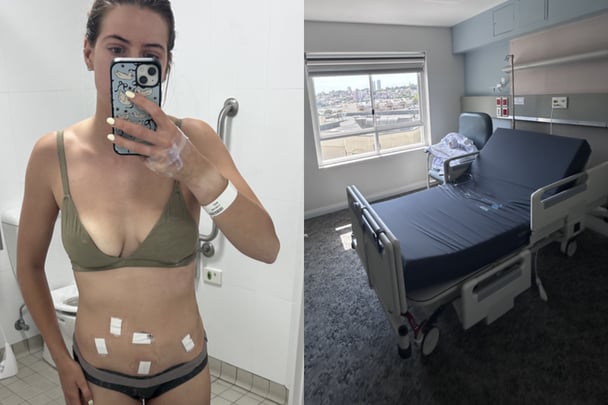
In 2023, I was officially diagnosed with endometriosis at the age of 25 following a long-awaited laparoscopy. It came after years of medical dismissals, which many women have sadly become all too familiar with.
Watch: All your 'down there' questions answered, including unpacking excision surgery for endo. Post continues after video.
There were referrals to various specialists and multiple misdiagnoses courtesy of my vague symptoms — I heard everything from "pelvic inflammatory disease" to "painful periods". One can't forget the delightful time a male doctor told me my chronic pain was due to constipation…that one was joyous.
I've since had another resection surgery in February this year, my second since 2023 (and third in ten years, but at least for the last two we had a diagnosis to work with). Endo truly is the gift that keeps on giving…
But that is not the story we are telling today. Because there is a side of chronic illnesses that isn't really talked about — and it's a tale experienced by many women.
The side of chronic illness nobody talks about.
Let's go back to the beginning.
You've set the precedent for who you are and your social proclivities. Your life is made up of a well-maintained and, quite frankly, heaving social diary. You have plans seven days a week. Your friends expect this from you.
Your body changes. New symptoms present. You start experiencing chronic pelvic pain and fatigue. You start cancelling plans. You feel like a flake. No one understands.
And so, the cycle begins.
The habitual act of planning is already so well established. You hate your body for the inconveniences it is causing, hoping "next week will be better". You keep making plans. You keep cancelling. People start to view you as unreliable. A recluse. The antithesis of the person you viewed yourself to be.
The cycle continues. You force yourself to make plans. Exhaustion ensues. You don't recognise the person who is drained by conversing. You hate yourself.
Again, no one understands. No one reaches out. You are alone.
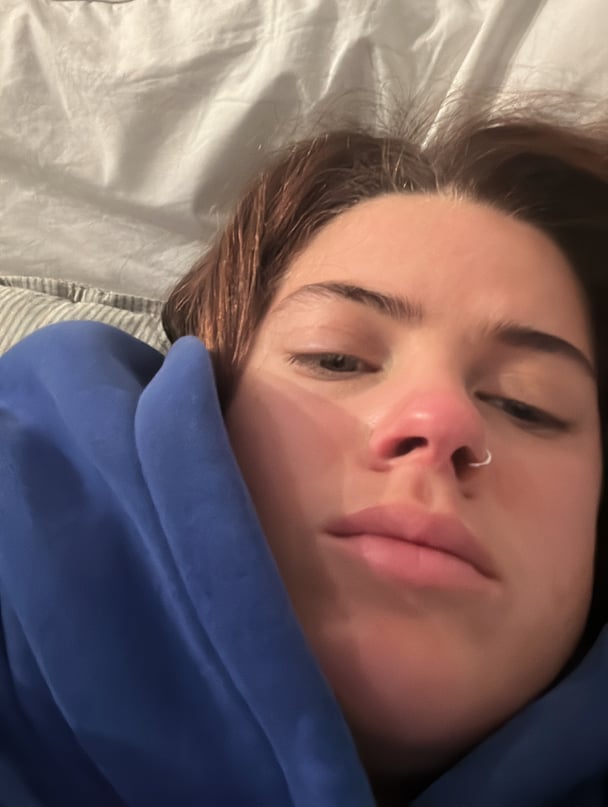
Your body becomes unpredictable and so you become unpredictable. And not only do you not recognise yourself, but your friends don't recognise you. You try to explain your pain and your tiredness. People suggest you "just come for a bit", "take some paracetamol and have a drink" or say, "you have to come, everyone will be there". You don't give yourself permission to recover and neither do they.
You begin shutting people out.
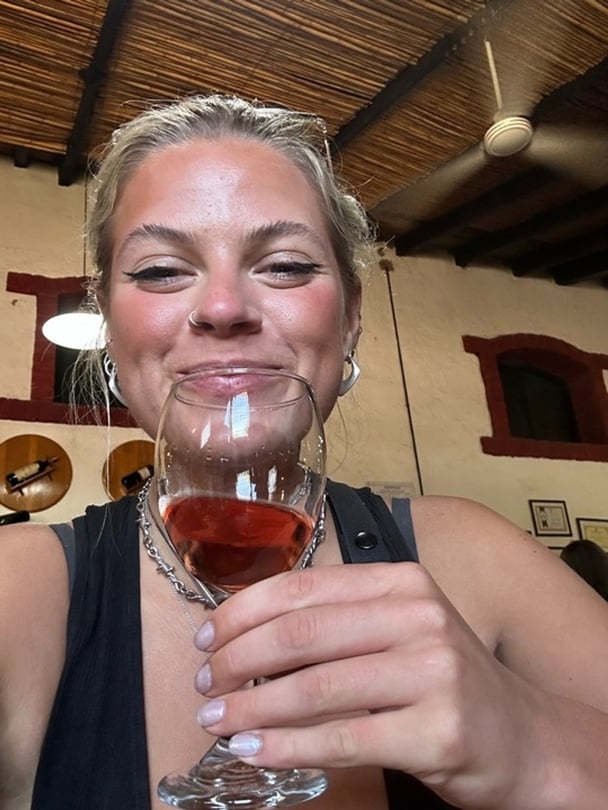
You take pain killers, supplements and expensive holistic medicines. You scald yourself with heatpacks and hot water bottles. Your body swells, your clothes tighten and you stop wanting to '"dress up nice'" to go out. You try wacky diets, and have to stop eating out. You quit drinking and, of course, proceed to answer all the questions as to why you're not drinking. You feel like a weirdo, a freak. You feel judged and ostracised. You feel different to everyone else.
You stop making plans. You stop being unpredictable. You, predictably, stay home and see no one. You set a new precedent. You protect yourself from the disappointment of your body's inability to keep you safe.
You hide and you hibernate.
You have surgery. Everyone cheers, "you are finally going to be pain-free". The pain lets up, but you keep expecting it to return. You have some respite, and reform social connections lost along the way.
You're back, and can feel yourself returning to a semblance of "normality". You're almost free from your prison of chronic pain.
But in your head, nestled into a dark crevice, pain waits to deal its newest hand. And, just like that, the shackles return. They tease and taunt you, starting as just a whisper and progressing into a dark expanse. You are back where you started, but you no longer have the same fight you did at the start of this war.
Onto another surgery you go. But this one is different. You know the road ahead doesn't promise an end to your pain. You question if this pain is manifested; something you have concocted that isn't actually there. You wake up and are told there were lesions; the endometriosis was removed. Deep breath, deep breath.
When the pain returns, you question if you've been lied to. You're numb. You regress again. You will yourself to stay positive, to trust the process and the experts. But yet again, you are alone in your pain.
This is the well-trodden road of the isolation that comes from living with a chronic disease. You resent the body you can't trust. You miss the good times you should be having. You mourn the person you once were; the person you can no longer be.
The things I wish I said.
My tale of isolation — a mirror of the one above — is not the first, nor will it be the last. It has manifested for many people battling chronic illness in many different ways.
Letting someone into your world, your network, your life, is easy. But, letting someone into your pain, your suffering and your darkness, is gruelling. And, there are very few people in life who have earned the right to share in your pain.
There are so many things I wish I had said. Things I wish I'd had the energy to say. And things I can only see now in the rear-view mirror of life.
My greatest unspoken asks were these:
- Give me permission to be tired.
- Be the person to tell me to stay home, cancel plans and look after myself.
- Don't guilt me or regale me with tales of what I will be missing out on.
- Understand when I cancel plans, I wouldn't cancel if I truly didn't have to.
- Sympathy and empathy are different. You can sympathise with me but you cannot empathise.
- Surgery doesn't fix everything. I will still have pain. Please understand this.
- Pain isn't linear. A lot of the time there's no trigger. This unpredictability frustrates me in ways you cannot imagine. Be patient with me.
- My mental health is tumultuous. I feel like I'm trapped in my own body. Be there. Love me.
- You can ask questions about my fertility. About family planning. But NEVER give unsolicited advice.
- Listen and help me when I say: "I am still here. I just need to re-find myself".
Listen: The strangest place you can find endo. Post continues after episode.
Going one step further.
It's estimated that endo affects approximately 10 per cent of reproductive-age women and girls worldwide — and one in seven Australian women. I'm heartened to see that endo awareness is slowly growing, but we must take one step further.
After awareness, there needs to come understanding; understanding that if a friend or family member isolates, it's not a measure of YOUR relationship.
I hope by sharing my story, the story of many, I help to describe the pain, the tiredness, and the loss of self this disease takes
Because we don't want to be defined by this disease. We want to thrive in spite of it, and re-find ourselves in the process.
Feature image: Supplied.
Want to win a $1000 gift card?
We want to know how you stay connected online. Complete our quick 3-minute survey for a chance to win a gift voucher in our quarterly draw!
Take survey →
Sign up to Mamamia Weekend Reads
Sent weekly
Sally Best
Author
No Comments
Be the first to leave a comment