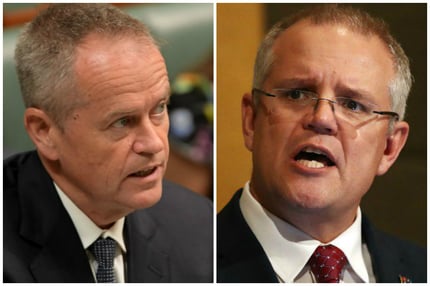
The 2019 Federal election is looming, and we now have just under two weeks to decide who to vote for before we head to the polls.
According to a recent Roy Morgan poll, over a quarter of electors are yet to make up their minds when it comes to their vote, and 44 per cent say no party is addressing the issues that matter to them.
So what exactly do our major parties stand for? What do they have to say about the big questions Australians are asking?
The Quicky team break down the major parties to help you decide who to vote for. Post continues after audio.
Putting aside the bizarre personal and professional behaviour of our politicians (which is a problem in and of itself), we’ve broken down exactly what you need to know about this election, so you’re in the most informed position to decide who to vote for.
What do the major political parties stand for?
What do they say about the issues that matter to Australian women?
We surveyed 97 Australian millennial women
1. What do the parties propose to do about climate change?
Labor:They have big plans. Labor want to cut emissions by 45 per cent and ensure half of Australia's energy is from renewable sources by 2050. They want to force a cap on the country's biggest polluters and give business tax breaks to buy electric cars.
Liberal:They have more conservative plans. They are committed to Australia's 2030 Paris Agreement and will focus on the Emissions Reduction Fund which helps farmers benefit from new revenue opportunities. They'll be supporting small business to invest in solar, and will focus on a strategy to transition new vehicle technology and infrastructure to electric versions of themselves.
Greens:They have the strictest plan for the future. They want zero greenhouse gas emissions by no later than 2040. They want climate change considered in all decision and approval processes involving the federal government.
One Nation:Nothing. They are the only political party to question climate science. They think there is insufficient evidence to support it and want us to pull out of any international treaties or agreements we have currently in place.
2. What are the parties' opinions/plans for abortion?
Labor:Public hospitals will be able to offer termination services as part of Labor's Commonwealth funding arrangement. Abortion is still illegal in New South Wales and South Australia, so Labor will seek to have the state governments decriminalise the procedure. Currently abortion in these states is only lawful if a doctor has done a physical and mental assessment of a woman seeking an abortion.
Liberal:They won't be making any changes to the current arrangements.
Greens:They think access to abortion, as well as sexual and reproductive health services, is a woman's right. They want abortion to be legal, accessible and affordable.
One Nation:One Nation believes this is a matter of conscience for Australians but rejects legalisation of late term abortions except in exceptional circumstances.
3. Do the parties have an opinion on transgender awareness being taught in schools?
Labor:Yes, they support its inclusion in the Safe Schools program brought in by the Labor government in 2013. The Liberal government stopped funding the program in 2017. Bill Shorten thinks children have a right not to be bullied based on their sexual or gender identity.
Liberal:They think 'tolerance' should be taught at school, but not necessarily sexual or gender identity. Scott Morrison has said he doesn't think there should be "gender whisperers" at schools, in reference to teachers trained to identify children who might be transgender.
Greens:They want big changes. The Greens want increased support for students, the implementation of LGBTIQ-sensitive school-aged education and support programs.
One Nation:No, not at all. One Nation believes that teachers should teach the basics and not identity politics.
4. What are they doing when it comes to childcare funding?
Labor:A Shorten Labor Government will establish a new National Preschool and Kindy Program, guaranteeing every three and four-year-old can access the quality early education they need for the best start in school and life.
Liberal:The government thinks Labor is spending too much. They're proposing a typical family will be about $1,300 a year better off under their new Child Care Subsidy.
Greens:The Greens will extend universal access to early childhood education to 24 hours a week for all three and four-year-olds.
One Nation:They don't have a policy on this.
The Quicky explain why there is a budget right before an election. Post continues after podcast.
5. What are the varying thoughts on what the minimum wage should be?
Labor:They've pledged to lift the minimum wage, claiming that $18.93 per hour is "too low" for the average adult to look after their family. They haven't given a specific number, only to say they want it to better reflect the rising cost of living.
Liberal:The Coalition supports the determination made by the Fair Work Commission. So under them, the minimum wage won't change.
Greens:They want to increase the minimum wage to a living wage of at least 60% of the adult median wage so workers can afford to meet their basic needs.
One Nation:One Nation is comfortable with the current mechanism for deciding the minimum wage.
6. What are the parties doing about asylum seekers who approach by sea?
Labor:They're adamant they'd never let people smugglers get "back into business." They believe in strong borders, offshore processing, regional resettlement, and turnbacks when safe to do so because they "know it saves lives at sea."
Liberal:The Government is strongly committed to turnbacks where it is safe to do so.
Greens:They believe turnbacks are cruel and dangerous.
One Nation:They support the ban on re-settlement for those who arrive by boat.
7. What are they doing about reducing domestic violence?
Labor:A lot. They've proposed legislating 10 days domestic violence leave. They'd provide 20,000 support packages for those escaping family violence and $88 million for a safe housing fund. As part of a $660 million package, $62 million would go towards local grants for family violence prevention projects and 25 family violence specialists to work at Centrelink. There's also more money for refuges, legal assistance and school programs.
Liberal:A lot, but not as much as Labor. They've pledged a $328 million domestic violence plan, and 5 days domestic violence leave. $7.8 million would go towards working with alleged perpetrators of family violence in family law matters. They've also established a national system for online complaints and expanded the role of an e-Safety Commissioner.
Greens:A lot. They have a bold plan to increase investment in front line domestic violence services by $2.2 billion over 4 years. This will include rolling out perpetrator interventions, focusing on pouring money into crisis phone services, women's shelters, counselling, and training for service providers.
One Nation:They don't have a policy on this. They're more committed to supporting a fairer family law and child support system. Their domestic violence policy would be committed to focusing on the children impacted by marriage breakdown.
8. What's the deal with all of the tax promises?
Labor:They'll be taxing the country's wealthy the most in order to pay for their health promise to fund more nurses and midwives. They propose a new stamp duty on "top end luxury" cars and yachts, which will fund half the cost of their plans for hospitals. For the country's lowest paid workers (less than $40,000), they'll get a 30 per cent higher tax offset than what the Coalition is offering.
Liberal:Those earning between $50,000 and $90,000 (which is about 4.5 million people) will get an extra $550 per year thanks to the party's plans for tax relief (Labor's plan for middle income earners is fairly similar). Small business will be taxed less in an effort to give them a helping hand, and high income earners will be better off under the Coalition.
One Nation:They oppose any increase to the G.S.T as it will reduce spending and destroy small business. They also support the investigation of an alternative tax system and fairer tax reform.
Who will you be voting for in the Federal election? What issues are helping you decide? Let us know in the comments below.
Gemma Bath
True Crime Conversations host
No Comments
Be the first to leave a comment