
For too long, coercive control has been the "invisible" reality of domestic abuse, leaving thousands of Australian women without clear legal recognition of their experiences. While NSW, Queensland and South Australia have now criminalised coercive control, other states and territories are still considering or developing standalone offences. In our new series , Mamamia is unpacking the warning signs, the profound impact, and the legal shifts, finally naming this behaviour for exactly what it is.
This article shares Anna's personal experience and perspective.
When Anna Coutts-Trotter first stepped into a courtroom to give evidence against her former partner, she thought the hardest part was behind her.
She had survived the abusive relationship, she had summoned the courage to speak to police, and made the difficult decision to pursue legal action.
But nothing could prepare her for the court process that followed.
"It's not trauma-informed," Anna told Mamamia.
"It's about testing evidence. That means your credibility, memory, and character are torn apart in a public forum.
"The worst things that ever happened to me, shared in a room full of strangers and ripped apart into minute details."
Anna's experience forms part of a growing national conversation around domestic abuse and coercive control. That conversation has intensified following the first sentencing under NSW's new coercive control laws.
While Anna's case was heard before the new coercive control laws came into effect, her experience highlights why advocates fought for the change.
These legal shifts are designed to recognise patterns of abuse rather than isolated incidents, many victim-survivors say the process of seeking justice can be deeply confronting, and, at times, retraumatising.
Watch: Explainer about new coercive control laws. Post continues below.

"I thought all relationships were like this."
Anna's relationship with her former partner began like many others.
"At the beginning, it felt intense but also exciting," she said. "I was young, and I did not know what to expect from romantic relationships at my age.
"The relationship felt romantic and consuming, and I thought all relationships at our age were like this."
The shift into something more controlling wasn't obvious at first.
"The shift was gradual and very slow. It started with small comments about what I wore, who I spent time with, or how quickly I responded to messages," Anna recalled.
"He always made me feel like I had done something to deserve the treatment, as though I couldn't be trusted."
Looking back, Anna can identify where the abuse began, but at the time, it felt like something else.
Anna describes it as "isolation disguised as care, monitoring disguised as concern, and criticism framed as honesty and feedback for improvement."
She began changing her behaviour to avoid conflict — something she now recognises as a red flag.
"I had my Snapchat location shared with him, and I was constantly available to him online," Anna recalled.
"If I did not reply straight away, he would continuously call me until I answered.
"I started cancelling plans. I stopped sharing things with friends and family because I was ashamed to tell them how he was treating me."
Even when his behaviour became worse, Anna didn't immediately recognise it.
"I thought 'domestic violence' was a term that applied to people with families, mortgages, lives together," she said. "I thought I was too young to experience domestic violence and I invalidated myself because of that."
Over time, Anna says, the abuse escalated from pinching, whipping her with a tea towel, smacking and being kicked off the bed or couch into more violent behaviour.
"I think it escalated the most when he knew he was losing control of me, and I was leaving the relationship," she said.
"Worse than I ever imagined."
For Anna, disclosing what had happened felt like crossing a threshold.
"I told my Mum a few weeks after I saw him for the last time," she said. "I think I felt ready, knowing I was not going to go back to him this time."
Going to the police, however, felt more daunting.
"I knew the legal process would be drawn out and scary. And it was a lot worse than I ever imagined at that point too," she said.
While Anna felt supported by some individual officers, the system itself was a different story.
"There were individual police who were incredible with me," Anna said.
But Anna says they operated within a system that she felt was "intentionally designed to humiliate, punish, control and shame" her for what she'd experienced.
A common challenge.
Legal experts say Anna's experience reflects common challenges faced by victim-survivors navigating court.
Angela Lynch, lawyer, domestic violence advocate and chairperson of the National Women's Safety Alliance, says many people underestimate how confronting it can be to give evidence.
"They may have to directly face him in court or, if giving evidence by video, they know he is watching and listening — that can be incredibly frightening and challenging," she said.
"Though the whole case often hinges on the victim-survivor's evidence, they are not a party to the process and are only a witness to a crime.
"That means the system can operate in a way that is not trauma-informed or in a way that prioritises their needs."
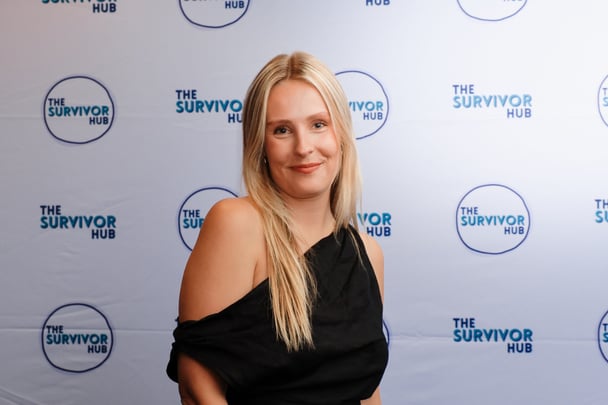
Anna describes the long lead-up to the trial as one of the most difficult parts of the process, with constant delays making it hard to move forward emotionally while the case was still unresolved.
"The waiting was exhausting. I could not start healing and recovering until long after court was over," she said. "I went years feeling anxious and nauseous every single day."
Angela says this extended waiting period is a common experience for victim-survivors navigating the criminal justice system.
"The delays in the criminal justice system have very real consequences for victim-survivors," she said.
"The length of the process keeps victim-survivors living in the past when the abuse occurred and not being able to move on with their lives."
When Anna finally took the stand, she says the reality of giving evidence was far more confronting than she had anticipated. Being questioned in detail about deeply personal experiences, in a public setting, felt overwhelming.
"It feels like being hit by multiple huge waves in the ocean, being dumped and tossed around, body scraping on the sand," she said. "It is not living, it is just staying alive."
She says cross-examination was particularly challenging, with defence lawyers closely scrutinising her memory and behaviour throughout the relationship.
Anna says she felt like she was the one on trial.
"Everything I did before, during, and after the abuse was analysed," she said.
"The focus shifted from 'Why did he do this?' to 'Why did you stay?' or 'Why didn't you leave sooner?'"
Power imbalances in courtrooms can amplify that feeling, explains Angela.
"The accused, if they are well resourced, can have their own lawyer that is advancing their case and protecting their interests. Victim-survivors feel a power imbalance and that the rules are set up to protect the accused rather than them," Angela said.
Ultimately, a court convicted Anna's former partner of one charge of physical assault, but he did not receive a custodial sentence. He was found not guilty in relation to other charges.
Healing became something Anna had to find outside the legal process.
Coercive control in the courtroom.
Experts say coercive control adds another layer of complexity to legal proceedings.
Unlike a single incident, coercive control is a pattern, often subtle, cumulative and spread across months or years. That can make it harder to explain clearly under pressure, particularly when trauma affects memory.
"There can be a lack of understanding about why women may delay making a report to police," Angela said. "There can be a failure to understand the freeze response and why some women didn't physically retaliate."
New coercive control laws aim to capture these patterns, recognising behaviour that might not be criminal in isolation, such as verbal or financial abuse, but becomes harmful as part of an ongoing course of conduct.
But Angela says reforms alone won't solve the problem.
"Everyone in the system needs training on the dynamics of domestic and family violence and trauma," she said.
"Consideration should be given to victim-survivors having their own lawyers."
Looking back now, Anna says one of the biggest misconceptions is that leaving the relationship marks the end of the struggle.
"Leaving is not the end," she said. "It was just the beginning of a years-long fight for 'justice' that most people… never get. The system was completely retraumatising."
She hopes greater awareness of coercive control will shift how survivors are treated, both inside and outside courtrooms.
"Greater trauma-informed practices, faster timelines, better protections during cross-examination," she says, are urgently needed.
As part of a new series, Mamamia is exploring coercive control — raising awareness of the warning signs, the patterns that often go unnoticed, and the impact they can have on Australian women's lives.
If you or anyone you know needs to speak with an expert, please contact 1800 RESPECT (1800 737 732) — the National Sexual Assault, Domestic and Family Violence Counselling Service. If you are in immediate danger, call 000.
RizeUp Australia is Mamamia's chosen charity partner, a nation-wide organisation that walks with victim-survivors of domestic and family violence to deliver practical, life-changing support. RizeUp supports women and families as they rebuild safety and stability after violence. Donate here to create safe homes and new beginnings.
Feature image: Supplied.

Sign up to Mamamia Daily
Sent daily
Nicole Madigan
Senior Writer
Comments are disabled for this article.