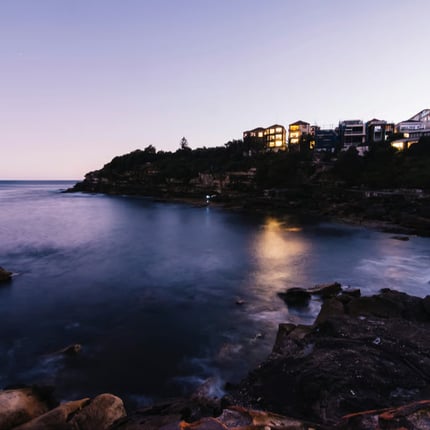
You know what they say: all good things must come to an end.
Judging from the pitch-black abyss outside my window when my alarm blares at 6:00 AM, it's become clear we're approaching the end of daylight saving.
Yes, the era of sun, sand, and those precious daylight hours is drawing to a close — (winter is coming and all of that).
Soon, we will trade our golden-hour swims for the frantic dash to get the laundry off the line before the sun disappears at what feels like lunchtime.
I'm going to be honest. Every year, without fail, I have that moment of daylight saving panic: Wait, do the clocks go forward or back? And without fail, it's a question I wind up Googling (don't judge me please, I'm wearing my confusion on my sleeve).
So, let's break it down once and for all.
Listen to The Quicky discuss the issue with daylight savings. Post continues below.
So, when does daylight saving end in Australia?
This year, daylight saving time ends on Sunday, 5 April 2026 (otherwise known as Easter Sunday).
It's important to note that the Northern Territory, Queensland and Western Australia do not observe daylight saving time. So the clocks will only change for those in:
- Australian Capital Territory
- New South Wales
- South Australia
- Tasmania
- Victoria
The time zones each state and territory observes during the daylight saving period are:
- Australian Eastern Daylight Time (AEDT) zone: ACT, NSW, Tasmania and Victoria
- Australian Eastern Standard Time (AEST): Queensland. The state is one hour behind AEDT
- Australian Central Daylight Time (ACDT): South Australia. The state is half an hour behind AEDT
- Australian Central Standard Time (ACST): Northern Territory. This time zone is an hour and a half behind AEDT
- Australian Western Standard Time (AWST): Western Australia, and the state is three hours behind AEDT
Once daylight saving ends, NSW, Victoria, Tasmania and ACT reverts to AEST, (joining Queenslanders), while South Australia will move to Australian Central Standard Time (ACST).
Do the clocks go forward or backwards?
The clocks will go backward one hour at 3:00am.
That means you will gain an hour of sleep, but lose the evening sunshine. Honestly? Trading a bit of evening sun for a guilt-free sleep-in is exactly what the doctor ordered for the Easter slump.
Now most smartphones should update automatically, but for analog clocks, it's best to set them before bed on Saturday night. Some devices, such as ovens and microwaves, may also need to be set manually.
Watch. Sleep relaxation tips that may help you adjust when the clocks go forward. Post continues below.

What is daylight saving, and why do we have it?
Daylight saving time (DST) is the practice of moving the clock forward during the warmer months to extend daylight in the evening hours.
The idea is that it maximises natural light during warm months and extends daylight hours to enjoy outdoor activities.
It has the added goal of lowering energy use by decreasing reliance on electric lighting in the evenings.
The concept has been around longer than you may think. It was first introduced by a New Zealand entomologist called George Hudson in 1895, as he wanted more daylight for bug collecting.
Canadian residents in Port Arthur, Ontario — today's Thunder Bay — first gave it a go in 1908. However, Germany is widely credited as the first nation to fully enact it during WWI, around mid-1916, as a bid to save fuel and energy.
Australia first observed it in 1916, with the aim of conserving energy by making better use of natural daylight.
It was a hit for some states, and not for others.
Since then, countries around the world have experimented with it. Today, around 70 nations still observe daylight saving in some form. While some countries have ditched it, the daylight saving debate continues here at home.
Critics say it's outdated and disruptive — you can count negotiating new time zones and interrupted sleep patterns amongst those disruptions — but it comes with the perks of lighter evenings, more time outside, and a better work-life balance in the summer months.
Feature image: Getty.

Sign up to Mamamia Daily
Sent daily
Raffaella Ciccarelli
News and Weekend Editor
No Comments
Be the first to leave a comment