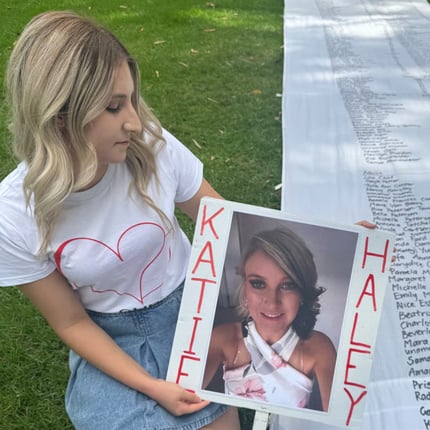
For too long, coercive control has been the "invisible" reality of domestic abuse, leaving thousands of Australian women without clear legal recognition of their experiences. While NSW, Queensland and South Australia have now criminalised coercive control, other states and territories are still considering or developing standalone offences. In our new series , Mamamia is unpacking the warning signs, the profound impact, and the legal shifts, finally naming this behaviour for exactly what it is.
When Bianca Unwin heard that a man had been sentenced to time in prison for coercive control — the first to be incarcerated in NSW under these laws — her first reaction wasn't relief.
"My first thought was, it's about time," she told Mamamia.
"For decades, we've told survivors that if they weren't being hit, it wasn't real abuse. This conviction flips that on its head."
Bianca's sister, Katie Haley, was murdered in March 2018 by her partner Shane Robertson, following years of escalating jealousy and control.
Watch: There are new coercive control laws. Check out our explainer below. Post continues below.

The 29-year-old mother-of-two had told him she wanted to leave.
During an argument at their home in north-west Melbourne, he struck her multiple times with a heavy dumbbell bar, causing fatal head injuries.
Their baby was asleep in the next room. Robertson later pleaded guilty to murder and was sentenced to 24 years in prison, with a non-parole period of 19 years.
In court, the judge described months of extreme jealousy, surveillance and possessive behaviour leading up to the attack — warning signs that, at the time, weren't fully understood as coercive control.
For Bianca and her father, Boyd, the legal recognition of coercive control has been a long time coming.
"It's a massive step forward to see a judge look at a pile of text messages, bank statements and isolated incidents and say, 'this isn't a rocky relationship, this is a crime'," Bianca said.
"But I won't be celebrating or praising the courts, because the law is just finally doing its job. Which has been long overdue for victims of this type of abuse.
"There isn't a day that goes by where we don't think of Katie or what she endured."
Listen to Bianca talk about Katie on True Crime Conversations. Post continues below.
The signs no one recognised.
Looking back now, Katie and Bianca's father, Boyd, says the patterns of coercive control are painfully obvious.
"Especially after all the details were revealed in court, it was clear that Katie had been subjected to all forms of coercive control," he said.
"We knew some of these things were happening but had no understanding of what coercive control was or what it could lead to."
Bianca believes awareness of coercive control could've changed the conversations that were being had with Katie much earlier.
"If we had known what coercive control was, or her friends did or, more importantly, Katie did herself, then we would have been equipped to have better discussions around the behaviours," Bianca explained.
At the time of Katie's murder, Bianca says, society largely viewed abuse through the lens of physical violence.
"While those close to Katie saw fragments of the abuse, no one held the full picture, and society wasn't discussing this type of abuse," she said.
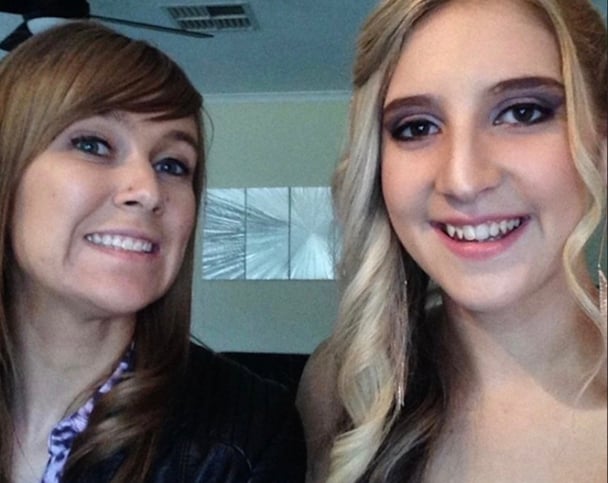
Coercive control rarely begins with obvious violence. It often starts with subtle tactics such as monitoring movements, questioning friendships, creating financial dependency or slowly isolating someone from support networks.
"The silence surrounding this abuse is maintained through sophisticated manipulation," Bianca said. "Perpetrators are experts at controlling the narrative, often gaslighting victims into believing they are the cause of the conflict."
"To us on the outside, these early warning signs were easily dismissed as immaturity or typical jealousy, rather than the calculated tactics of control they actually were."
Boyd believes part of the misunderstanding comes down to language.
"I think part of the problem is that we hear the term domestic violence or family violence, and it instantly gives the connotation of physical violence," he said. "Abuse is a better term."
What coercive control actually does to a person.
Experts say that gradual erosion of autonomy is what makes coercive control so dangerous.
"In our research with victim-survivors, coercive and controlling behaviours often included acts of physical violence typically perpetrated over time alongside other forms of abuse," said domestic and family violence expert, Professor Kate Fitz-Gibbons.
She explains that coercive control is not a single incident, but a pattern of behaviour.
"Coercive control erodes autonomy. Over time, victim-survivors may begin to doubt their own perceptions, minimise the abuse, or feel incapable of leaving the abusive partner because their world has been systematically narrowed, and they have been deliberately isolated from support networks and services."
Many survivors describe feeling trapped long before violence occurs.
"In our research, victim-survivors of coercive control often described feeling like they were constantly walking on eggshells," she said. "The immediate and long-term impacts of living with fear and unpredictability are immense."

When coercive control becomes physical.
One of the hardest realities for Katie's family is that there were no recorded physical assaults before the night she died.
"I wish everyone was aware of the types of coercive control, and how rapidly it can escalate to a very dangerous situation when a perpetrator loses that control," Bianca said. "Generally, this is when someone tries to leave a relationship. This is what happened to Katie."
Experts say the period around separation is widely recognised as one of the highest risk times.
"The point of relationship separation is widely recognised as a high-risk period for women in abusive intimate partner relationships," Professor Fitz-Gibbons explained.
"For perpetrators who have built their identity around control, the loss of that control within their relationship can lead to an escalation of violence, including greater risk of homicide."
Why do systems still struggle to respond?
According to Professor Fitz-Gibbons, the justice system has historically focused on isolated incidents rather than patterns.
"The criminal justice system, including police and courts, has historically been focused on identifying, evidencing and responding to individual incidents of abuse," she said.
"An incident-focused approach fails to capture the full breadth of the abuse, the seriousness and the wide-ranging impacts."
Domestic violence researcher Silke Meyer says fragmented responses across services can mean warning signs are overlooked.
"Many still look at the latest incident — what's right in front of them — and that in itself may not be a high-risk scenario," she said.
"However, when looking at what else is going on and a pattern of behaviour and a web of multiple cumulative tactics is present, risk is easier to identify, assess and manage.
"In some of the highly publicised intimate partner homicide cases we've seen, many people held one little piece of the puzzle based on the presenting issue relevant to their area of practice, but nobody looked at the bigger picture."
What families want people to understand.
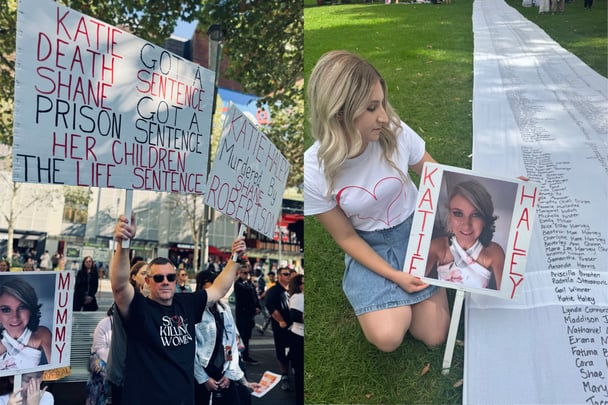
For Bianca and Boyd, speaking publicly is about helping others recognise the subtle warning signs they once struggled to name.
"That the perpetrators are subtle, intentionally subtle," Boyd said.
"If something doesn't feel right, it probably isn't."
Bianca urges people supporting someone in an abusive relationship to lead with compassion.
"When supporting someone in an abusive situation, approach them with empathy rather than judgment," she said.
"You cannot force someone to listen or leave before they are ready, but you can remain a consistent, non-judgmental presence in their life."
Listen: Queensland has become the second state to criminalise coercive control, but what does that mean and what about the rest of Australia? Post continues below.
A shift across Australia.
Across Australia, awareness of coercive control is growing, but families like the Unwins say progress still feels slow.
"It feels like there is finally someone listening," Boyd said. "That there may be light at the end of the tunnel."
Experts agree the country is in a period of transition, with new laws and changing community understanding.
"We are in a period of transition across Australia in terms of legal system responses to coercive control," Professor Fitz-Gibbons said. "Safe implementation requires substantive training across the justice system, consistent and improved policing responses, and careful attention to risks."
For Bianca, the message is simple: coercive control is not harmless, and it is not just a relationship issue.
"I wish everyone was aware of the types of coercive control," she said. "And how rapidly it can escalate to a very dangerous situation."
Because sometimes, the most dangerous abuse is the kind no one recognises — until it's too late.
As part of a new series , Mamamia is exploring coercive control — raising awareness of the warning signs, the patterns that often go unnoticed, and the impact they can have on Australian women's lives.
If you or anyone you know needs expert help, please contact 1800 RESPECT (1800 737 732) — the National Sexual Assault, Domestic and Family Violence Counselling Service. If you are in immediate danger, call 000.
RizeUp Australia is Mamamia's chosen charity partner, a nationwide organisation that walks with victim-survivors of domestic and family violence to deliver practical, life-changing support. RizeUp supports women and families as they rebuild safety and stability after violence. Donate here to create safe homes and new beginnings.
Feature Image: Supplied.

Sign up to Mamamia Daily
Sent daily
Nicole Madigan
Senior Writer
No Comments
Be the first to leave a comment