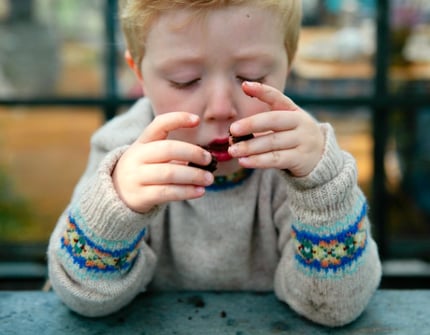
It’s every parent’s worst nightmare: watching their child struggle for breath as they begin choking.
If you have a child or are expecting, taking a class that covers baby choking and infant CPR is a good way to be prepared. We all hope we will never be put in the position of having to see a child choking, but accidents happen.
We know that babies love to put anything and everything in their mouths. While tasting is just their way of exploring, there are some things you don’t want bubs to get their chubby little hands on.
The most common choking dangers that could be found in and around your home can include grapes, coins, small toys, rubber bands and balloons.
If you are ever unsure of what could be a choking hazard the ACCC has created a downloadable ‘choke check’ tool, which you can print out to see if an object is a choking hazard.
To minimise the risk of your child choking, there are a few simple steps you can take including:
The signs of choking include:
If a baby (under one year) shows signs of choking, call Triple Zero (000) for an ambulance and give back blows as follows:
If the blockage hasn’t cleared after five back blows:
If the blockage hasn’t cleared after five chest thrusts, continue alternating five back blows with five chest thrusts until medical aid arrives. If the infant becomes unconscious, commence CPR.
The good people from St John Ambulance show us how it’s done.
If a child (over one year) shows signs of choking, encourage the patient to relax and ask them to cough to remove the object. If coughing does not remove the blockage:
If the blockage hasn’t cleared after five back blows:
If the blockage has not cleared after five chest thrusts, continue alternating up to five back blows with up to five chest thrusts until medical aid arrives. If the patient becomes unconscious remove any visible obstruction from mouth and commence CPR.
St John has helped prepare parents for accidents through first aid for over 130 years. As the first aid experts, we recommend all parents and grandparents learn basic first aid. Book a Caring for Kids course today.
Author
No Comments
Be the first to leave a comment