If you want to support independent women's media, become a Mamamia subscriber . Get an all-access pass to everything we make, including exclusive podcasts, articles, videos and our exercise app, MOVE.
When I was 34 and newly married, a soft-hearted friend asked if my husband and I were going to have children together.
"You've still got time," she said kindly.
At the time, my daughter was 16 and my son 14. My husband's children were a similar age. Biologically, she wasn't wrong. I nodded and agreed. But what stayed with me wasn't the possibility. It was the assumption that time automatically equals obligation.
Like many blended families, we're often asked if we're going to have "our own children". I usually smile and say that we already do. Between us, we have four. More than most.
Watch: Kate Winslet shares a rare and beautiful insight into her blended family. Post continues below.

But the truth is, long before I met my husband, I'd already made my decision.
I was 19 when my son was born, my second biological child, and I knew that day he would be my last. I understood my limits early. I knew how much of myself I could give without resentment or depletion, and I didn't want to stretch my capacity thinner at the expense of the children I already had.
That decision wasn't about scarcity. It was about responsibility.
I was young, still growing up alongside my kids, learning how to parent them while also parenting myself. I became the kind of mother who apologised when I got it wrong, who allowed silliness, who grew with her children instead of pretending to have it all figured out. I knew my limits and I respected them.
Dating in my twenties reflected that clarity. Many people I met didn't want children, or wanted them "one day," and neither fit my reality. I couldn't bend my life around hypotheticals. My children were already here, and they came first.
When I met my now husband at 29, I met someone who understood that. He'd also married young and had children early. There was never going to be a traditional fairy-tale timeline for us, and we didn't need one. Our relationship grew without the pressure to validate itself through reproduction.
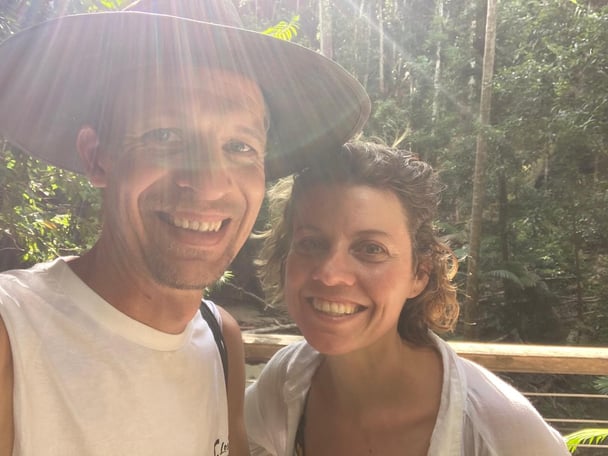
By the time people started telling me I still "had time," I wasn't deciding whether to have children. I was protecting the family I already had.
Blended family life is complex. Schedules are full. Emotional dynamics shift. No matter how deeply I love my husband's children, they have their own very present mother, just as my children have their own very present father. The roles are different, and pretending otherwise doesn't serve anyone.
Over the years, the thought of having a child with my husband has crossed my mind. I love him deeply, and the idea of creating a life together was meaningful. But that thought always passed quickly. Not because it wasn't possible, but because it wasn't necessary.
I've come to understand that love doesn't need replication to be real.
Instead of starting again, we've become young empty nesters. My husband is in his early forties, and I'm 39. Many of our peers are in the thick of raising babies and toddlers, juggling income with childcare, and navigating new parental roles inside their relationships. We recognise those patterns because we've lived them, just not together.
And while I deeply admire couples who raise children to adulthood and still manage to maintain strong partnerships, I'm grateful we didn't have to face those pressures within our marriage.
Without them, we've had space to be present in other ways.
We're available for ageing parents, nieces and nephews, and people in our community who need support. We can answer the phone and stay on it.
We can volunteer. We can show up without constantly triaging exhaustion. That doesn't make our lives more valuable, just differently focused.
Listen: Why do women burnout faster? Learn how to identify, treat and recover from it. Post continues below.
I don't see the possibility of having children together as something that's "running out of time." I'm focused on another kind of time entirely: the time to be present, to contribute, to use the experience of having already raised children while still having the energy to support others.
My marriage doesn't feel incomplete because it doesn't include another baby. It feels complete because of what we contribute together.
Even when I work alone, I know what I'm able to do is possible because I have a partner supporting me in the background, and the same is true for him. Two really are better than one. That's the validity I need.
We didn't run out of time.
We chose how to use it.
Feature Image: Supplied.
Calling all Australians aged 18+!
We want to know about your relationship with insurance products. Complete our survey now for a chance to win a $1,000 gift voucher in our quarterly draw!
Take survey →
Sign up to Mamamia Weekend Reads
Sent weekly
Andi Saunders
Author
No Comments
Be the first to leave a comment