
If you want to support independent women's media, become a Mamamia subscriber . Get an all-access pass to everything we make, including exclusive podcasts, articles, videos and our exercise app, MOVE.
A family in Brazil took a '12-year-old girl' named Gabriele into their care. They believed the young girl had experienced "a history of abuse" and "health problems" and they were willing to help.
She lived with the foster family for over a year. They reportedly gave her a room, fed her and bought her clothes and toys.
It wasn't until police arrived at the family's door that they realised it had all been a lie.
Watch: The trailer for the latest series of Well. Post continues below.

'Gabriele' wasn't 12 years old. In fact, she wasn't a child at all. She was a 37-year-old woman named Amanda Maria Souza de Oliveira. She had been posing as a child to live with the foster family.
During the 14 months that Amanda lived with the couple, she spoke in a high-pitched, childlike voice. When police arrived, according to The Washington Post, she dropped her tone to an adult register to speak to them.
Amanda was reportedly placed with the family in 2023 after contacting a local organisation that works with vulnerable children.
To maintain the disguise, police found that Amanda claimed to have autism and that she had been administered hormones, which she said explained why she looked older than her age, per The Washington Post and local publication G1 Santa Catarina.
During the time she lived with the family, Amanda stayed in a decorated room and was given children's toys. The family even reportedly organised a 12th birthday party for her.
Listen to the latest episode of Mamamia's twice-daily news podcast The Quicky. Post continues below.
Police say Amanda asked her foster parents not to enrol her in school or begin a formal adoption process out of fear her abusive father might find her, according to The Washington Post.
Now, Amanda has been convicted in Joinville, Santa Catarina, Brazil, of fraud and identity theft, according to a translated media release from the Court of Justice of Santa Catarina.
A relative of the couple eventually grew suspicious, found information about a previous arrest of Amanda's in Rio and went to police, leading to her arrest, the outlet reported.
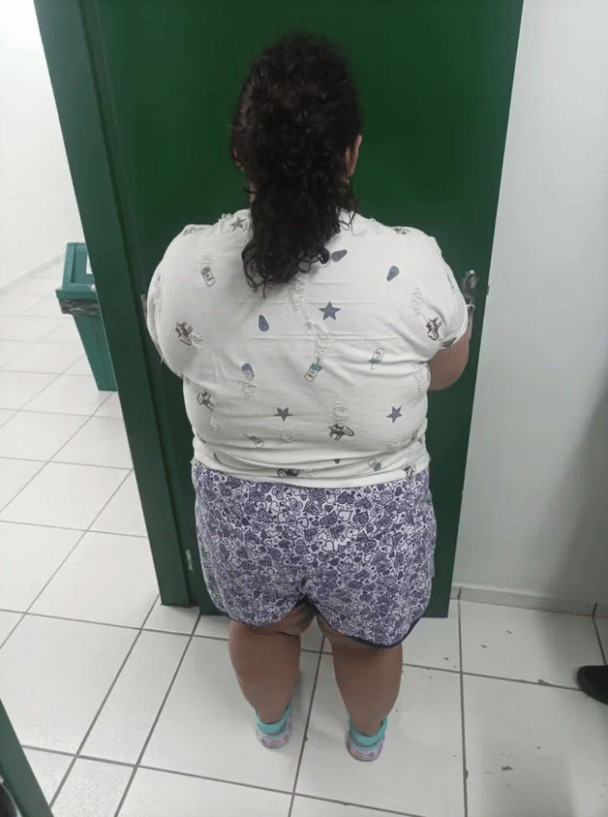
According to court records, Amanda created a fake identity and spent 14 months living with the family. During that time, she was "treated as a daughter and received housing, medication and other care until the story was discovered".
The ruling found that Amanda approached the family and reported "a history of abuse, health problems and family abandonment".
Living with the family meant Amanda was able to gain "financial advantage" as the family was "fully covering her living expenses" during the time she lived with them, per the ruling.
The court also considered the impact the situation had on the family, noting "the bond built between the defendant and the victims over more than a year".
Amanda was ultimately sentenced to approximately 18 months in prison, followed by about five months of detention under a semi-open prison regime, according to the court.
The family has not been publicly identified.
Amanda had been living falsely as a child for 15 years in an "elaborate fraud".
Local police chief Rodrigo Gusso, who arrested Amanda, told The Washington Post: "What struck me the most was her ability to deceive so many people for so long."
"Her strategy was to target small shelters, churches and religious groups, where people's instinct to help is the very thing she exploited," he added.
One of Amanda's attorneys, Lucio Sousa, described her as "a vulnerable person" who had "lived on the streets".
He said Amanda "admits that she invented an identity" and that "it was the way she found to survive" but claimed that Amanda had not obtained any financial advantage or committed robbery or theft.
Following the court ruling, Sousa shared a statement on social media, writing that Amanda's legal team disagrees with the decision and plans to "pursue all appropriate legal measures and appeals before the higher courts."
Feature image: Campo Grande Civil Police.
Gabrielle Oehlmann
Author
No Comments
Be the first to leave a comment