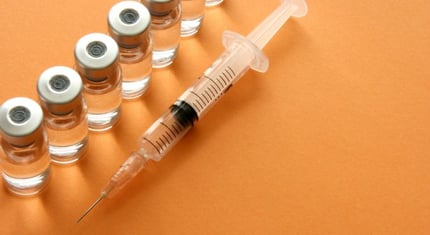
Image: iStock.
The National HPV Vaccination Program has been shown to reduce rates of cervical abnormalities and genital warts in young women, yet in some parts of Australia more than one in four of teenage girls haven’t completed it, despite it being free for students.
According to a report from the National Health Performance Authority, roughly 38,400 of the 137,460 Australian girls who turned 15 in 2013 were not fully immunised against the human papillomavirus. That equates to around 28 per cent.
RELATED: One woman’s story about what it’s like living with HPV.
Regions with the lowest coverage included the Blue Mountains, south-east Tasmania and rural South Australia, with the lowest coverage rate being just 56 per cent. Notably high coverage areas included Mackay, Warrnambool and inner south Melbourne.
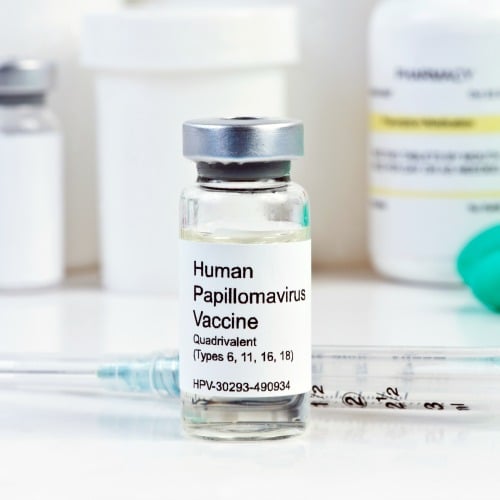
The school-based National HPV Vaccination Program, which involves three injections beginning at age 12 to 13, was launched in 2007 to protect adolescent girls against HPV and its associated diseases, including cervical cancer. In 2013, this program was extended to include boys.
The HPV vaccine involves three injections.
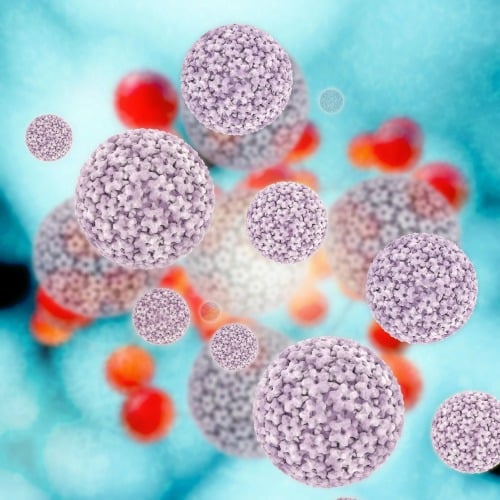
HPV is a common viral infection of the reproductive tract that is a leading cause of cervical cancer and has also been linked to cancer of the anus, vagina, vulva and penis.
According to Dr Brian Morton, Chair of the AMA Council of General Practice, there are a number of possible explanations for low coverage rates, and it's not necessarily a case of outright objection from parents.
RELATED: 10 ways the pap smear process will be changing in Australia soon.
For instance, from an administration point of view the process of parental approval required — as the children are underage when the first vaccine is administered — isn't fail-proof.
"You've got a letter for the parent's agreement or approval, that's got to get back to the school for the permission to actually be given it on the day. There are a couple of issues there, in either the letter not getting to the parents to sign, and secondly the delivery back to the school," Dr Morton says. (Post continues after gallery.)
What you need to know about HPV. (Info via health.gov.au)


The three-dose process could also be a contributing factor, as there's a higher chance of failure. "We actually see that in the childhood vaccinations - after the first, second and third, you start to get a drop in the 12 and 18 months... because of either parents being busy or forgetting about it or inadequate recall and reminders. There are those sorts of issues," Dr Morton says.
In some cases it could also be symptomatic of a lack of education, or misconceptions about why the vaccine is required.
RELATED: "Will the flu vaccine give me the flu?"
"The implication people might take is that it's sexual promiscuity or promoting early sexual intercourse, or 'It's not necessary because my child wouldn't do that'. It probably requires a high level of myth-busting and understanding by parents as to why it should be done," Dr Morton explains.
"I think also we need to recognise that one solution doesn't solve the problem for everyone in the community. Some kids have a terrible fear of injections ... we see kids coming in to our practice because they didn't want to do [the HPV vaccine] at school because they were too scared or saw a school friend faint due to it. That adds to the fear." (Post continues after gallery.)
Popular forms of birth control
Contraceptive pill
The Pillis the most popular form of birth control. There are two types: the combined pill, containing two hormones, and theprogestogen-only, or mini, pill, which only contains one female hormone. The combined pill works by preventing the ovary from releasing an egg each month. The mini pill changes the mucus at the entrance of the uterus, which stops sperm from entering. Both are 99.7% effective; however, they don't offer protection from STDs.
Intrauterine device
IUDs are small, T-shaped devices that are inserted into the uterus by a doctor in order to prevent pregnancy. There are two types of IUD: copper, which affects the movement and survival of sperm in the womb while changing the lining of the womb;and hormonal, which releases progestogen (a synthetic version of the naturally-occurring hormone progesterone) into the uterus. Although IUDs have a success rate of more than 99%, only around 2% of Australian women currently use one.
Condoms
The male condom is a barrier contraception that prevents both pregnancy and the transmission of STDs. They work by collecting semen so it doesn't enter theman's partner's body. Condoms are 95 to 99% effective at preventing pregnancy.
The female condom
The female condom is a pre-lubricated sheath, which loosely fits inside of the vagina. The condom has a removable ring, which helps to insert the sheath and keep the condom in place. A larger ring remains on the outside to cover the opening of the vagina. They are designed to fit all women and can only to be used once. Due to misuse of the product it is only 79 per cent effective.
Diaphragm
Like the male condom, the diaphragm is a barrier method of contraception. It's a shallow silicone dome that's inserted into the vagina andcovers the cervix, which is the entrance to the uterus. It's held in place by the pelvic muscles, and works by preventing sperm from entering the uterus. After sex, diaphragms need to remain in placefor another six hours, in which time the sperm inside the vagina die. This method is 88 to 94% effective at preventing pregnancy, although this rate increases with experience.
Birth control implant
This is a 4cm-longimplant that is inserted into a woman's upper arm, just under the skin, by a doctor. It releases a hormone called etonogestrel, which prevents ovulation and thickens the mucus in the cervix, which can stop sperm from entering. Contraceptive implants - usually sold as Implanon - are removed under anaesthetic every three years, and are close to 100% effective.
Vaginal ring
Vaginal rings are soft plastic rings that contain the same two hormones as the combined pill - oestrogen and progestogen. The ring is inserted into the vagina, where the hormones are absorbed into the body and then prevent the ovaries from releasing eggs. Once inside the ring can't be felt, and it needs replacing every three weeks (with one week's break in between). When used correctly, this method is more than 99% effective.
Depo Provera
Depo is a long lasting hormonal injection. The synthetic form of progesterone is administered every 12 to 14 weeks to woman, preventing pregnancy within this ongoing time period. The injection, which is given in the buttock or muscle of the upper arm, prevents ovulation and thickens the mucus in the cervix, helping to block sperm. The injections are 99 per cent effective but do not protect against STDs. Male contraceptive injections are currently being trialled
The morning after pill
Emergency co
Author
No Comments
Be the first to leave a comment